Department of Dental Medicine, Faculty of Medicine and Dentistry, University of Valencia, 46010 Valencia, Spain.
Int J Environ Res Public Health. 2020 Oct 19;17(20):7582. doi: 10.3390/ijerph17207582.
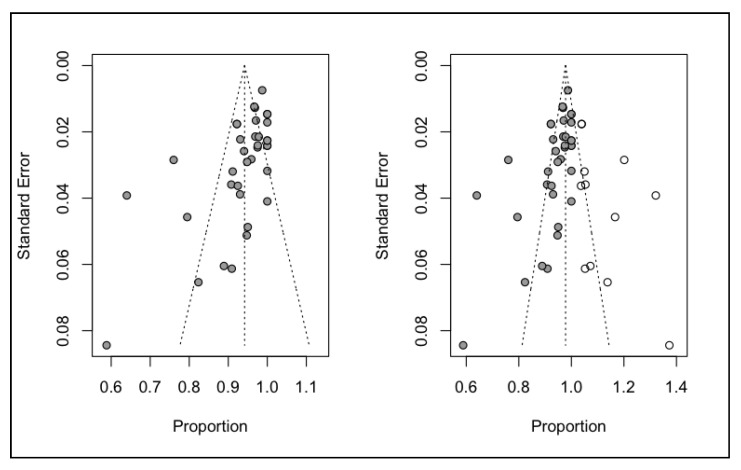
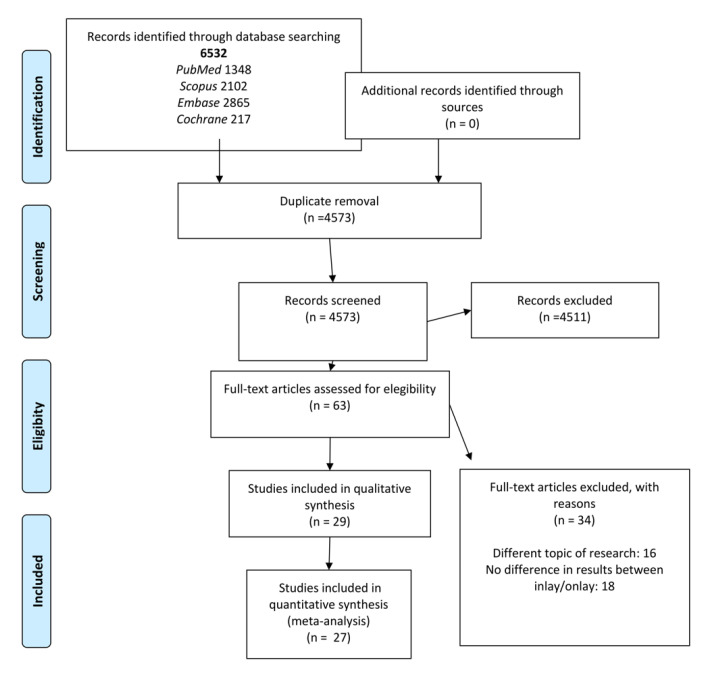
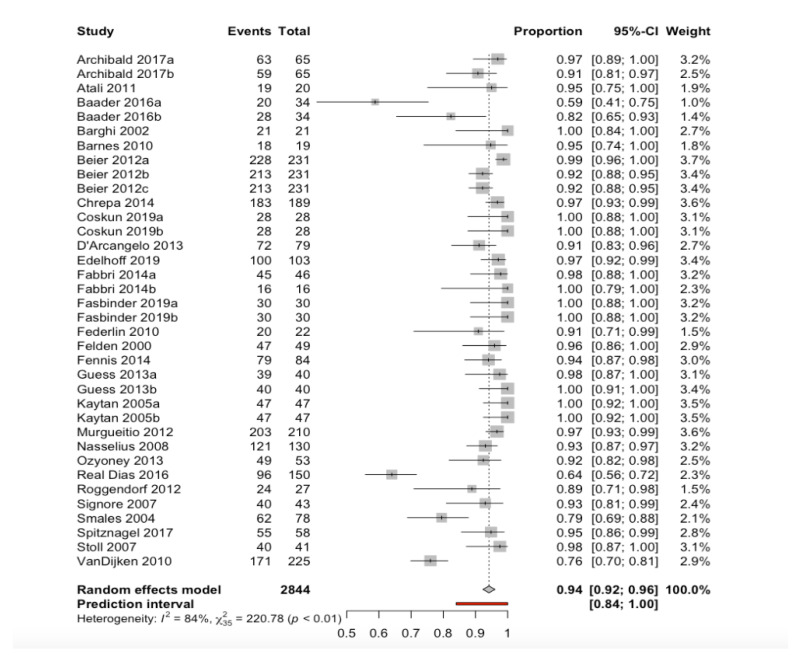
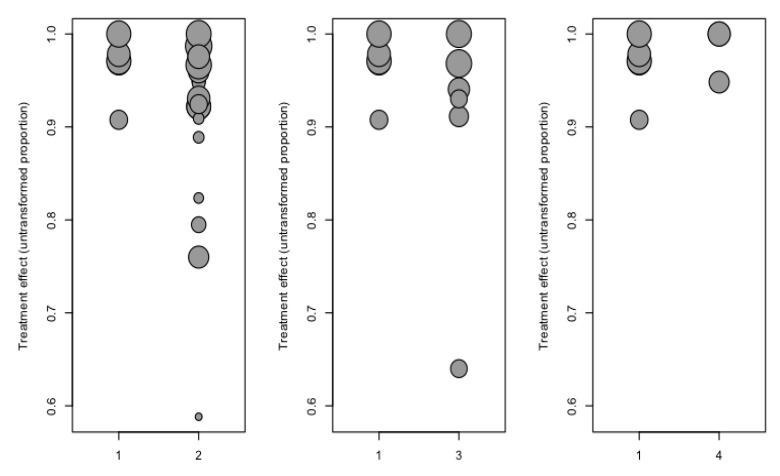
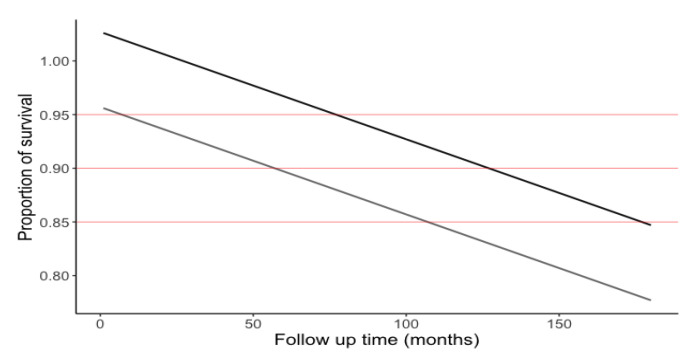
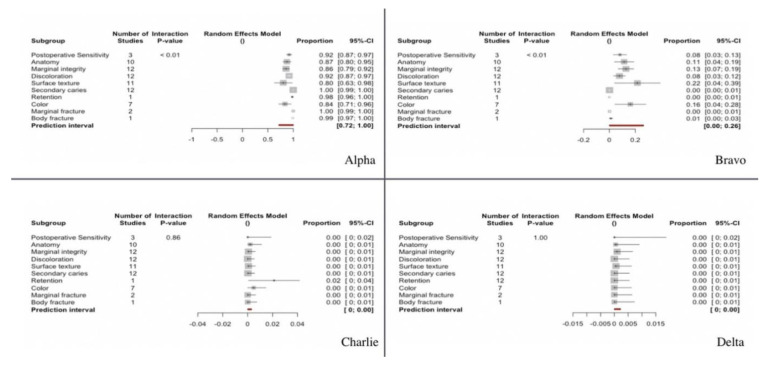
A systematic review and meta-analysis was performed to analyze the survival of onlay restorations in the posterior region, their clinical behavior according to the material used (ceramic reinforced with lithium disilicate, conventional feldspathic ceramic or reinforced with leucite; hybrid materials and composite), possible complications, and the factors influencing restoration success. The systematic review was based on the preferred reporting items for systematic reviews and meta-analyses (PRISMA) statement, without publication date or language restrictions. An electronic search was made in the PubMed, Scopus, Embase, and Cochrane databases. After discarding duplicate publications and studies that failed to meet the inclusion criteria, the articles were selected based on the population, intervention, comparison, outcome (PICO) question. The following variables were considered in the qualitative and quantitative analyses: restoration survival rate (determined by several clinical parameters), the influence of the material used upon the clinical behavior of the restorations, and the complications recorded over follow-up. A total of 29 articles were selected for the qualitative analysis and 27 for the quantitative analysis. The estimated restoration survival rate was 94.2%. The predictors of survival were the duration of follow-up (beta = -0.001; = 0.001) and the onlay material used (beta = -0.064; = 0.028). Composite onlays were associated with a lower survival rate over time. Onlays are a good, conservative, and predictable option for restoring dental defects in the posterior region, with a survival rate of over 90%. The survival rate decreases over time and with the use of composite as onlay material.
一项系统评价和荟萃分析旨在分析后牙区覆盖修复的存活率、根据所用材料(锂硅二硅酸锂增强陶瓷、传统长石质陶瓷或增强型透锂长石;混合材料和复合材料)的临床行为、可能的并发症以及影响修复成功的因素。系统评价基于系统评价和荟萃分析的首选报告项目(PRISMA)声明,没有出版日期或语言限制。在 PubMed、Scopus、Embase 和 Cochrane 数据库中进行了电子检索。在排除重复出版物和不符合纳入标准的研究后,根据人群、干预、比较、结果(PICO)问题选择了文章。在定性和定量分析中考虑了以下变量:修复体存活率(由几个临床参数确定)、所用材料对修复体临床行为的影响以及随访期间记录的并发症。共有 29 篇文章用于定性分析,27 篇文章用于定量分析。估计修复体的存活率为 94.2%。存活率的预测因素是随访时间(β = -0.001; = 0.001)和使用的覆盖材料(β = -0.064; = 0.028)。随着时间的推移,复合材料覆盖物的存活率较低。覆盖物是修复后牙区牙齿缺损的一种良好、保守且可预测的选择,存活率超过 90%。随着时间的推移,存活率会降低,并且使用复合材料作为覆盖材料也会降低存活率。