Patan Academy of Health Sciences, Oxford University Clinical Research Unit, Kathmandu, Nepal.
Centre for Tropical Medicine and Global Health, Nuffield Department of Medicine, University of Oxford, Oxford, UK.
Ann Clin Microbiol Antimicrob. 2020 Oct 21;19(1):48. doi: 10.1186/s12941-020-00390-y.
Multi-drug resistance (MDR) and extensive-drug resistance (XDR) associated with extended-spectrum beta-lactamases (ESBLs) and carbapenemases in Gram-negative bacteria are global public health concerns. Data on circulating antimicrobial resistance (AMR) genes in Gram-negative bacteria and their correlation with MDR and ESBL phenotypes from Nepal is scarce.
A retrospective study was performed investigating the distribution of ESBL and carbapenemase genes and their potential association with ESBL and MDR phenotypes in E. coli, Klebsiella spp., Enterobacter spp. and Acinetobacter spp. isolated in a major tertiary hospital in Kathmandu, Nepal, between 2012 and 2018.
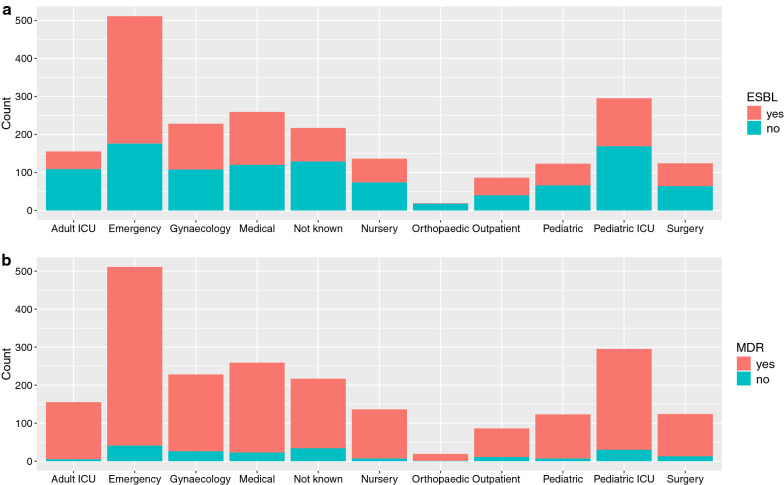
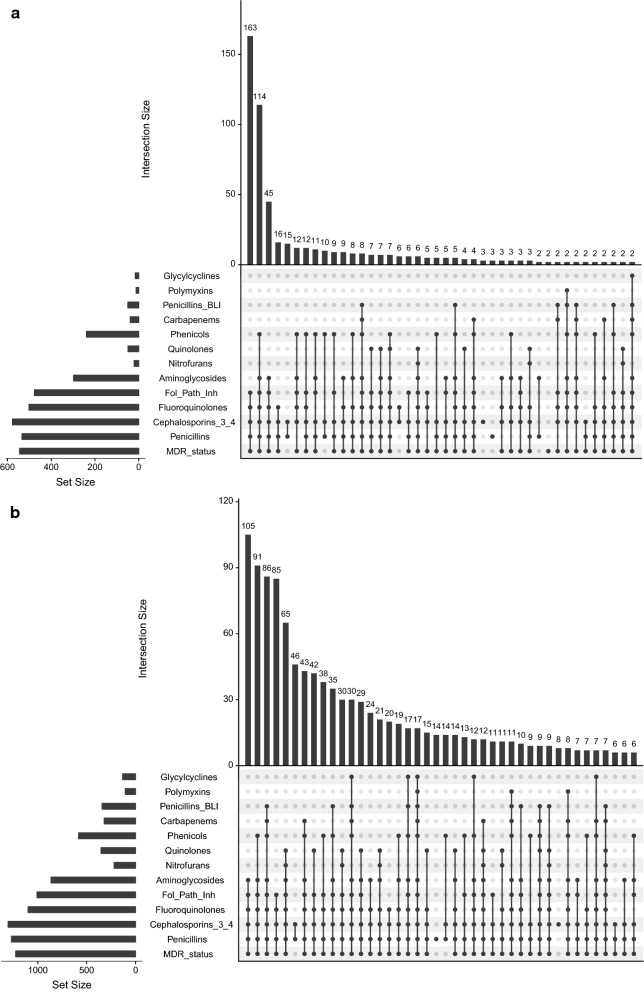
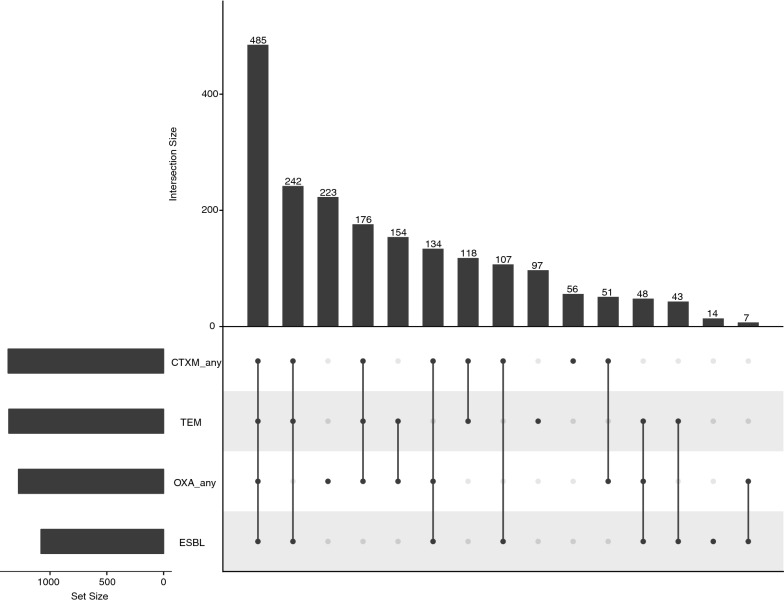
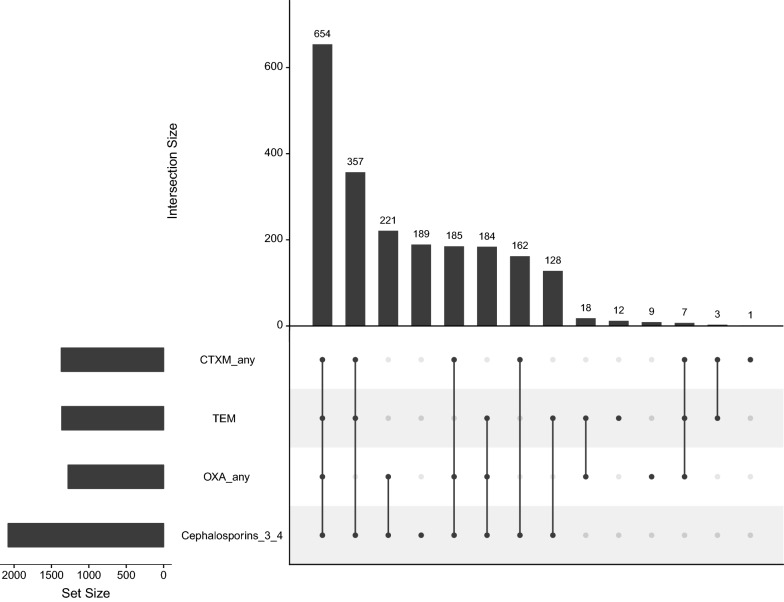
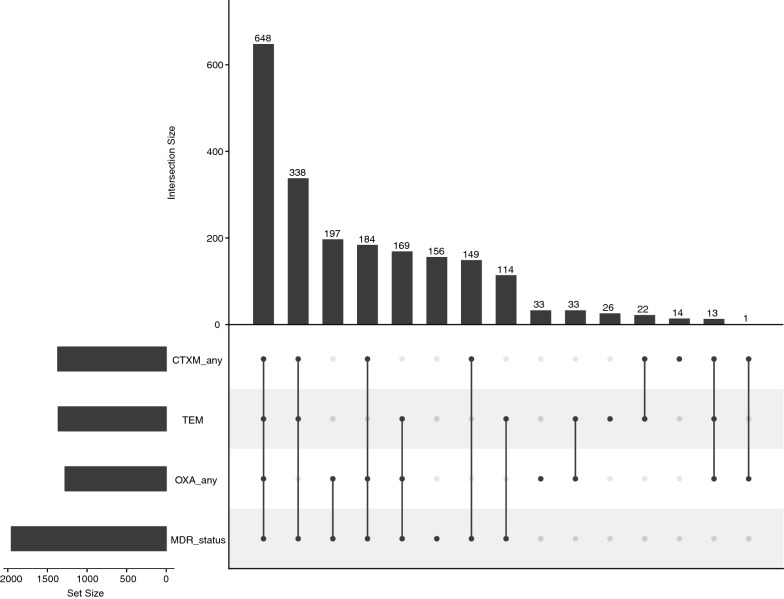
During this period, the hospital isolated 719 E. coli, 532 Klebsiella spp., 520 Enterobacter spp. and 382 Acinetobacter spp.; 1955/2153 (90.1%) of isolates were MDR and half (1080/2153) were ESBL producers. Upon PCR amplification, bla (1281/1771; 72%), bla (930/1771; 53%) and bla (419/1771; 24%) were the most prevalent ESBL genes in the enteric bacilli. Bla and bla were the most common bla family genes in the enteric bacilli (918/1771; 25%) and Acinetobacter spp. (218/382; 57%) respectively. Sixteen percent (342/2153) of all isolates and 20% (357/1771) of enteric bacilli harboured bla and bla carbapenemase genes respectively. Of enteric bacilli, Enterobacter spp. was the most frequently positive for bla gene (201/337; 60%). The presence of each bla and bla were significantly associated with non-susceptibility to third generation cephalosporins (OR 14.7, p < 0.001 and OR 2.3, p < 0.05, respectively).The presence of each bla, bla and bla family genes were significantly associated with ESBL positivity (OR 2.96, p < 0.001; OR 14.2, p < 0.001 and OR 1.3, p < 0.05 respectively) and being MDR (OR 1.96, p < 0.001; OR 5.9, p < 0.001 and OR 2.3, p < 0.001 respectively).
This study documents an alarming level of AMR with high prevalence of MDR ESBL- and carbapenemase-positive ESKAPE microorganisms in our clinical setting. These data suggest a scenario where the clinical management of infected patients is increasingly difficult and requires the use of last-resort antimicrobials, which in turn is likely to intensify the magnitude of global AMR crisis.
与革兰氏阴性菌中的广谱β-内酰胺酶(ESBLs)和碳青霉烯酶相关的多药耐药(MDR)和广泛耐药(XDR)是全球公共卫生关注的问题。尼泊尔革兰氏阴性菌中循环抗菌药物耐药(AMR)基因及其与 MDR 和 ESBL 表型的关系的数据很少。
本回顾性研究调查了在尼泊尔加德满都的一家主要三级医院中,2012 年至 2018 年间分离的大肠埃希菌、克雷伯菌属、肠杆菌属和不动杆菌属中 ESBL 和碳青霉烯酶基因的分布及其与 ESBL 和 MDR 表型的潜在相关性。
在此期间,医院共分离出 719 株大肠埃希菌、532 株克雷伯菌属、520 株肠杆菌属和 382 株不动杆菌属;1955/2153(90.1%)的分离株为 MDR,其中一半(1080/2153)为 ESBL 产酶株。通过 PCR 扩增,bla(1281/1771;72%)、bla(930/1771;53%)和 bla(419/1771;24%)是肠杆菌属中最常见的 ESBL 基因。bla 和 bla 是肠杆菌属(918/1771;25%)和不动杆菌属(218/382;57%)中最常见的 bla 家族基因。所有分离株的 16%(342/2153)和肠杆菌属的 20%(357/1771)分别携带 bla 和 bla 碳青霉烯酶基因。肠杆菌属中,Enterobacter spp. 携带 bla 基因的频率最高(201/337;60%)。每种 bla 和 bla 的存在与第三代头孢菌素的非敏感性显著相关(OR 14.7,p<0.001 和 OR 2.3,p<0.05)。每种 bla、bla 和 bla 家族基因的存在与 ESBL 阳性(OR 2.96,p<0.001;OR 14.2,p<0.001 和 OR 1.3,p<0.05)和 MDR(OR 1.96,p<0.001;OR 5.9,p<0.001 和 OR 2.3,p<0.001)显著相关。
本研究记录了在我们的临床环境中,令人震惊的 AMR 水平和高比例的 MDR ESBL-和碳青霉烯酶阳性 ESKAPE 微生物。这些数据表明,感染患者的临床管理越来越困难,需要使用最后手段的抗菌药物,这反过来又可能加剧全球 AMR 危机的严重程度。