Division of Endocrinology and Diabetology, Medical University of Graz, Graz, Austria.
Channing Division of Network Medicine, Brigham and Women's Hospital, USA.
Clin Nutr. 2021 Apr;40(4):2053-2060. doi: 10.1016/j.clnu.2020.09.028. Epub 2020 Sep 28.
BACKGROUND & AIMS: It is unclear if intervention can mitigate the dramatic alterations of metabolic homeostasis present in critical illness. Our objective was to determine the associations between increased 25-hydroxyvitamin D levels following high dose vitamin D and more favorable metabolomic profiles in critical illness.
We performed a post-hoc metabolomics study of the VITdAL-ICU randomized double-blind, placebo-controlled trial. Trial patients from Medical and Surgical Intensive Care Units at a tertiary university hospital with 25-hydroxyvitamin D level ≤20 ng/mL received either high dose oral vitamin D (540,000 IU) or placebo. We performed an analysis of 578 metabolites from 1215 plasma samples from 428 subjects at randomization (day 0), day 3 and 7. Using mixed-effects modeling, we studied changes in metabolite profiles in subjects receiving intervention or placebo relative to absolute increases in 25-hydroxyvitamin D levels from day 0 to day 3.
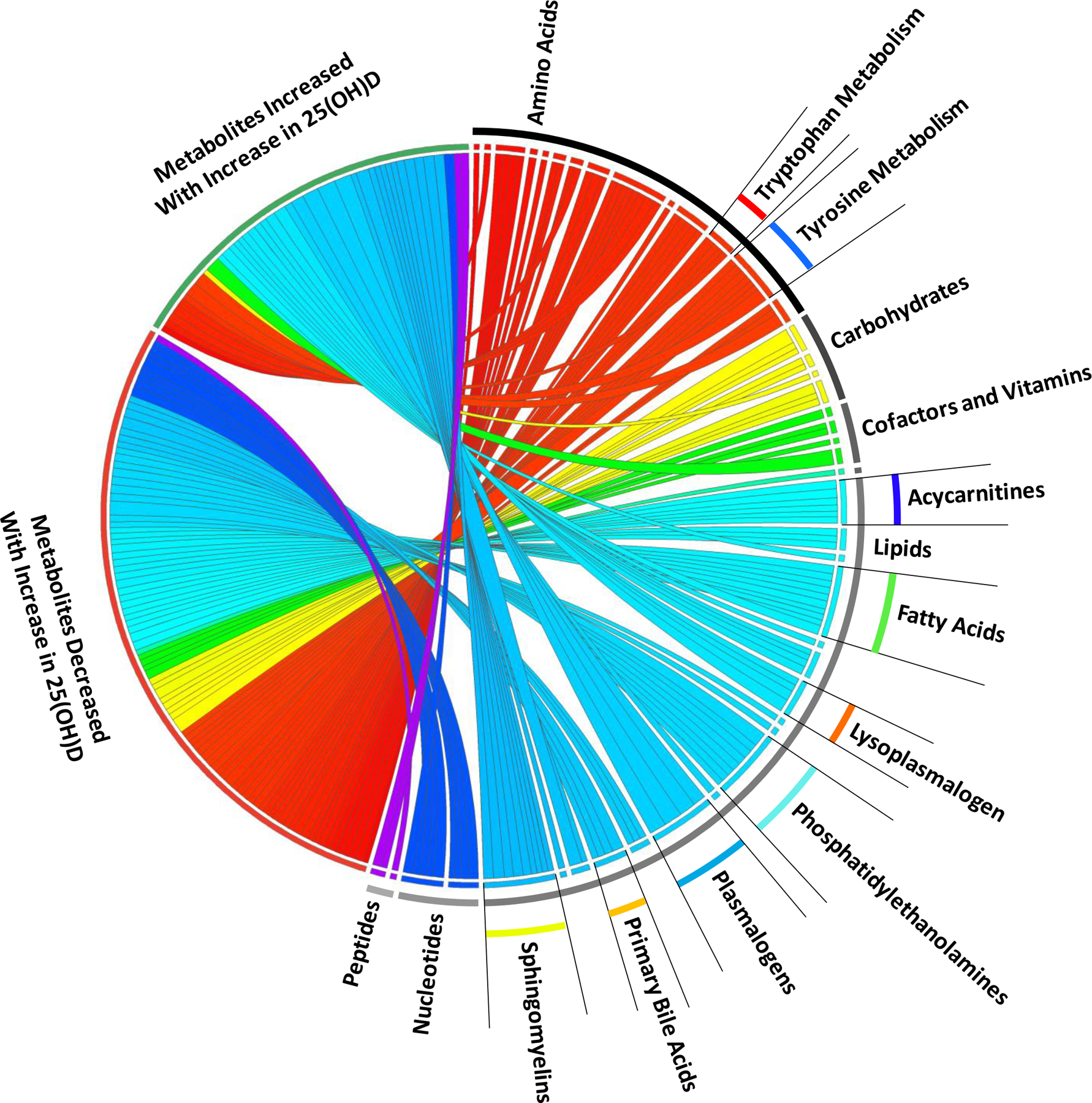
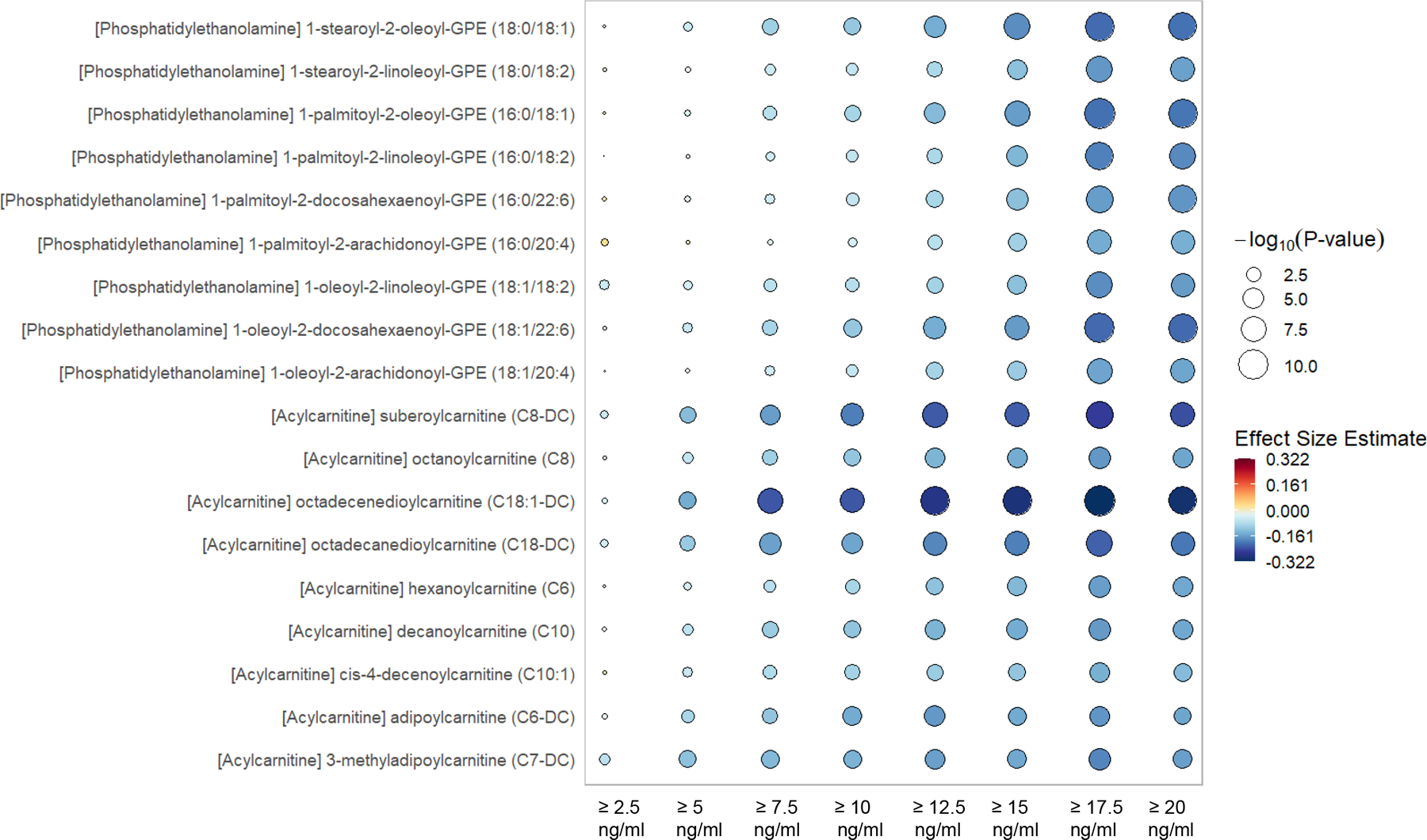
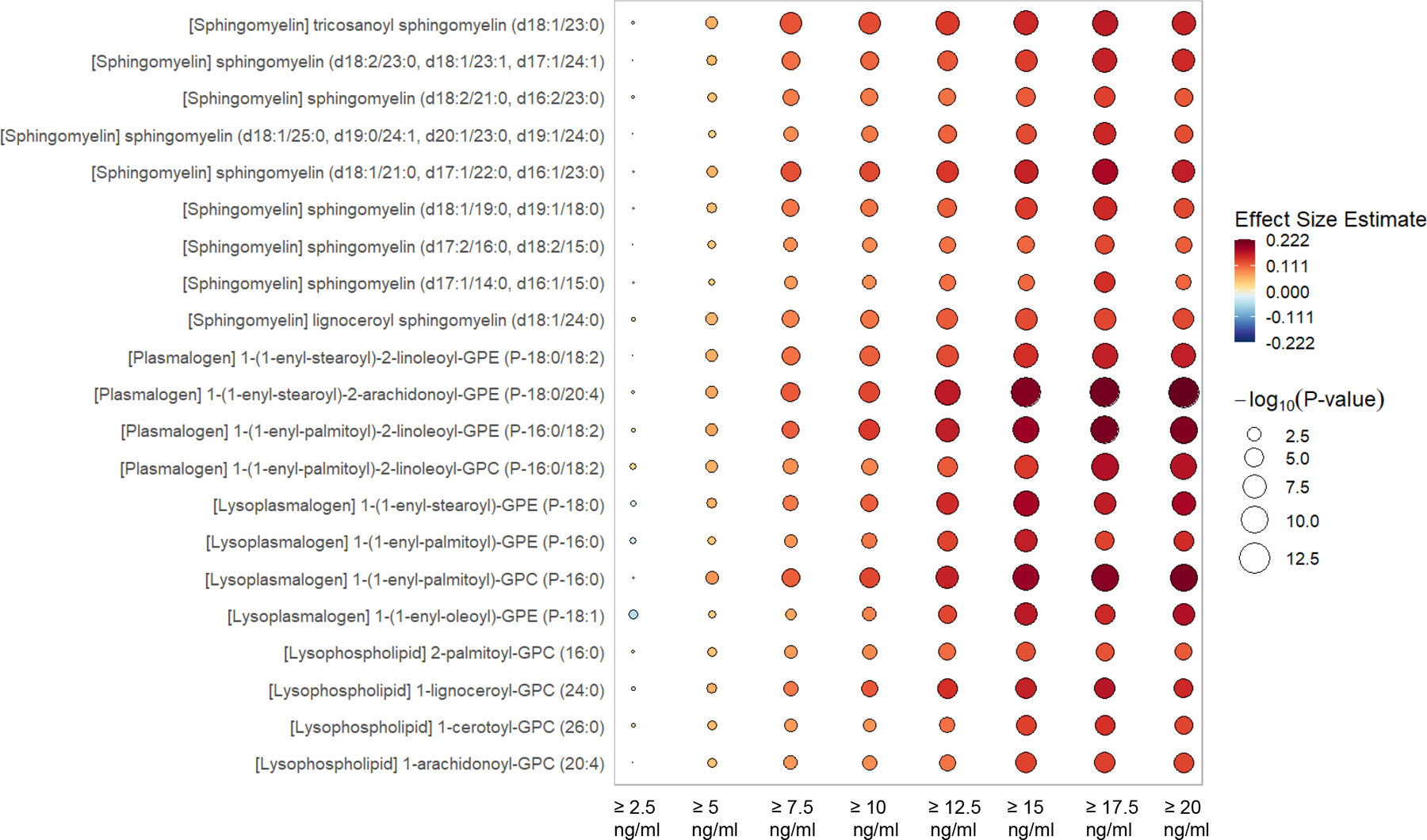
55.2% of subjects randomized to high dose vitamin D demonstrated an absolute increase in 25-hydroxyvitamin D ≥ 15 ng/ml from day 0 to day 3. With an absolute increase in 25-hydroxyvitamin D ≥ 15 ng/ml, multiple members of the sphingomyelin, plasmalogen, lysoplasmalogen and lysophospholipid metabolite classes had significantly positive Bonferroni corrected associations over time. Further, multiple representatives of the acylcarnitine and phosphatidylethanolamine metabolite classes had significantly negative Bonferroni corrected associations over time with an absolute increase in 25-hydroxyvitamin D ≥ 15 ng/ml. Changes in these highlighted metabolite classes were associated with decreased 28-day mortality.
Increases in 25-hydroxyvitamin D following vitamin D intervention are associated with favorable changes in metabolites involved in endothelial protection, enhanced innate immunity and improved mitochondrial function.
目前尚不清楚干预是否可以减轻危重病患者代谢稳态的剧烈改变。我们的目的是确定危重病患者中,大剂量维生素 D 治疗后 25-羟维生素 D 水平升高与代谢组学特征更有利之间的关系。
我们对 VITdAL-ICU 随机双盲、安慰剂对照试验进行了事后代谢组学研究。该试验纳入了一家三级大学医院内科和外科重症监护病房的 25-羟维生素 D 水平≤20ng/ml 的患者,他们接受大剂量口服维生素 D(540000IU)或安慰剂治疗。我们对 428 名受试者在随机分组时(第 0 天)、第 3 天和第 7 天的 1215 份血浆样本中的 578 种代谢物进行了分析。采用混合效应模型,我们研究了接受干预或安慰剂的受试者的代谢谱相对于第 0 天至第 3 天 25-羟维生素 D 水平的绝对增加的变化。
55.2%随机接受大剂量维生素 D 的受试者的 25-羟维生素 D 水平从第 0 天到第 3 天绝对增加≥15ng/ml。在 25-羟维生素 D 水平绝对增加≥15ng/ml的情况下,鞘磷脂、类脂素、溶血磷脂和溶血磷脂代谢物类别的多个成员随着时间的推移呈现出显著的正 Bonferroni 校正相关性。此外,酰基辅酶 A 和磷脂酰乙醇胺代谢物类别的多个代表随着时间的推移与 25-羟维生素 D 水平的绝对增加呈显著负 Bonferroni 校正相关性≥15ng/ml。这些重点代谢物类别的变化与 28 天死亡率降低相关。
维生素 D 干预后 25-羟维生素 D 的增加与内皮保护、增强固有免疫和改善线粒体功能相关的代谢物的有利变化有关。