Malaria and Fever Programme, Foundation for Innovative New Diagnostics, Geneva, Switzerland
Malawi Epidemiology and Intervention Research Unit (MEIRU), Chilumba, Karonga, Malawi.
BMJ Glob Health. 2020 Oct;5(10). doi: 10.1136/bmjgh-2020-003141.
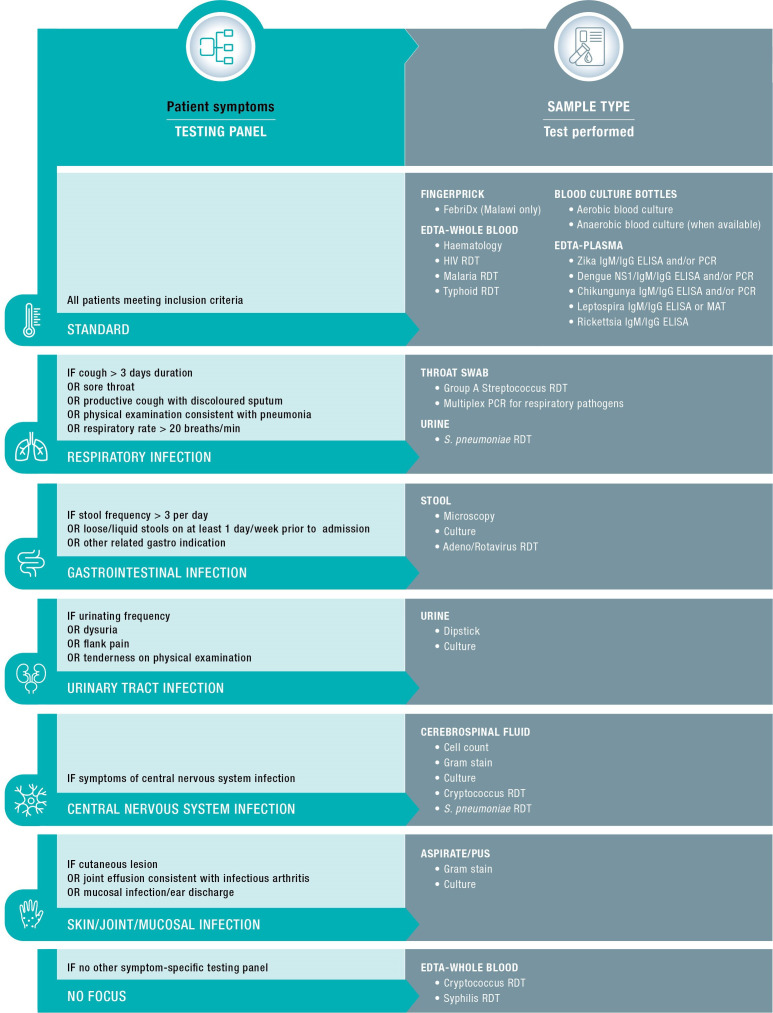
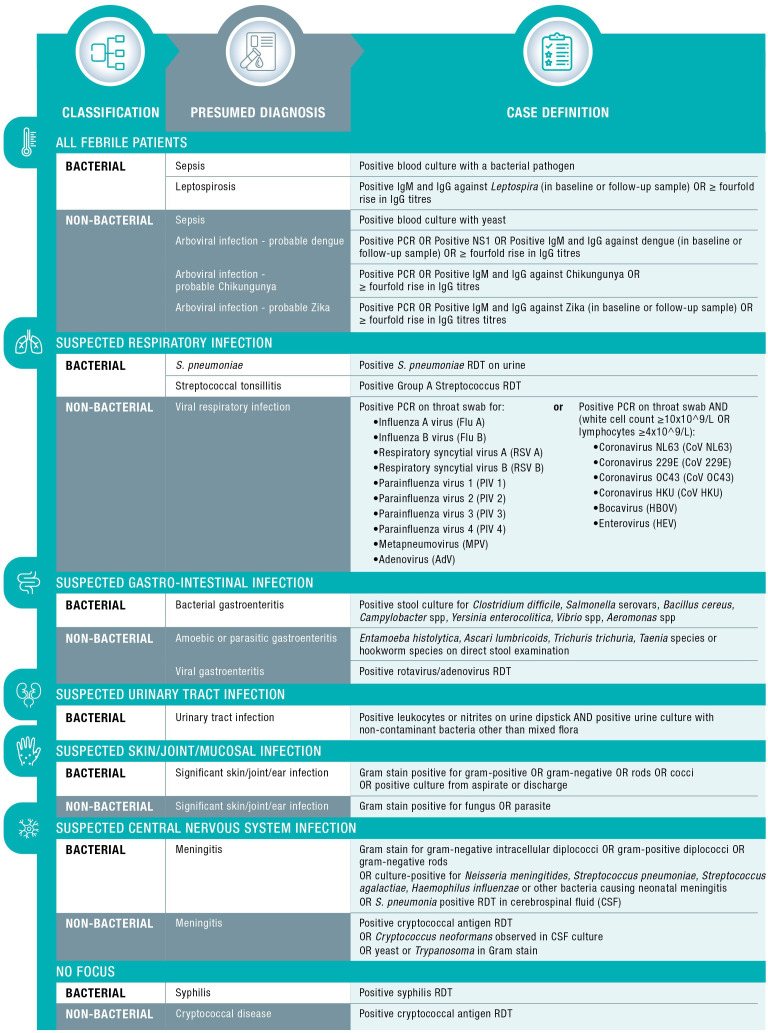
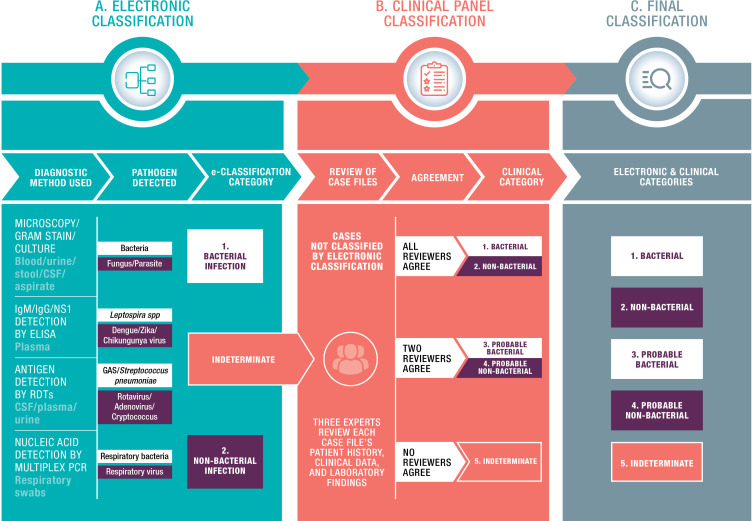
Acute febrile illness (AFI) is one of the most common reasons for seeking medical care in low-income and middle-income countries. Bacterial infections account for a relatively small proportion of AFIs; however, in the absence of a simple diagnostic test to guide clinical decisions, healthcare professionals often presume that a non-malarial febrile illness is bacterial in origin, potentially resulting in inappropriate antibiotic use. An accurate differential diagnostic tool for AFIs is thus essential, to both limit antibiotic use to bacterial infections and address the antimicrobial resistance crisis that is emerging globally, without resorting to multiple or complex pathogen-specific assays. The Biomarker for Fever-Diagnostic (BFF-Dx) study is one of the largest fever biomarker studies ever undertaken. We collected samples and classified disease aetiology in more than 1900 individuals, distributed among enrolment centres in three countries on two continents. Identical protocols were followed at each study site, and the same analyses were conducted in each setting, enabling like-with-like comparisons to be made among the large sample set generated. The BFF-Dx methodology can act as a model for other researchers, facilitating wider utility of the work in the future. The established sample collection is now accessible to researchers and companies and will facilitate the development of future fever-related diagnostic tests. Here, we outline the methodology used to determine the sample populations and to differentiate bacterial versus non-bacterial AFIs. Future publications will set out in more detail the study's demographics, the causes of fever identified and the performance of selected biomarkers.
急性发热性疾病(AFI)是低收入和中等收入国家最常见的就医原因之一。细菌性感染在 AFI 中占比较小;然而,由于缺乏简单的诊断测试来指导临床决策,医疗保健专业人员通常假定非疟疾发热疾病是由细菌引起的,这可能导致抗生素的不恰当使用。因此,对于 AFI 来说,一个准确的鉴别诊断工具是必不可少的,既要将抗生素的使用限制在细菌感染上,又要应对全球正在出现的抗微生物药物耐药性危机,而无需依赖多种或复杂的病原体特异性检测。生物标志物用于发热诊断(BFF-Dx)研究是有史以来最大的发热生物标志物研究之一。我们在三个国家的 1900 多名患者中采集样本并分类疾病病因。在每个研究地点都遵循相同的方案,并在每个环境中进行相同的分析,从而可以在生成的大型样本集中进行相似的比较。BFF-Dx 方法可以作为其他研究人员的模型,促进未来更广泛地应用这项工作。现已向研究人员和公司开放已建立的样本采集,这将有助于未来发热相关诊断测试的开发。在这里,我们概述了确定样本人群并区分细菌性与非细菌性 AFI 的方法。未来的出版物将更详细地介绍研究的人口统计学、确定的发热原因以及选定生物标志物的性能。