Division of Regenerative Medicine, Center for Stem Cell Biology and Regenerative Medicine, The Institute of Medical Science, The University of Tokyo, Tokyo, 108-8639, Japan.
Department of Regenerative Medicine, Yokohama City University Graduate School of Medicine, Yokohama, 236-0004, Japan.
Sci Rep. 2020 Oct 21;10(1):17937. doi: 10.1038/s41598-020-73908-1.
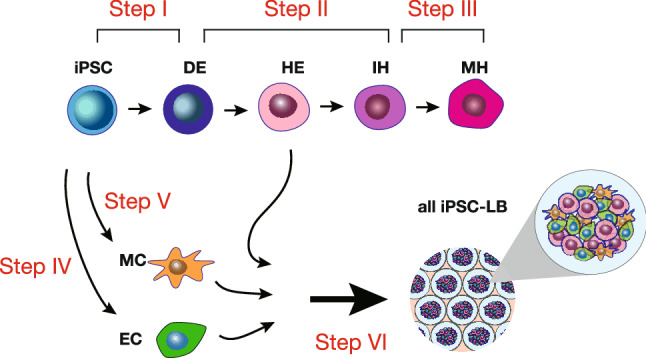
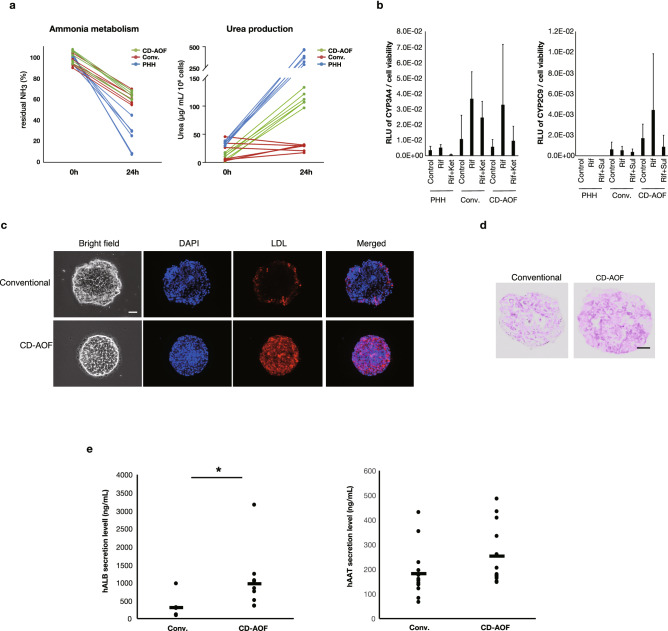
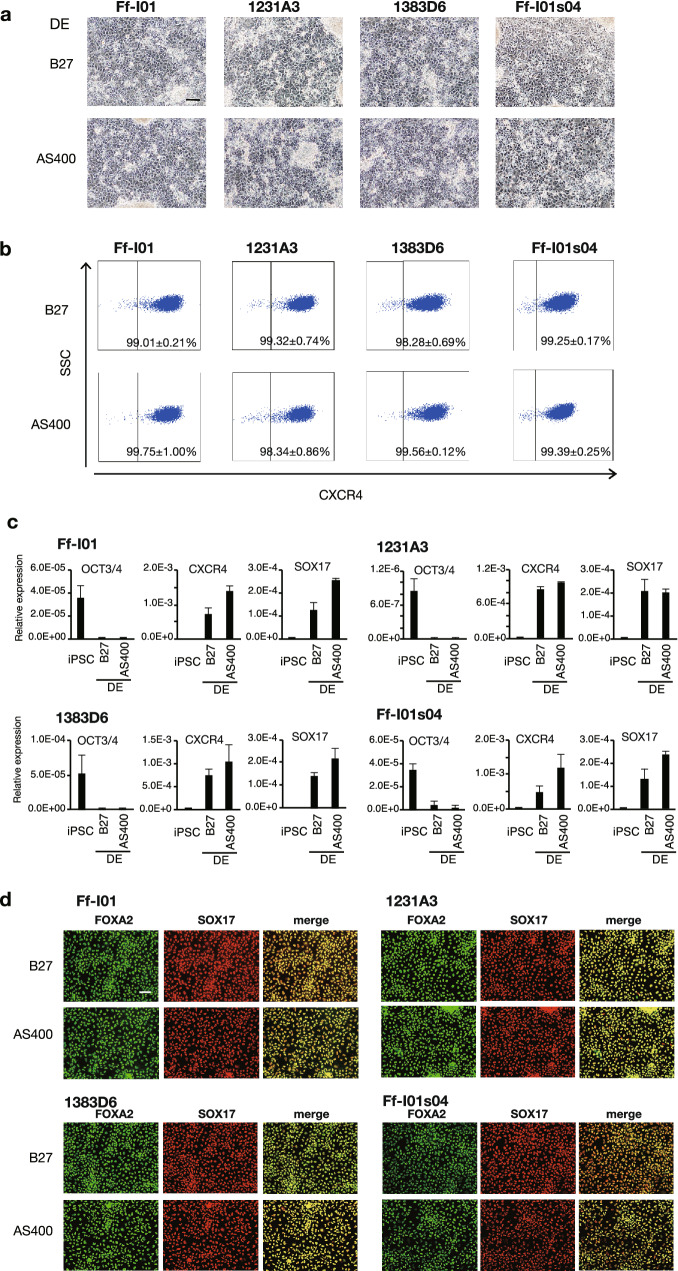
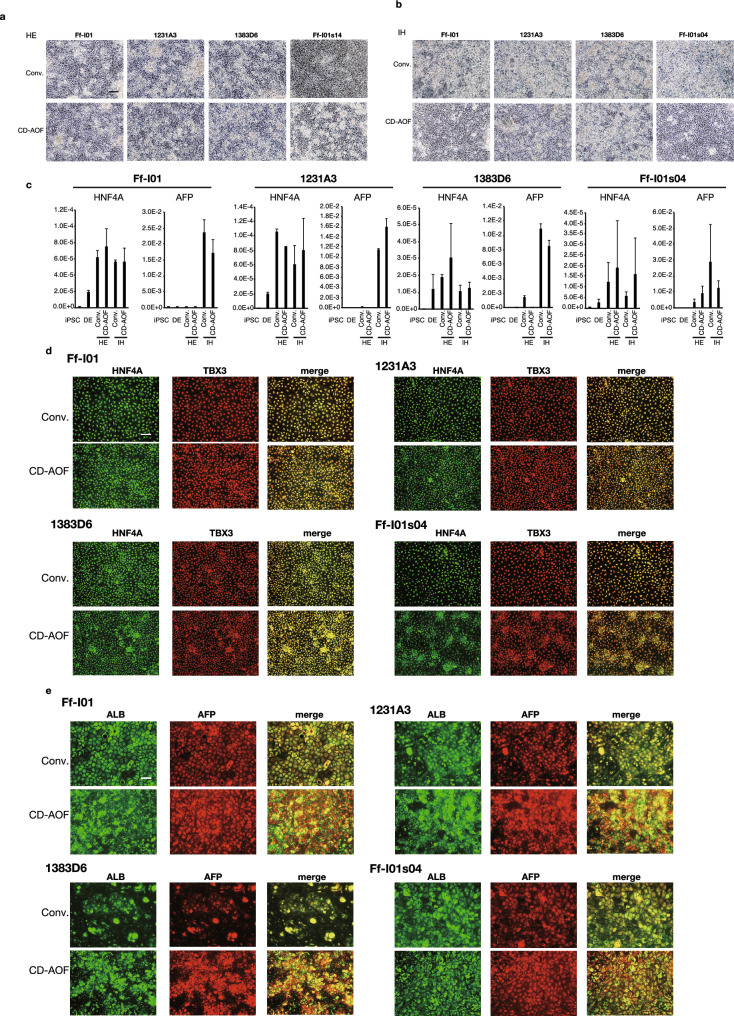
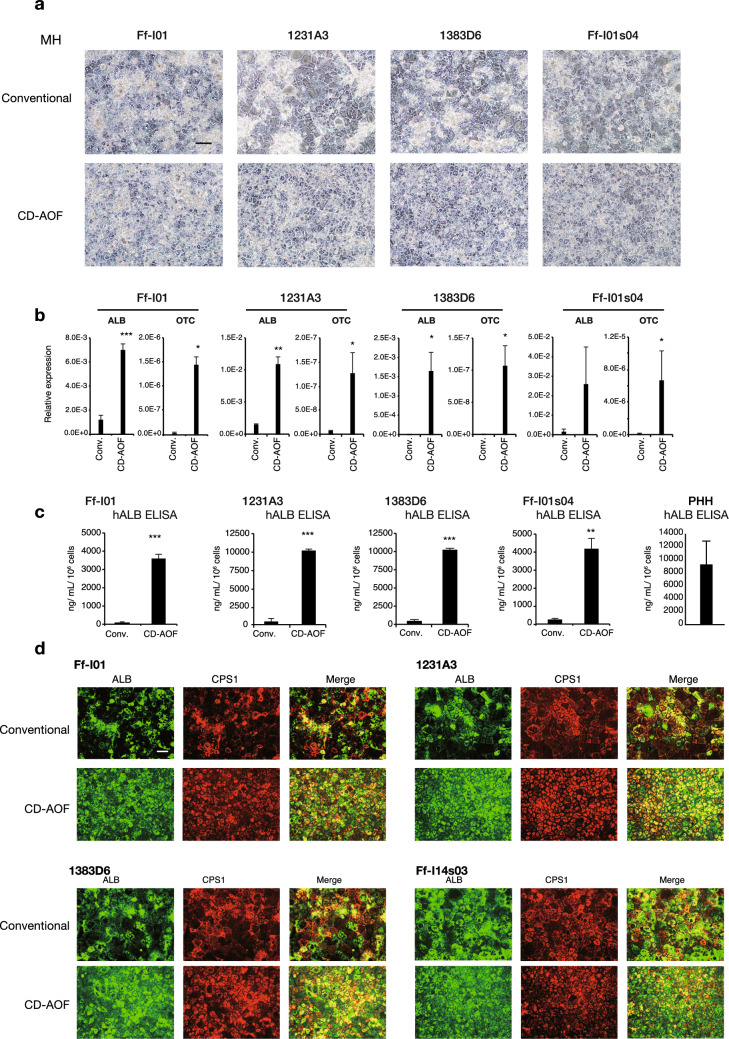
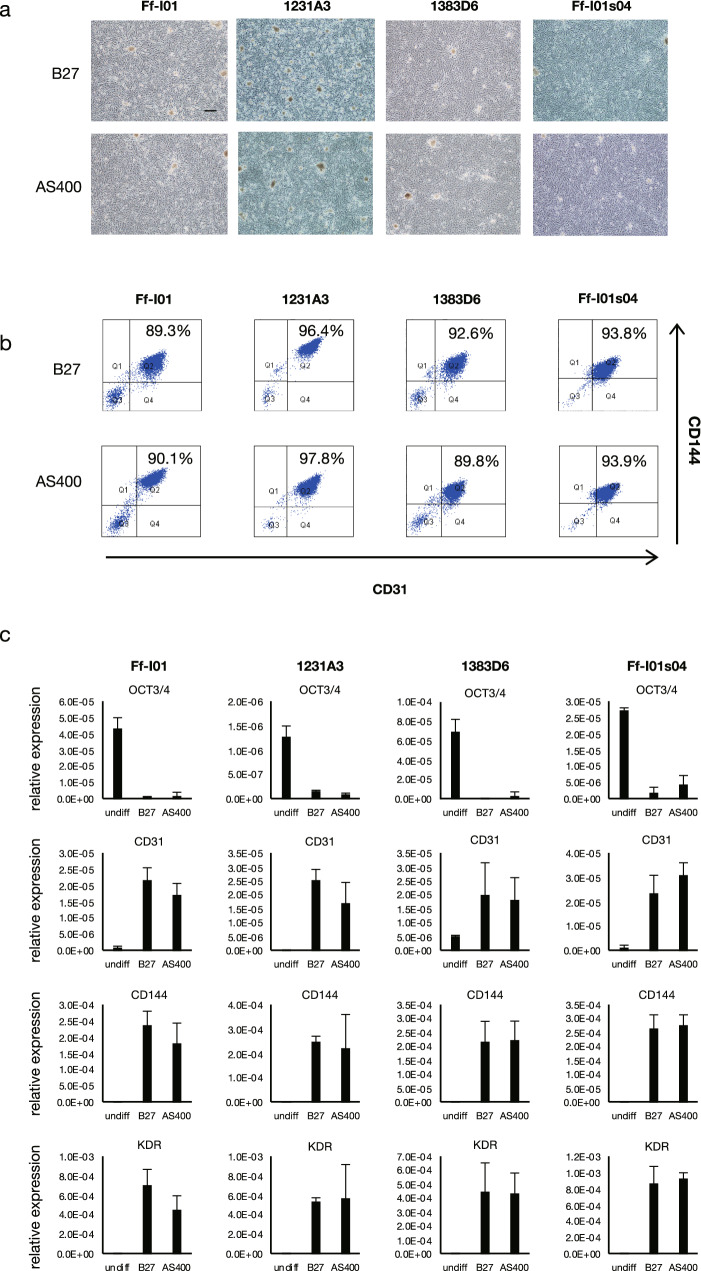
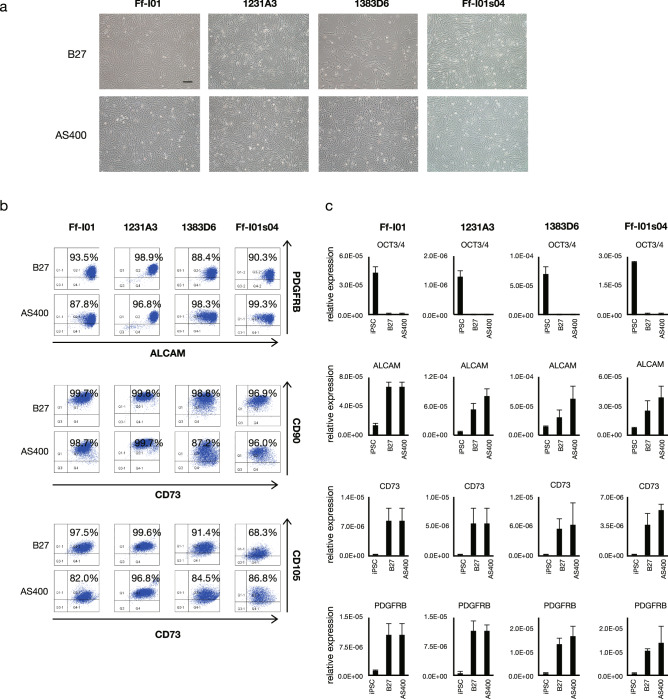
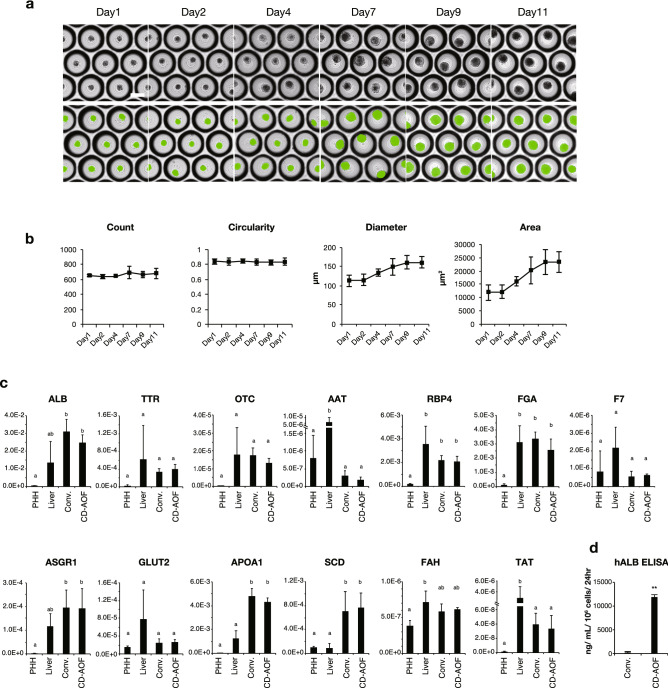
Advances in organoid technology have broadened the number of target diseases and conditions in which human induced pluripotent stem cell (iPSC)-based regenerative medicine can be applied; however, mass production of organoids and the development of chemically defined, animal origin-free (CD-AOF) media and supplements are unresolved issues that hamper the clinical applicability of these approaches. CD-AOF media and supplements ensure the quality and reproducibility of culture systems by lowering lot-to-lot variations and the risk of contamination with viruses or toxins. We previously generated liver organoids from iPSCs, namely iPSC-liver buds (iPSC-LBs), by mimicking the organogenic interactions among hepatocytes, endothelial cells (ECs), and mesenchymal cells (MCs) and recently reported the mass production of iPSC-LBs derived entirely from iPSCs (all iPSC-LBs), which should facilitate their large-scale production for the treatment of liver failure. However, in previous studies we used media originating from animals for differentiation except for the maintenance of undifferentiated iPSCs. Therefore, we developed a CD-AOF medium to generate all iPSC-LBs. We first developed a CD-AOF medium for hepatocytes, ECs, and stage-matched MCs, i.e., septum transversum mesenchyme (STM), in 2D cultures. We next generated all iPSC-LBs by incubating individual cell types in ultra-low attachment micro-dimple plates. The hepatic functions of all iPSC-LBs generated using the CD-AOF medium were equivalent to those of all iPSC-LBs generated using the conventional medium both in vitro and in vivo. Furthermore, we found that this CD-AOF medium could be used in several cell culture settings. Taken together, these results demonstrate the successful development of a CD-AOF medium suitable for all iPSC-LBs. The protocol developed in this study will facilitate the clinical applicability of all iPSC-LBs in the treatment of liver diseases.
类器官技术的进步拓宽了目标疾病和病症的范围,使得基于人诱导多能干细胞(iPSC)的再生医学可以得到应用;然而,类器官的大规模生产以及化学定义、无动物源(CD-AOF)的培养基和补充剂的开发仍然是尚未解决的问题,这些问题阻碍了这些方法的临床应用。CD-AOF 培养基和补充剂通过降低批次间的差异以及病毒或毒素污染的风险,确保了培养系统的质量和可重复性。我们之前通过模拟肝细胞、内皮细胞(EC)和间充质细胞(MC)之间的器官发生相互作用,从 iPSCs 中生成了肝类器官,即 iPSC-肝芽(iPSC-LB),并最近报道了完全由 iPSCs 衍生的 iPSC-LB 的大规模生产(所有 iPSC-LB),这应该有助于它们的大规模生产,以治疗肝衰竭。然而,在之前的研究中,我们除了维持未分化的 iPSC 之外,都使用了动物来源的培养基来进行分化。因此,我们开发了一种 CD-AOF 培养基来生成所有 iPSC-LB。我们首先在 2D 培养中开发了一种用于肝细胞、EC 和阶段匹配的 MC(即横膈膜间充质)的 CD-AOF 培养基。然后,我们通过在超低附着微凹板中孵育单个细胞类型来生成所有 iPSC-LB。使用 CD-AOF 培养基生成的所有 iPSC-LB 的肝功能在体外和体内与使用传统培养基生成的所有 iPSC-LB 相当。此外,我们发现这种 CD-AOF 培养基可以在几种细胞培养环境中使用。综上所述,这些结果证明了适合所有 iPSC-LB 的 CD-AOF 培养基的成功开发。本研究中开发的方案将促进所有 iPSC-LB 在治疗肝脏疾病中的临床应用。