Center for Stem Cell Biology and Department of Neurosurgery, Memorial Sloan-Kettering Cancer Center, 1275 York Avenue, New York 10065, USA.
1] Center for Stem Cell Biology and Department of Neurosurgery, Memorial Sloan-Kettering Cancer Center, 1275 York Avenue, New York 10065, USA. [2] Developmental Biology Program, Memorial Sloan-Kettering Cancer Center, 1275 York Avenue, New York 10065, USA.
Nat Rev Genet. 2014 Feb;15(2):82-92. doi: 10.1038/nrg3563.
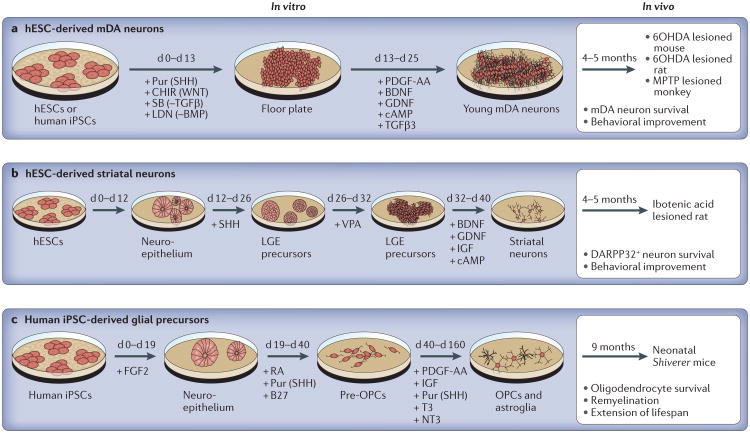
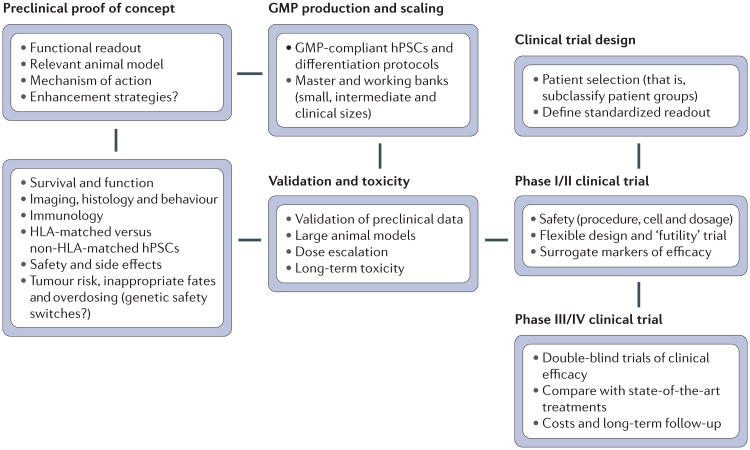
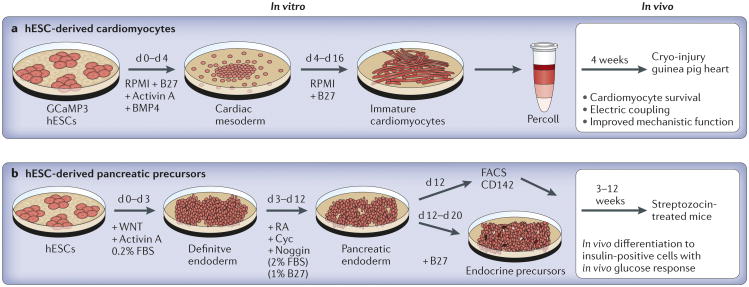
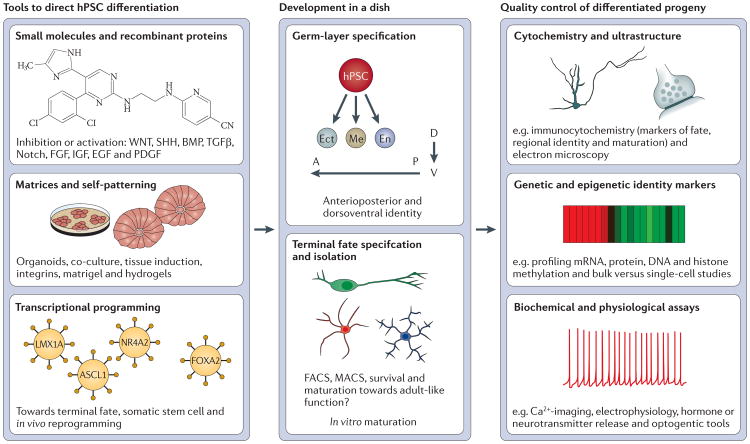
After years of incremental progress, several recent studies have succeeded in deriving disease-relevant cell types from human pluripotent stem cell (hPSC) sources. The prospect of an unlimited cell source, combined with promising preclinical data, indicates that hPSC technology may be on the verge of clinical translation. In this Review, we discuss recent progress in directed differentiation, some of the new technologies that have facilitated the success of hPSC therapies and the remaining hurdles on the road towards developing hPSC-based cell therapies.
经过多年的渐进式进展,最近的几项研究成功地从人类多能干细胞 (hPSC) 来源中获得了与疾病相关的细胞类型。无限的细胞来源的前景,加上有希望的临床前数据,表明 hPSC 技术可能即将进入临床转化。在这篇综述中,我们讨论了定向分化的最新进展、一些促进 hPSC 疗法成功的新技术以及在开发基于 hPSC 的细胞疗法道路上仍然存在的障碍。