Research Group Plant Ecology and Phytochemistry, Cluster Plant Sciences and Natural Products, Institute of Biology, Leiden University, Leiden, The Netherlands.
College of Forestry, Sichuan Agricultural University, Chengdu, China.
J Chem Ecol. 2020 Dec;46(11-12):1105-1116. doi: 10.1007/s10886-020-01222-1. Epub 2020 Oct 22.
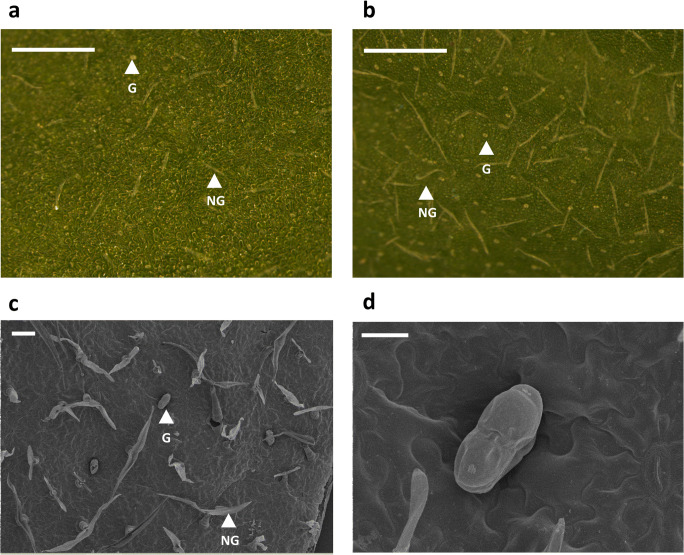
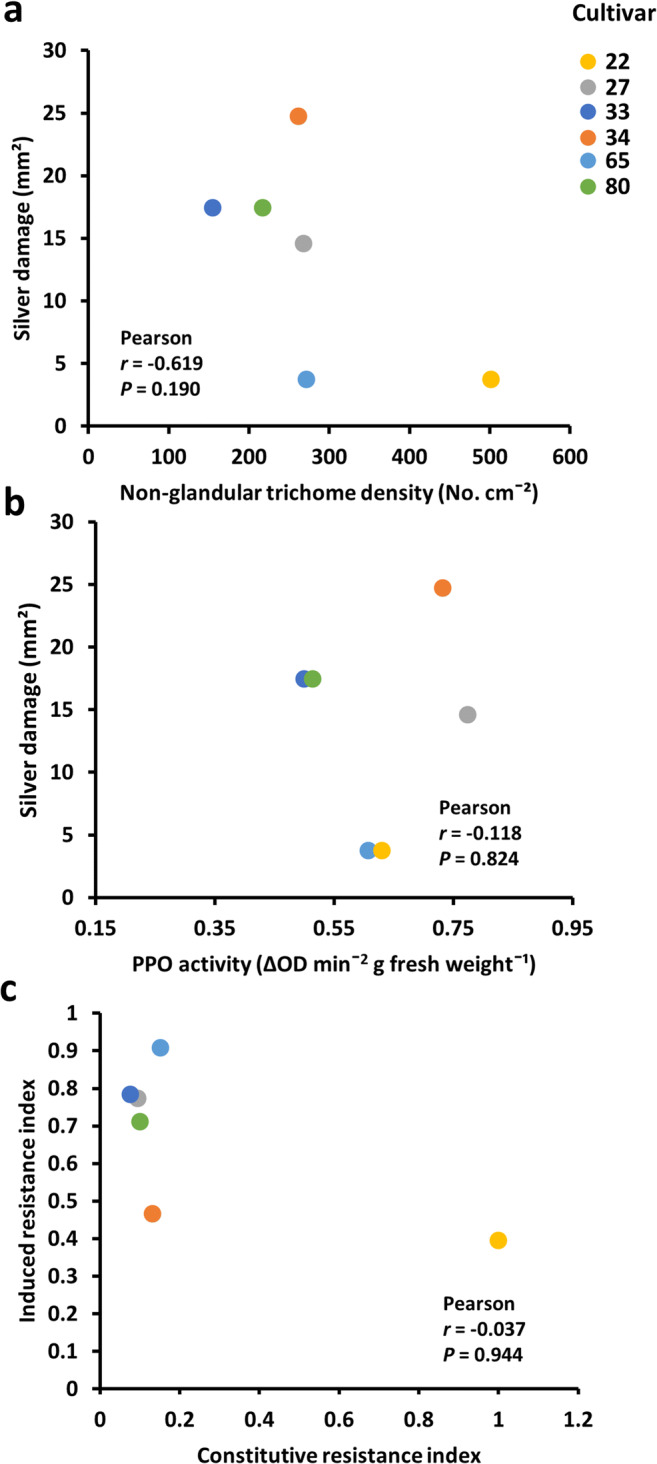
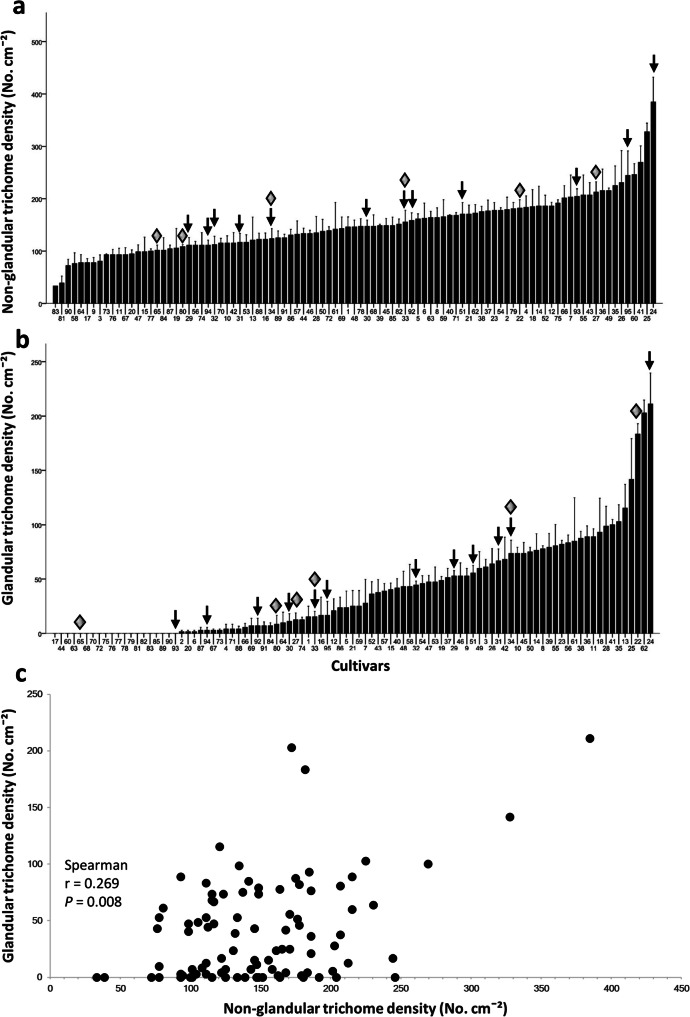
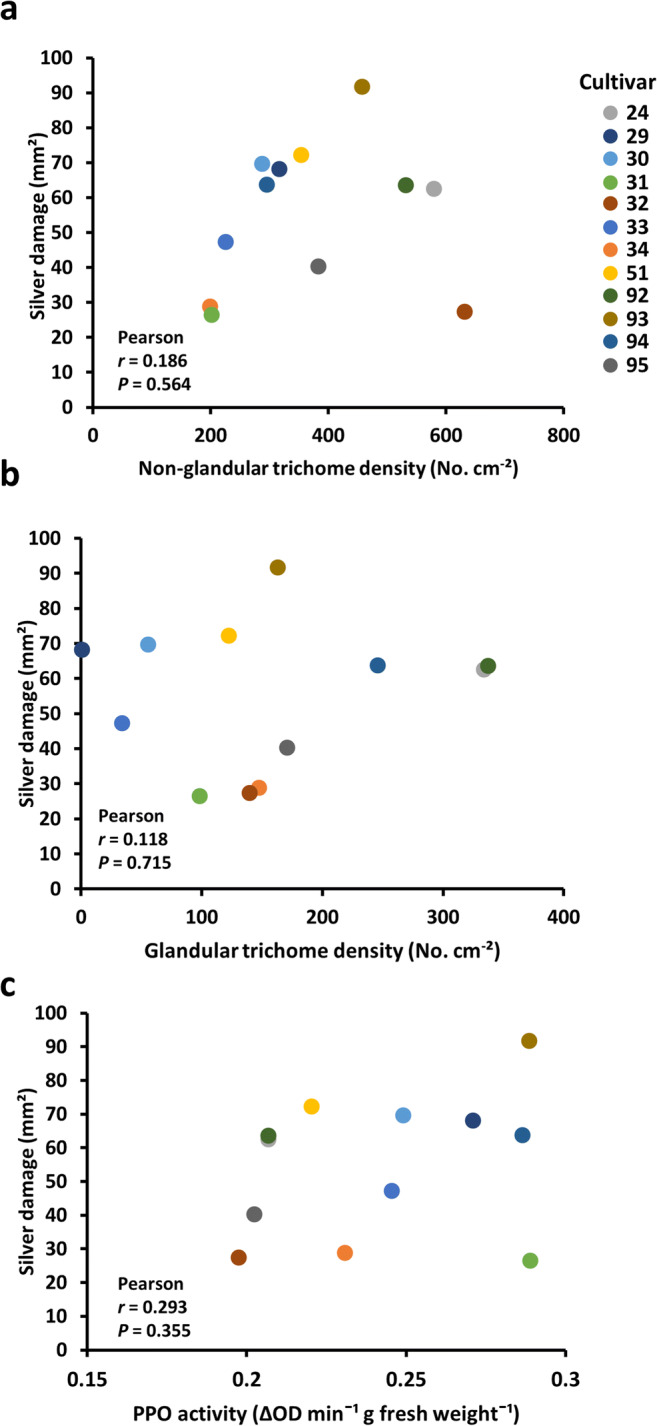
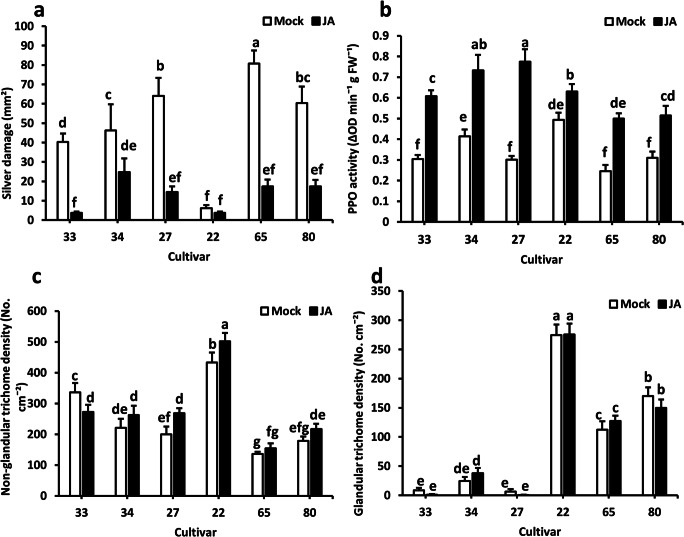
Western flower thrips (WFT), Frankliniella occidentalis, is a serious insect pest of Chrysanthemum [Chrysanthemum × morifolium Ramat. (Asteraceae)]. Here we have investigated whether genotypic variation in constitutive and inducible resistance to WFT correlates with phenotypic differences in leaf trichome density and the activity of the defense-related enzyme polyphenol oxidase (PPO) in chrysanthemum. Non-glandular and glandular leaf trichome densities significantly varied among ninety-five chrysanthemum cultivars. Additional analyses in a subset of these cultivars, differing in leaf trichome density, revealed significant variation in PPO activities and resistance to WFT as well. Constitutive levels of trichome densities and PPO activity, however, did not correlate with chrysanthemum resistance to WFT. Further tests showed that exogenous application of the phytohormone jasmonic acid (JA) increased non-glandular trichome densities, PPO activity and chrysanthemum resistance to WFT, and that these effects were cultivar dependent. In addition, no tradeoff between constitutive and inducible resistance to WFT was observed. JA-mediated induction of WFT resistance, however, did not correlate with changes in leaf trichome densities nor PPO activity levels. Taken together, our results suggest that chrysanthemum can display both high levels of constitutive and inducible resistance to WFT, and that leaf trichome density and PPO activity may not play a relevant role in chrysanthemum defenses against WFT.
西方花蓟马(WFT),Frankliniella occidentalis,是菊花(Chrysanthemum × morifolium Ramat.)的严重虫害。在这里,我们研究了 WFT 组成型和诱导抗性的基因型变异是否与叶片毛状体密度和防御相关酶多酚氧化酶(PPO)的活性之间的表型差异相关。95 个菊花品种的非腺毛和腺毛叶片密度存在显著差异。在这些品种的亚组中进行的进一步分析表明,叶片毛状体密度不同的品种,PPO 活性和对 WFT 的抗性也存在显著差异。然而,组成型毛状体密度和 PPO 活性水平与菊花对 WFT 的抗性没有相关性。进一步的测试表明,植物激素茉莉酸(JA)的外源应用增加了非腺毛密度、PPO 活性和菊花对 WFT 的抗性,并且这些效应依赖于品种。此外,没有观察到对 WFT 的组成型和诱导抗性之间的权衡。然而,JA 介导的 WFT 抗性诱导与叶片毛状体密度或 PPO 活性水平的变化没有相关性。总之,我们的研究结果表明,菊花可以表现出高水平的组成型和诱导性对 WFT 的抗性,并且叶片毛状体密度和 PPO 活性可能在菊花对 WFT 的防御中不起重要作用。