Zong Wubei, Ren Ding, Huang Minghui, Sun Kangli, Feng Jinglei, Zhao Jing, Xiao Dongdong, Xie Wenhao, Liu Shiqi, Zhang Han, Qiu Rong, Tang Wenjing, Yang Ruqi, Chen Hongyi, Xie Xianrong, Chen Letian, Liu Yao-Guang, Guo Jingxin
State Key Laboratory for Conservation and Utilization of Subtropical Agro-bioresources, College of Life Sciences, South China Agricultural University, SCAU, Guangzhou, 510642, China.
Guangdong Laboratory for Lingnan Modern Agriculture, Guangzhou, 510642, China.
New Phytol. 2021 Feb;229(3):1635-1649. doi: 10.1111/nph.16946. Epub 2020 Oct 22.
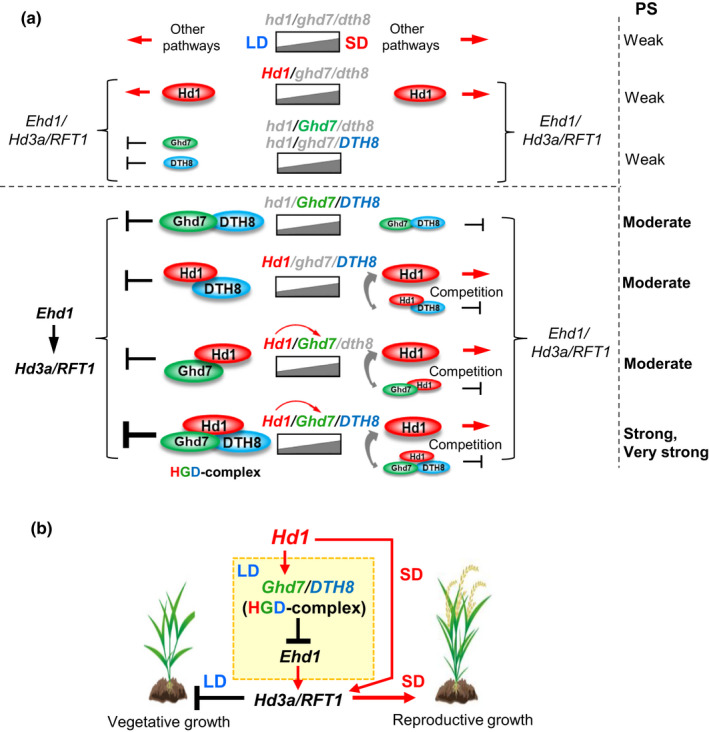
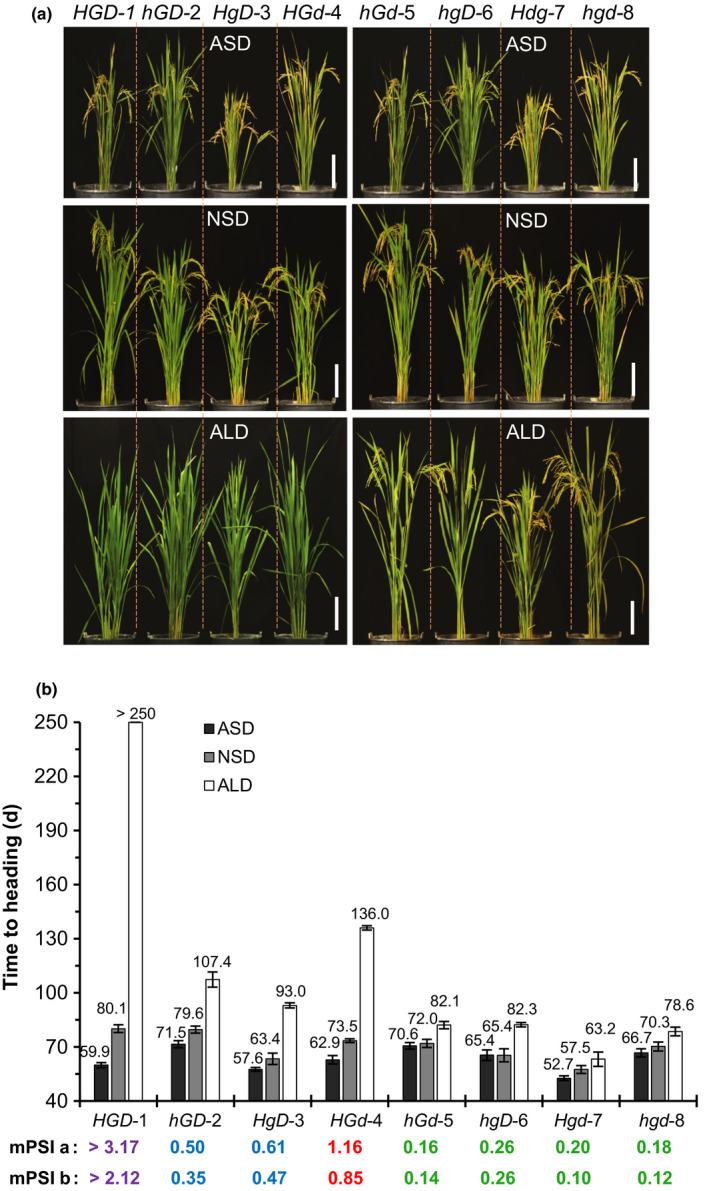
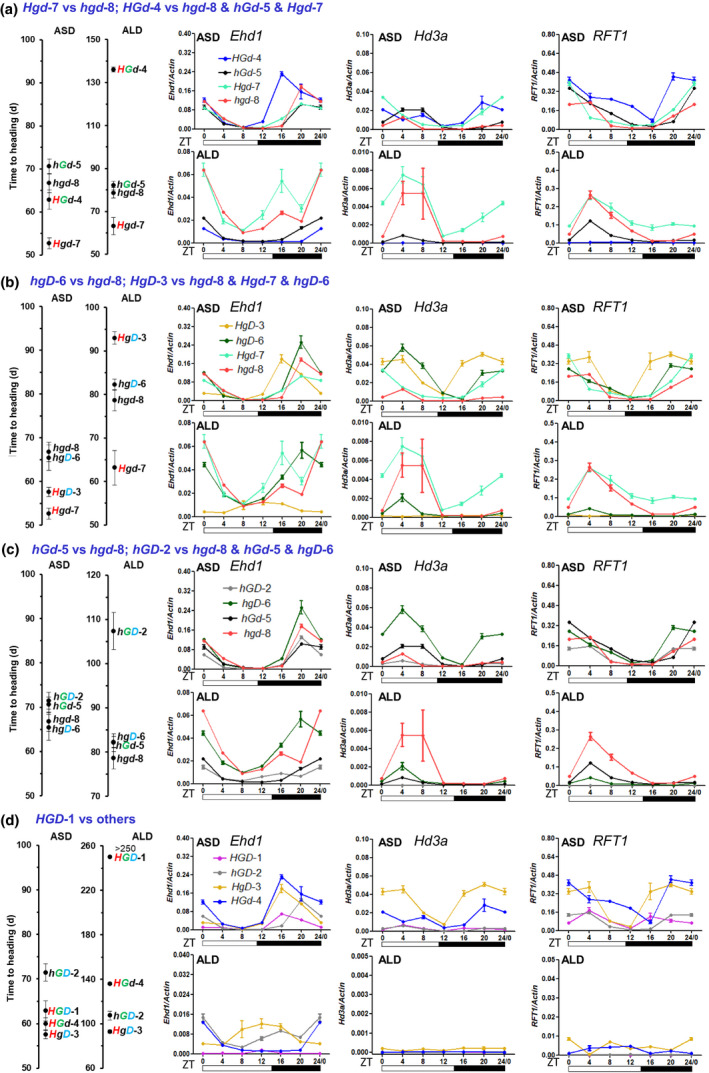
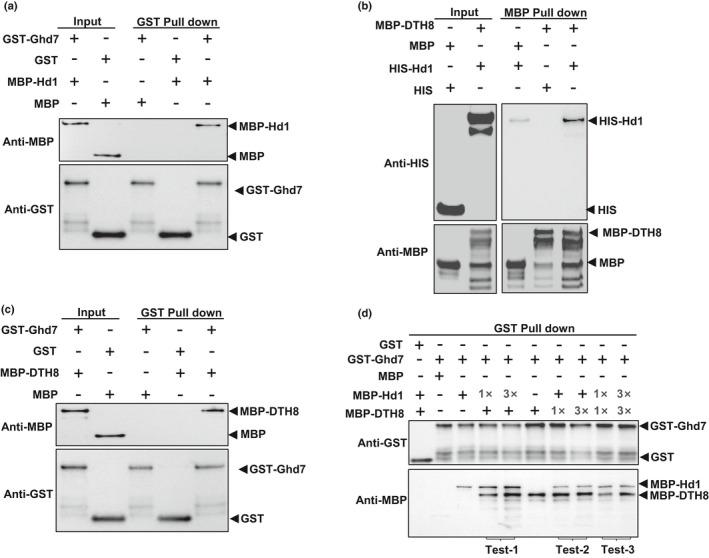
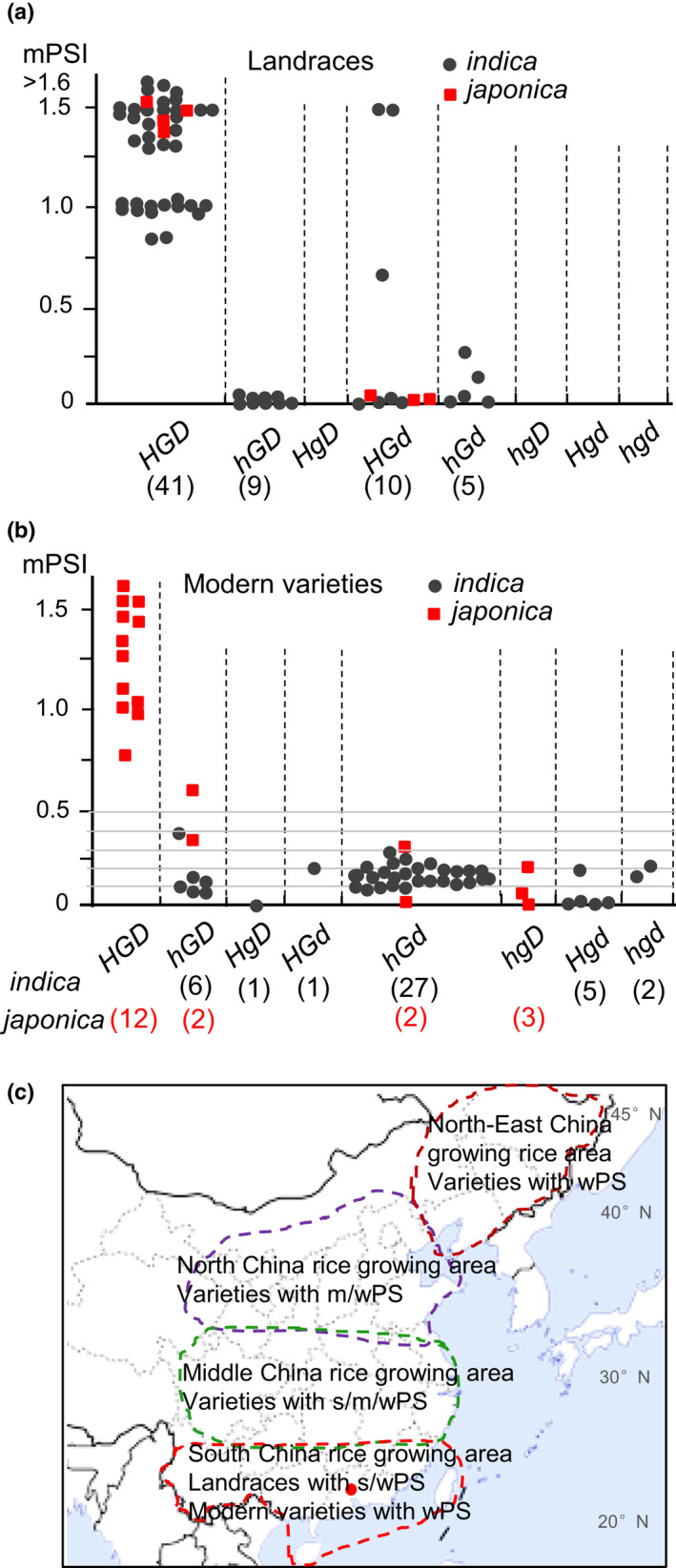
Rice (Oryza sativa) is a short-day (SD) plant originally having strong photoperiod sensitivity (PS), with SDs promoting and long days (LDs) suppressing flowering. Although the evolution of PS in rice has been extensively studied, there are few studies that combine the genetic effects and underlying mechanism of different PS gene combinations with variations in PS. We created a set of isogenic lines among the core PS-flowering genes Hd1, Ghd7 and DTH8 using CRISPR mutagenesis, to systematically dissect their genetic relationships under different day-lengths. We investigated their monogenic, digenic, and trigenic effects on target gene regulation and PS variation. We found that Hd1 and Ghd7 have the primary functions for promoting and repressing flowering, respectively, regardless of day-length. However, under LD conditions, Hd1 promotes Ghd7 expression and is recruited by Ghd7 and/or DTH8 to form repressive complexes that collaboratively suppress the Ehd1-Hd3a/RFT1 pathway to block heading, but under SD conditions Hd1 competes with the complexes to promote Hd3a/RFT1 expression, playing a tradeoff relationship with PS flowering. Natural allelic variations of Hd1, Ghd7 and DTH8 in rice populations have resulted in various PS performances. Our findings reveal that rice PS flowering is controlled by crosstalk of two modules - Hd1-Hd3a/RFT1 in SD conditions and (Hd1/Ghd7/DTH8)-Ehd1-Hd3a/RFT1 in LD conditions - and the divergences of these genes provide the basis for rice adaptation to broad regions.
水稻(Oryza sativa)是一种短日照植物,最初具有较强的光周期敏感性(PS),短日照促进开花,长日照抑制开花。尽管对水稻光周期敏感性的进化已进行了广泛研究,但很少有研究将不同光周期敏感性基因组合的遗传效应及潜在机制与光周期敏感性变异相结合。我们利用CRISPR诱变技术在核心光周期敏感性开花基因Hd1、Ghd7和DTH8之间创建了一组近等基因系,以系统解析它们在不同日长条件下的遗传关系。我们研究了它们对靶基因调控和光周期敏感性变异的单基因、双基因和三基因效应。我们发现,无论日长如何,Hd1和Ghd7分别具有促进和抑制开花的主要功能。然而,在长日照条件下,Hd1促进Ghd7表达,并被Ghd7和/或DTH8招募形成抑制复合物,协同抑制Ehd1-Hd3a/RFT1途径以阻止抽穗,但在短日照条件下,Hd1与这些复合物竞争以促进Hd3a/RFT1表达,与光周期敏感性开花存在权衡关系。水稻群体中Hd1、Ghd7和DTH8的自然等位变异导致了各种光周期敏感性表现。我们的研究结果表明,水稻光周期敏感性开花受两个模块的相互作用控制——短日照条件下的Hd1-Hd3a/RFT1和长日照条件下的(Hd1/Ghd7/DTH8)-Ehd1-Hd3a/RFT1,这些基因的差异为水稻适应广泛区域提供了基础。