Wang Zhongkun, Zheng Ge, Li Guangjian, Wang Mengkun, Ma Zhanchuan, Li Huimin, Wang Xiang-Yang, Yi Huanfa
Central Laboratory, The First Hospital of Jilin University, Changchun, China.
Key Laboratory of Organ Regeneration and Transplantation, Ministry of Education, Changchun, China.
J Cell Mol Med. 2020 Dec;24(23):13703-13714. doi: 10.1111/jcmm.15928. Epub 2020 Oct 23.
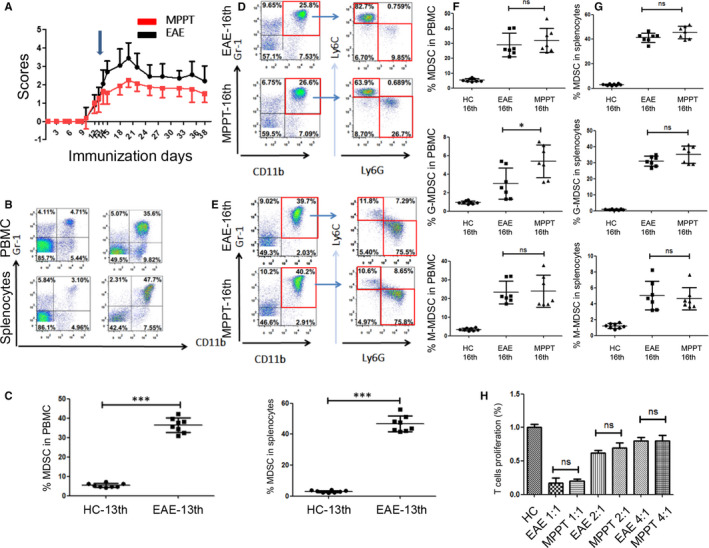
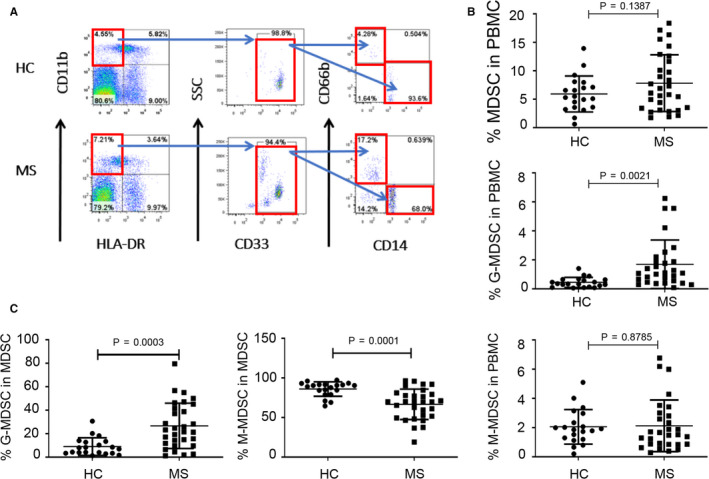
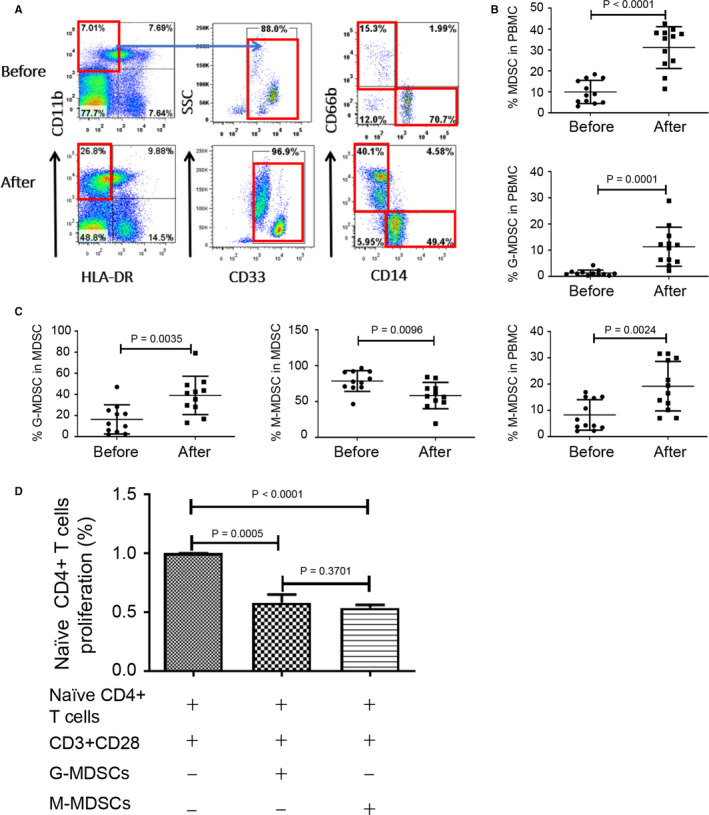
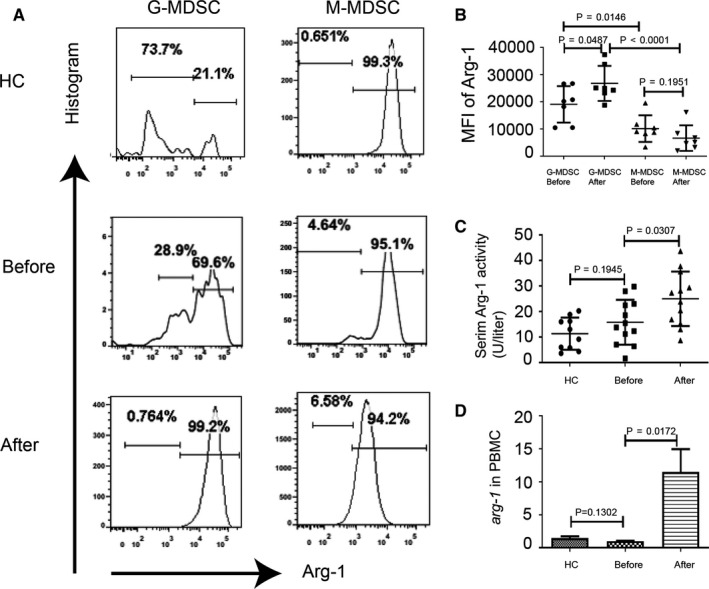
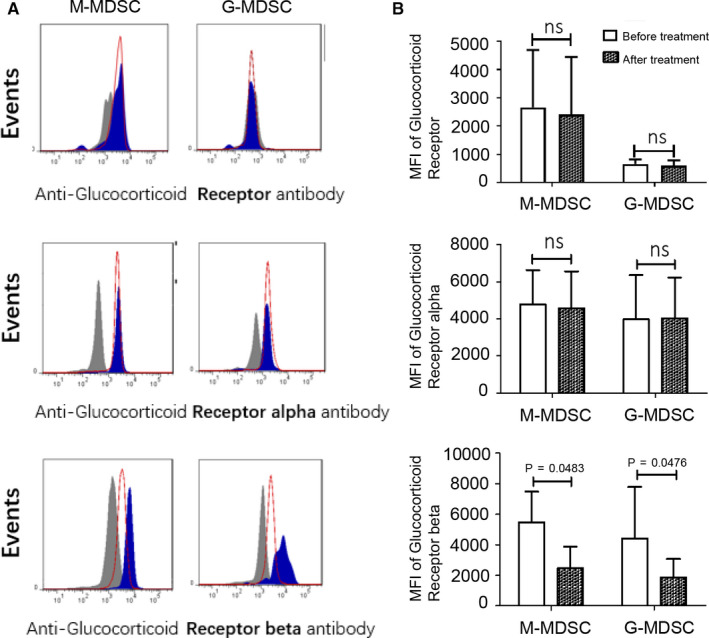
Methylprednisolone is an effective drug in the treatment of autoimmune disease, such as multiple sclerosis (MS), due to long-acting anti-inflammatory, antiallergic and immunosuppressant. Previous studies have noted the importance of myeloid-derived suppressor cells (MDSC) in MS progression. However, it is still not known whether methylprednisolone could influence the ratio and function of MDSC during MS treatment. In the current study, we found an increased ratio of MDSC at the onset of EAE in mice model; but methylprednisolone pulse therapy (MPPT) did not alter the percentage and suppressive function of MDSC during disease attenuation. However, the percentage of G-MDSC in PBMC significantly increased in patients with MS. Surprisingly, relapsing MS patients showed a significant increase in both M-MDSC and G-MDSC after MPPT. The disease remission positively correlated expansion of MDSC and expression of arginase-1. Additionally, MPPT reduced the expression of inhibitory glucocorticoid (GCs) receptor β subunit on MDSC while elevating serum levels of immune regulatory S100A8/A9 heterodimer. Thus, MDSC dynamics and function in mouse EAE differ from those in human MS during MPPT. Our study suggested that GCs treatment may help relieve the acute phase of MS by expanding MDSC through up-regulating of GR signalling and S100A8/A9 heterodimers.
甲基强的松龙是一种治疗自身免疫性疾病(如多发性硬化症,MS)的有效药物,因其具有长效抗炎、抗过敏和免疫抑制作用。以往研究已注意到髓源性抑制细胞(MDSC)在MS进展中的重要性。然而,甲基强的松龙在MS治疗过程中是否会影响MDSC的比例和功能仍不清楚。在本研究中,我们发现小鼠模型中实验性自身免疫性脑脊髓炎(EAE)发病时MDSC比例增加;但甲基强的松龙脉冲疗法(MPPT)在疾病缓解过程中并未改变MDSC的百分比和抑制功能。然而,MS患者外周血单核细胞(PBMC)中粒细胞-巨噬细胞集落刺激因子(G-MDSC)的百分比显著增加。令人惊讶的是,复发型MS患者在接受MPPT后,M-MDSC和G-MDSC均显著增加。疾病缓解与MDSC的扩增及精氨酸酶-1的表达呈正相关。此外,MPPT降低了MDSC上抑制性糖皮质激素(GCs)受体β亚基的表达,同时提高了免疫调节性S100A8/A9异二聚体的血清水平。因此,在MPPT过程中,小鼠EAE中MDSC的动态变化和功能与人类MS中的不同。我们的研究表明,糖皮质激素治疗可能通过上调糖皮质激素受体(GR)信号和S100A8/A9异二聚体来扩增MDSC,从而有助于缓解MS的急性期。