Hellström Jarkko, Granato Daniel, Mattila Pirjo H
Production Technologies, Natural Resources Institute Finland (Luke), Myllytie 1, FI-31600 Jokioinen, Finland.
Production Technologies, Natural Resources Institute Finland (Luke), Tietotie 2, FI-02150 Espoo, Finland.
Foods. 2020 Oct 21;9(10):1515. doi: 10.3390/foods9101515.
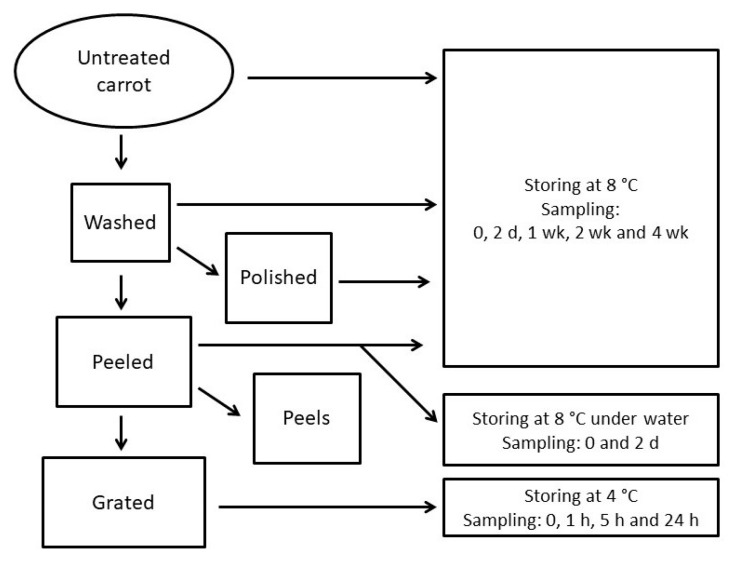
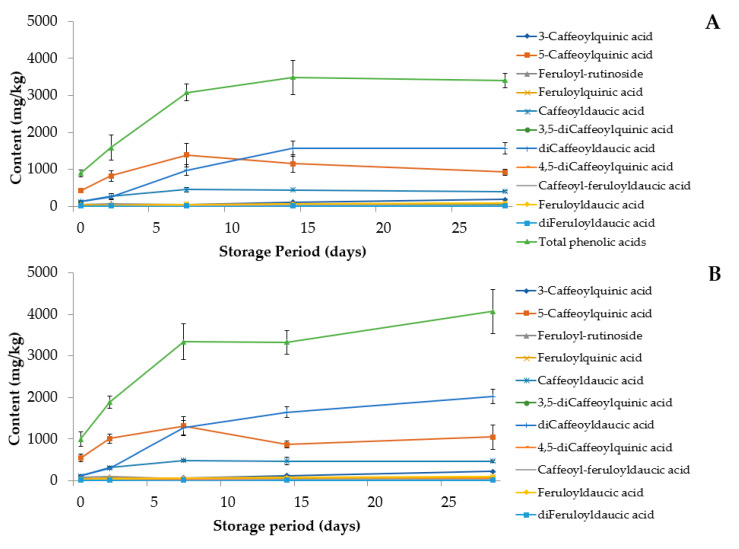
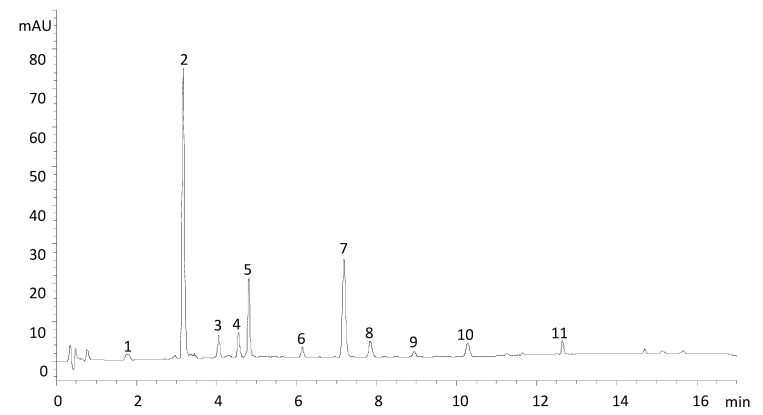
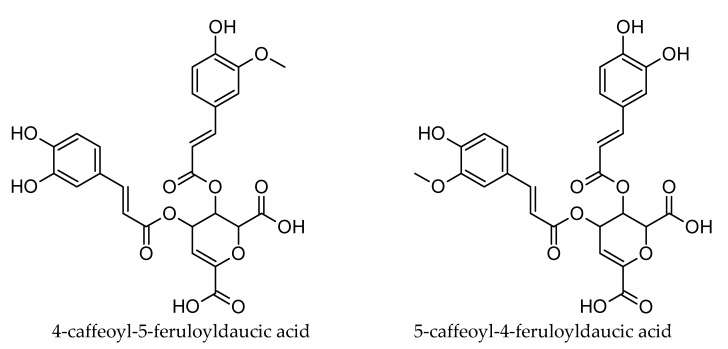
Carrots contain a significant content of phenolic compounds, mainly phenolic acids. Technological processing of carrots inflicts wounding stress and induces accumulation of these compounds, especially caffeic acid derivatives, in the periderm tissue. In this study, the effect of minimal processing (polishing, washing, peeling, and grating) on the retention of soluble phenolic acids in carrots was monitored during cold storage. Storage for up to 4 weeks and 24 h was used for whole and grated carrot samples, respectively. Total phenolic acid levels found in differently processed carrots varied greatly at the beginning of the storage period and on dry weight basis they ranged from 228 ± 67.9 mg/kg (grated carrot) to 996 ± 177 mg/kg (machine washed). In each case, processing followed by storage induced phenolic acid accumulation in the carrots. At the end of the experiment (4 weeks at +8 °C), untreated and machine-washed carrots contained ca. 4-fold more phenolic acids than at day 0. Similarly, polished carrots contained 9-fold and peeled carrots 31-fold more phenolic acids than at day 0. The phenolic acid content in grated carrot doubled after 24 h storage at +4 °C. Individual phenolic acids were characterized by high resolution mass spectrometry. MS data strongly suggest the presence of daucic acid conjugates of phenolic acids in carrot. Storage time did not have statistically similar effect on all compounds and generally in a way that dicaffeoyldaucic acid had the highest increase. This research provides important information for primary production, packaging, catering, the fresh-cut industry and consumers regarding the selection of healthier minimally processed carrots.
胡萝卜含有大量酚类化合物,主要是酚酸。胡萝卜的加工过程会造成创伤应激,并诱导这些化合物,尤其是咖啡酸衍生物,在周皮组织中积累。在本研究中,监测了低温储存期间最小加工(抛光、清洗、去皮和磨碎)对胡萝卜中可溶性酚酸保留量的影响。完整胡萝卜样品和磨碎胡萝卜样品的储存时间分别为长达4周和24小时。不同加工方式的胡萝卜中总酚酸水平在储存期开始时差异很大,以干重计,范围从228±67.9毫克/千克(磨碎胡萝卜)到996±177毫克/千克(机器清洗)。在每种情况下,加工后储存都会诱导胡萝卜中酚酸的积累。在实验结束时(+8℃下储存4周),未处理和机器清洗的胡萝卜中酚酸含量约为第0天的4倍。同样,抛光胡萝卜中酚酸含量是第0天的9倍,去皮胡萝卜是第0天的31倍。磨碎胡萝卜在+4℃下储存24小时后酚酸含量翻倍。通过高分辨率质谱对单个酚酸进行了表征。质谱数据有力地表明胡萝卜中存在酚酸的胡萝卜酸共轭物。储存时间对所有化合物的影响在统计学上并不相似,总体而言,二咖啡酰胡萝卜酸的增加幅度最大。这项研究为初级生产、包装、餐饮、鲜切行业和消费者在选择更健康的最小加工胡萝卜方面提供了重要信息。