Department of Biotechnology, National Kaohsiung Normal University, Kaohsiung, 824, Taiwan.
Department of Biological Sciences, National Sun Yat-Sen University, Kaohsiung, 804, Taiwan.
Sci Rep. 2020 Oct 23;10(1):18159. doi: 10.1038/s41598-020-75371-4.
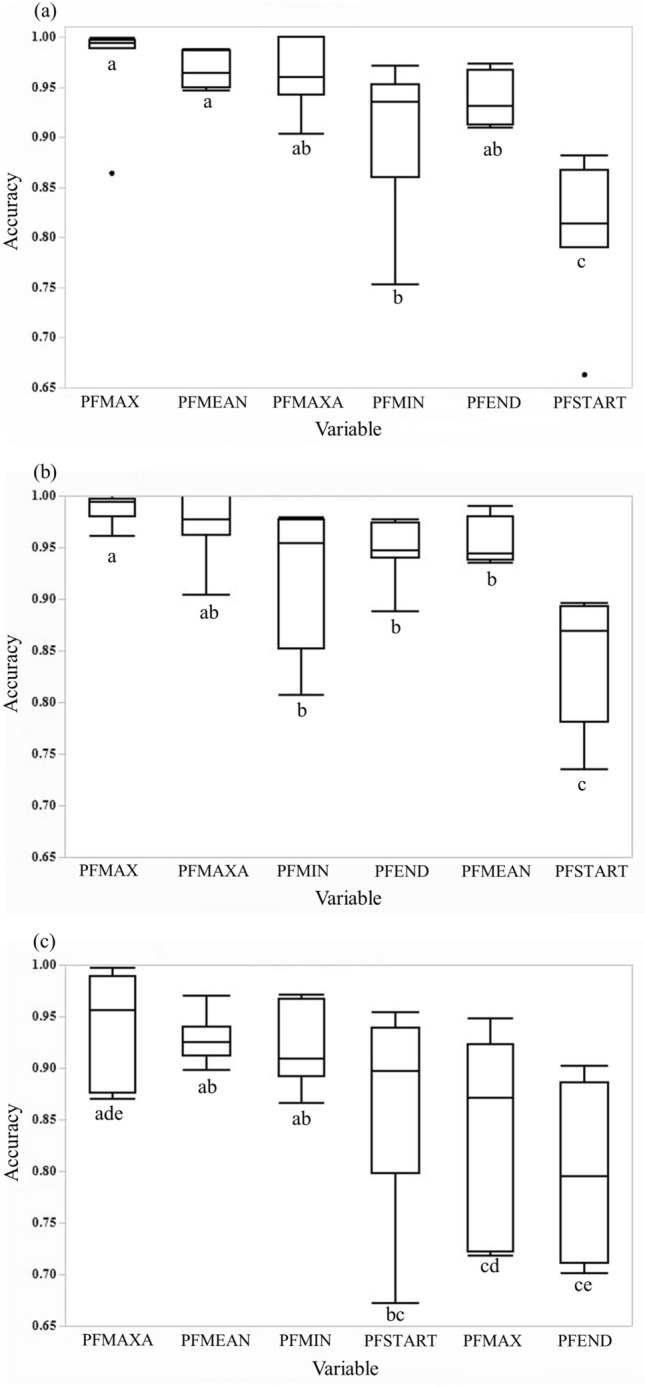
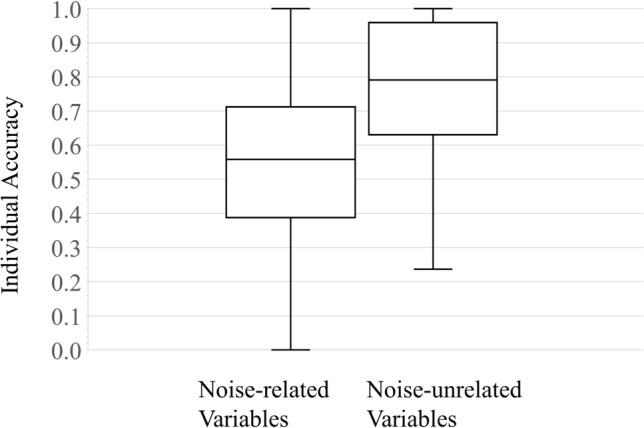
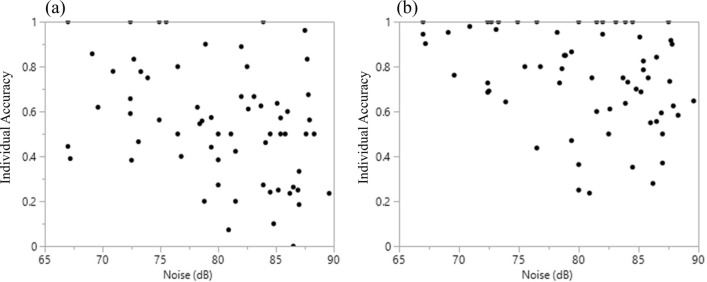
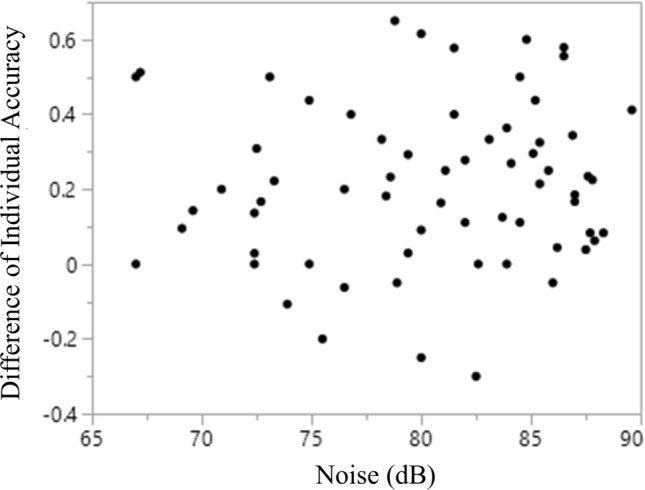
As urbanization has expanded dramatically, the impacts of urban noise on wildlife have drawn increasing attention. However, previous studies have focused primarily on diurnal songbirds and much less on nocturnal nonpasserines such as nightjars. The savanna nightjar has recently successfully colonized urban areas in Taiwan. Using 1925 calls recorded from 67 individuals, we first investigated the individual differences of the acoustic structures; and, for those acoustic variables with significant individual differences, we examined the correlation between the acoustic structures and the ambient noise levels. We then compared the transmission efficacy of vocal individuality among three sets of acoustic variables: all acoustic variables, noise-related variables, and noise-unrelated variables. Using seven artificial frequency-shifted calls to represent seven different individuals in playback-recording experiments, we also investigated the transmission efficacy of vocal individuality and variable accuracy in three different urban noise levels (high, medium, low). We found that all 30 acoustic variables derived from the acoustic structures demonstrated significant individual differences, and 14 frequency-based variables were negatively correlated with ambient noise levels. Although transmission efficacy was significantly affected by urban noise, individuality information was still transmitted with high accuracy. Furthermore, the noise-unrelated structures (which included the maximum frequency, the maximum amplitude frequency, and the mean frequency of the call) had a significantly higher transmission efficacy of vocal individuality than the noise-related variables (which included the minimum frequency, the frequency at the start and the end of the call) in both field observation and playback-recording experiments. We conclude that these noise-unrelated acoustic features may be one of the key preadaptations for this nocturnal nonpasserine to thrive so successfully in its newly adopted urban environment.
随着城市化的迅猛扩张,城市噪声对野生动物的影响引起了越来越多的关注。然而,以前的研究主要集中在昼行性鸣禽上,而对夜行性非雀形目鸟类(如夜鹰)的研究则相对较少。萨凡纳夜鹰最近在台湾成功地在城市地区定居。我们使用从 67 只个体记录的 1925 次鸣叫,首次调查了声学结构的个体差异;对于那些具有显著个体差异的声学变量,我们研究了声学结构与环境噪声水平之间的相关性。然后,我们比较了三种声学变量集(所有声学变量、与噪声相关的变量和与噪声无关的变量)中声音个性的传递效果。在播放-录音实验中,我们使用七个人工频率偏移的鸣叫来代表七个不同的个体,还研究了在三个不同的城市噪声水平(高、中、低)下声音个性和可变性准确性的传递效果。我们发现,所有 30 个源自声学结构的声学变量都表现出显著的个体差异,并且 14 个基于频率的变量与环境噪声水平呈负相关。尽管传递效果受到城市噪声的显著影响,但个性信息仍然以高精度传递。此外,在现场观察和播放-录音实验中,与噪声无关的结构(包括鸣叫的最大频率、最大振幅频率和平均频率)比与噪声相关的变量(包括鸣叫的最小频率、起始频率和结束频率)具有更高的声音个性传递效果。我们得出的结论是,这些与噪声无关的声学特征可能是这种夜行性非雀形目鸟类在新适应的城市环境中成功生存的关键预适应之一。