UOC of Radiology, Ospedale SS Trinità, ATS, Cagliari, Italy.
Neuroendovascular Program, Department of Radiology, Massachusetts General Hospital, Harvard Medical School, Boston, MA, USA.
Cardiovasc Intervent Radiol. 2021 Feb;44(2):289-299. doi: 10.1007/s00270-020-02658-4. Epub 2020 Oct 25.
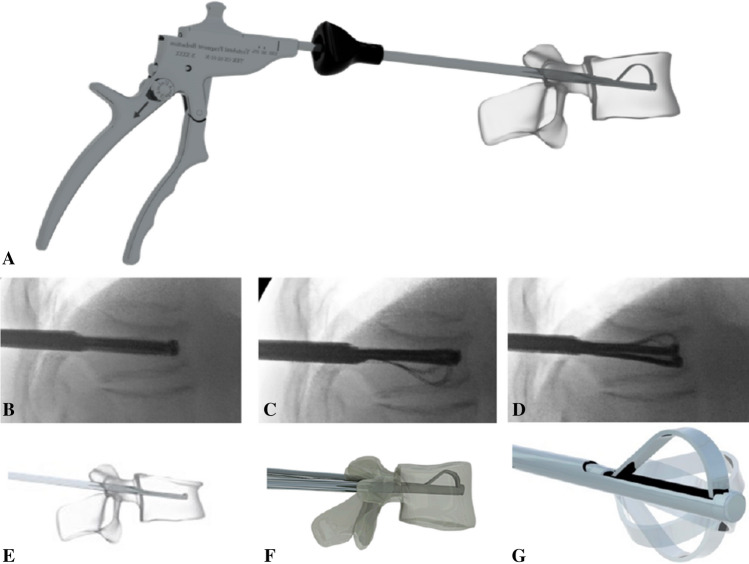
To evaluate the safety and efficacy of a novel augmentation implant in the treatment of patients with symptomatic vertebral body fractures.
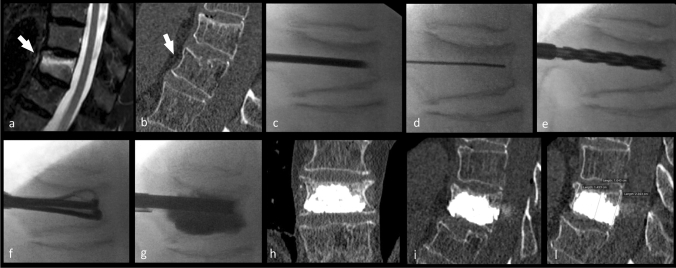
Thirty consecutive patients (seven males and 23 females), mean age of 70 years (range 56 to 89) with osteoporotic fractures and/or low-energy trauma fractures (osteoporosis confirmed by CT), were enrolled in an IRB-approved prospective study. The type of fracture was classified according to the Magerl classification. The patients were treated with the Tektona dedicated vertebral body augmentation system. Visual analogue scale (VAS) and Oswestry Disability Index (ODI) scores were obtained after 1, 6 and 12 months. Quality of life was assessed with the SF36 score.
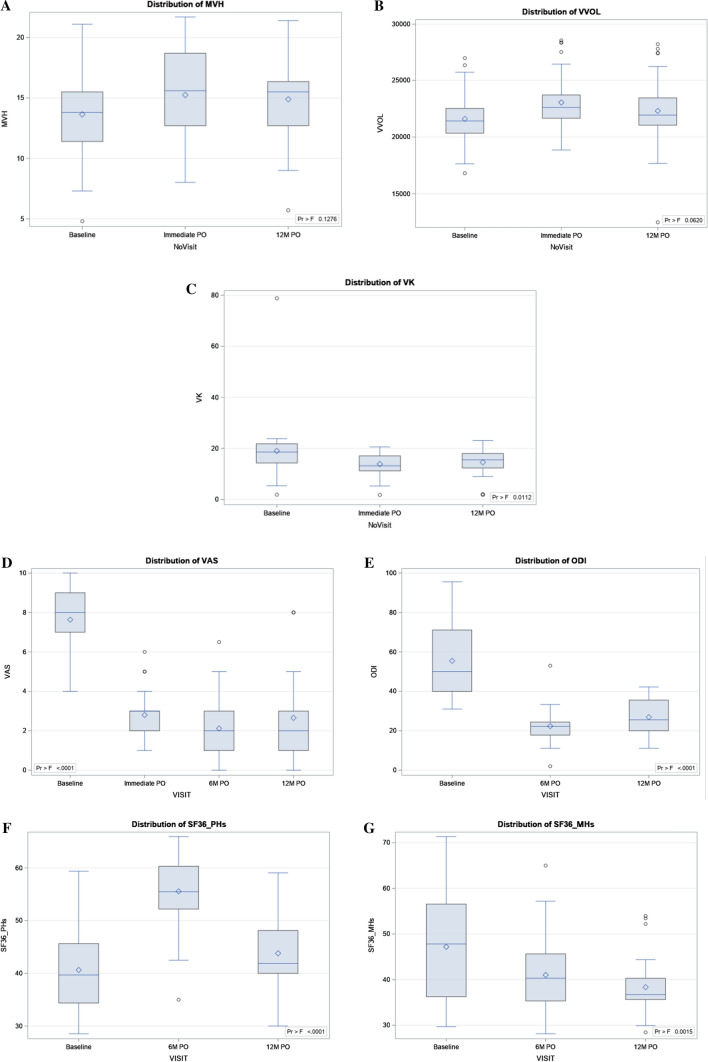
A total of 37 vertebral bodies, mostly from T6 to L5, were treated in the 30 enrolled patients. In 67.6% of the cases (n = 25), lumbar fractures were treated. Most of the fractures (43%; n = 16) were A1.1 according to the Magerl classification. A significant pain reduction evaluated by VAS scores (p < 0.0001) was observed on average 7.6 (before the procedure) to 2.8 (immediately post-treatment), 2.1 and 2.7 (after 6 and 12 months later, respectively). The mean ODI score was 55.5% before treatment, and this was statistically significant reduced to 22.3% and 26.9%, respectively, at 6 and 12 months after treatment (p < 0.0001). The SF36 scores, both physical and mental components, showed statistically significant variations (p < 0.0001) whose direction was subpopulation dependent.
Patients with confirmed osteoporosis, suffering from symptomatic vertebral body fractures (osteoporotic and/or low-energy traumatic), were treated safely and effectively using this novel implant.
评估新型增强植入物治疗有症状椎体骨折患者的安全性和疗效。
30 例连续患者(7 名男性和 23 名女性),平均年龄 70 岁(56 岁至 89 岁),患有骨质疏松性骨折和/或低能量创伤性骨折(通过 CT 证实骨质疏松症),参加了一项 IRB 批准的前瞻性研究。骨折类型根据 Magerl 分类进行分类。患者采用 Tektona 专用椎体增强系统进行治疗。治疗后 1、6 和 12 个月分别采用视觉模拟量表(VAS)和 Oswestry 残疾指数(ODI)评分。采用 SF36 评分评估生活质量。
30 例患者共治疗 37 个椎体,主要位于 T6 至 L5。在 67.6%(n=25)的病例中,治疗了腰椎骨折。根据 Magerl 分类,大多数骨折(43%;n=16)为 A1.1。VAS 评分(p<0.0001)平均从 7.6(术前)降低到 2.8(即刻治疗后),2.1 和 2.7(分别在 6 和 12 个月后)。治疗前平均 ODI 评分为 55.5%,治疗后分别显著降低至 22.3%和 26.9%(p<0.0001)。SF36 评分(身体和精神成分)均显示出统计学显著变化(p<0.0001),其方向取决于亚群。
患有骨质疏松症并患有有症状的椎体骨折(骨质疏松性和/或低能量创伤性)的患者使用这种新型植入物安全有效地治疗。