Canh Nguyen Phuc, Thanh Su Dinh
School of Banking, University of Economics Ho Chi Minh City, Ho Chi Minh 700000, Viet Nam.
School of Public Finance, University of Economics Ho Chi Minh City, Ho Chi Minh 700000, Viet Nam.
Ann Tour Res. 2020 Nov;85:103063. doi: 10.1016/j.annals.2020.103063. Epub 2020 Oct 20.
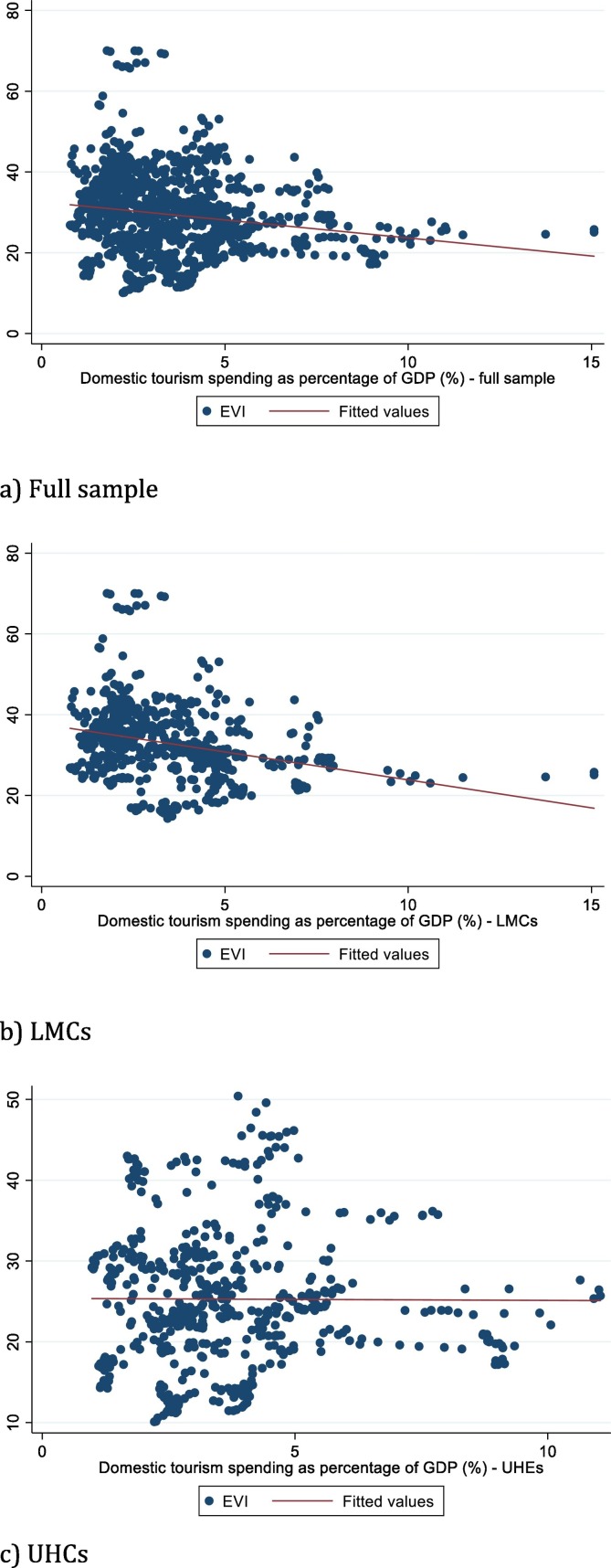
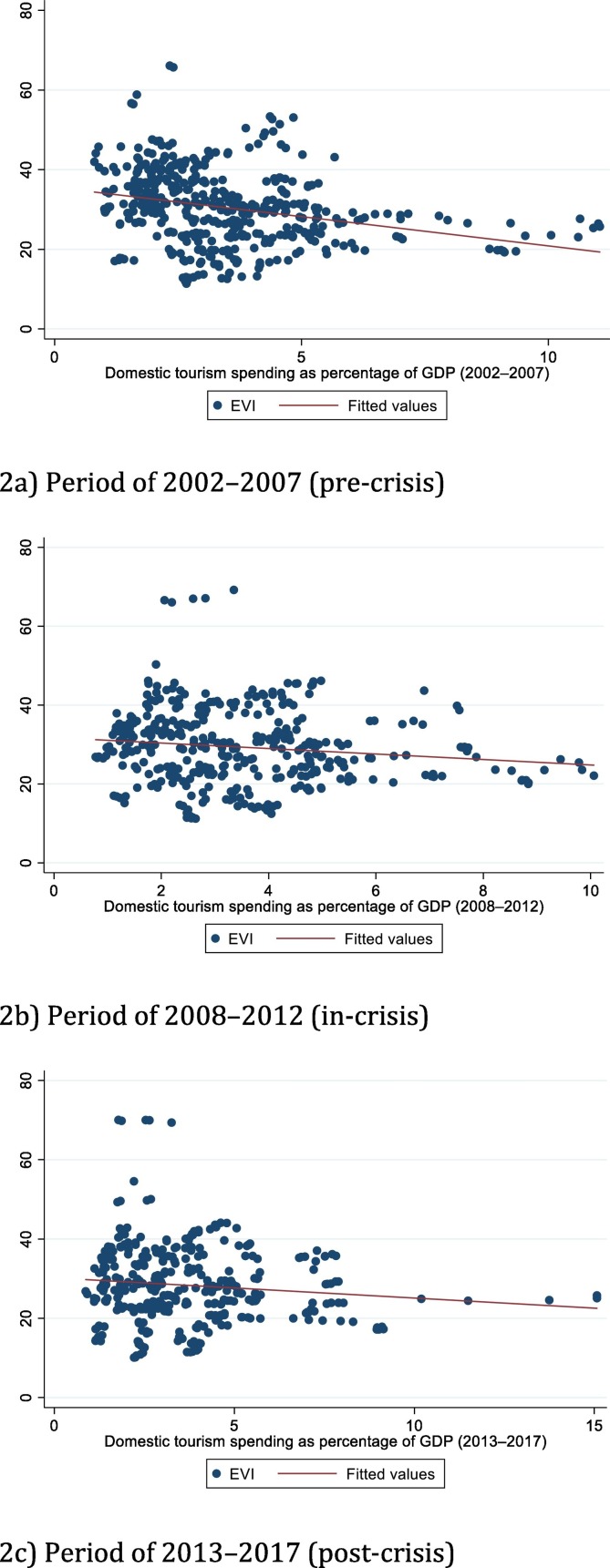
This study examines the influence of domestic tourism on economic vulnerability index (EVI). Domestic tourism spending has a significant effect in reducing EVI. These results are consistent with two sub-indices of EVI (shock index and exposure index). Interestingly, it is found that: (i) this impact is consistent in low- and lower-middle-income countries, while domestic tourism has a non-significantly effect in upper-middle and high-income countries of increasing EVI; (ii) these results are consistent in the long-run; and (iii) the impact of domestic tourism is consistent in both the 2002-2007 and 2008-2012 periods, but is statistically non-significant in the 2013-2017 period. Notably, we find that domestic tourism spending has a U-shape effect on EVI; while international tourism has an increasing effect.
本研究考察了国内旅游业对经济脆弱性指数(EVI)的影响。国内旅游支出在降低EVI方面具有显著作用。这些结果与EVI的两个子指数(冲击指数和暴露指数)一致。有趣的是,研究发现:(i)这种影响在低收入和中低收入国家是一致的,而国内旅游业在中高收入和高收入国家对EVI增加的影响不显著;(ii)这些结果在长期内是一致的;(iii)国内旅游业的影响在2002 - 2007年和2008 - 2012年期间是一致的,但在2013 - 2017年期间在统计上不显著。值得注意的是,我们发现国内旅游支出对EVI有U形影响;而国际旅游业则有增加的影响。