Liu Laura, Moon Hyungsik Roger, Schorfheide Frank
Indiana University, United States of America.
University of Southern California, United States of America.
J Econom. 2021 Jan;220(1):2-22. doi: 10.1016/j.jeconom.2020.08.010. Epub 2020 Oct 16.
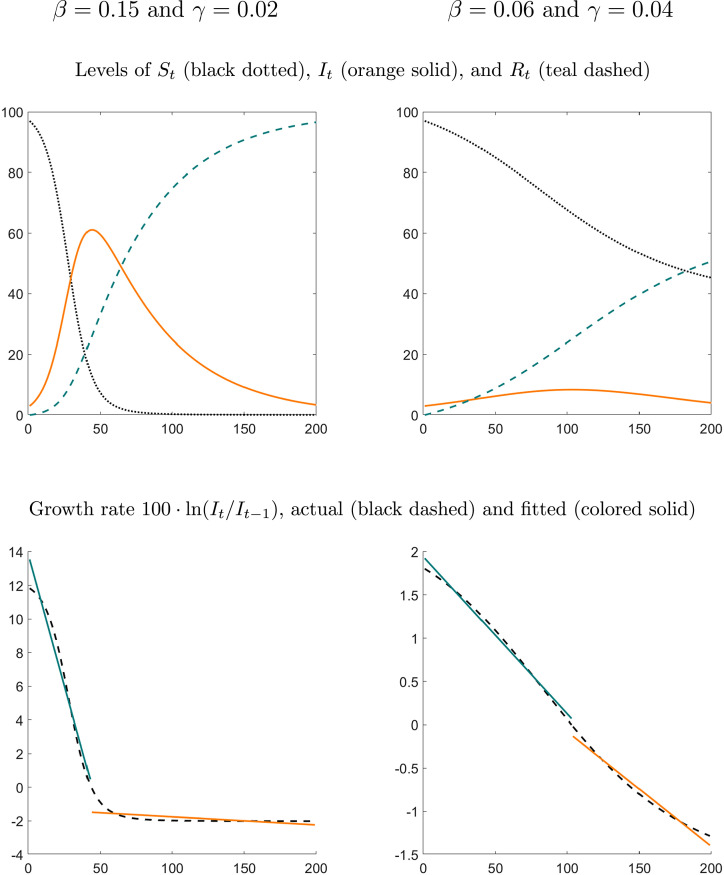
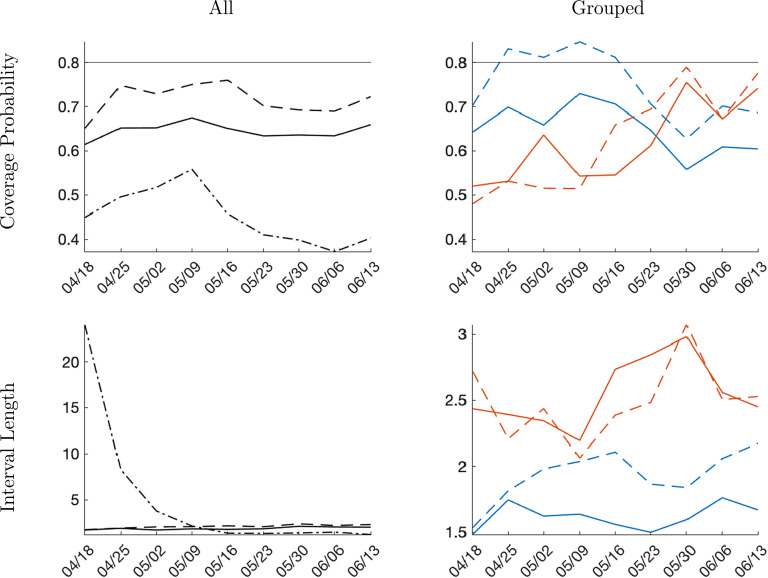
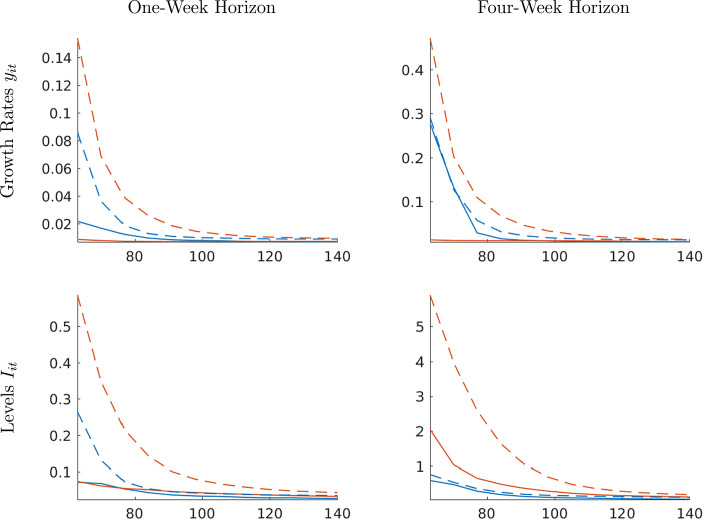
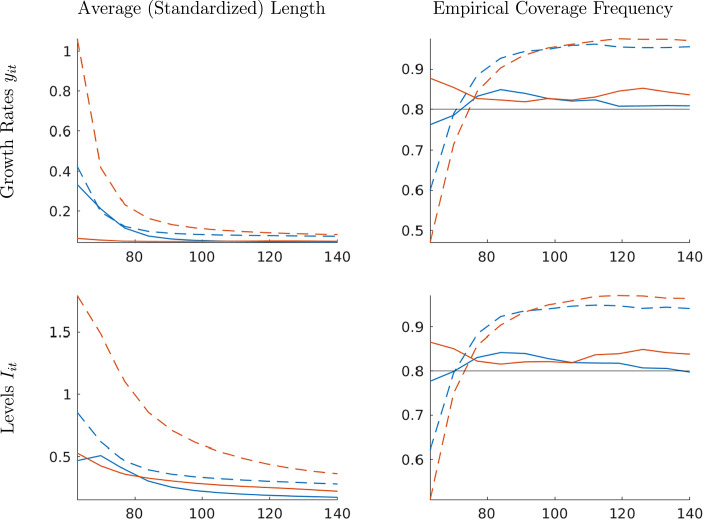
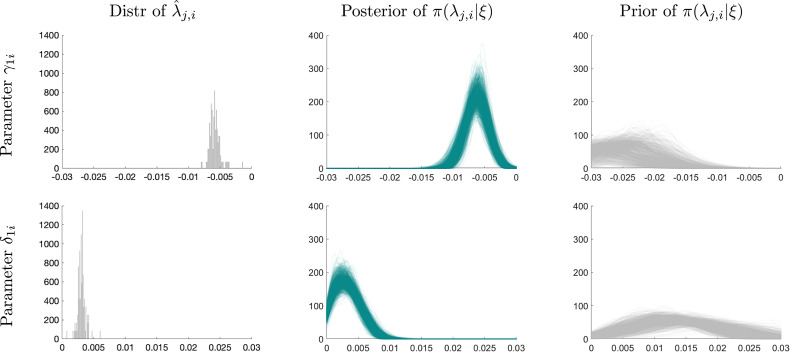
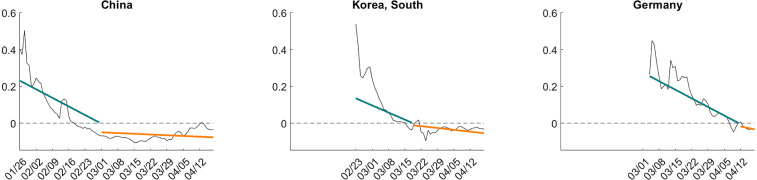
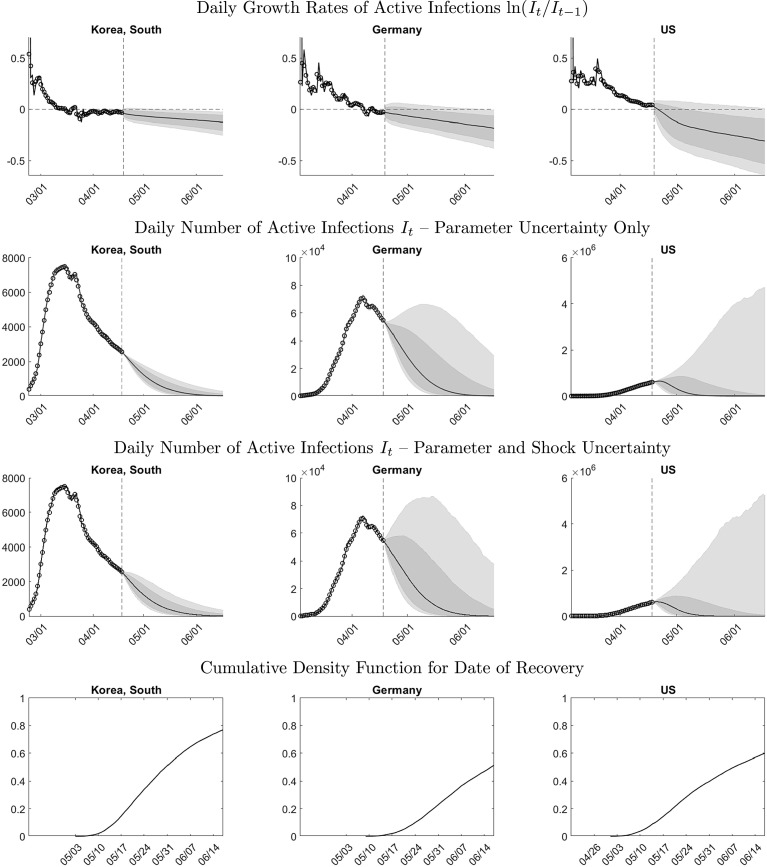
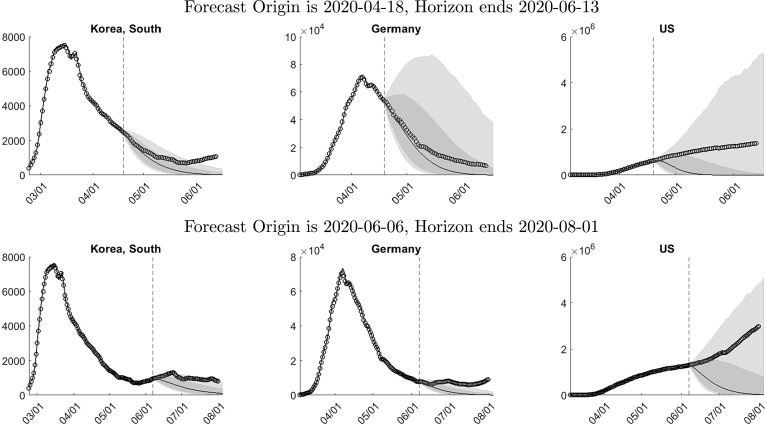
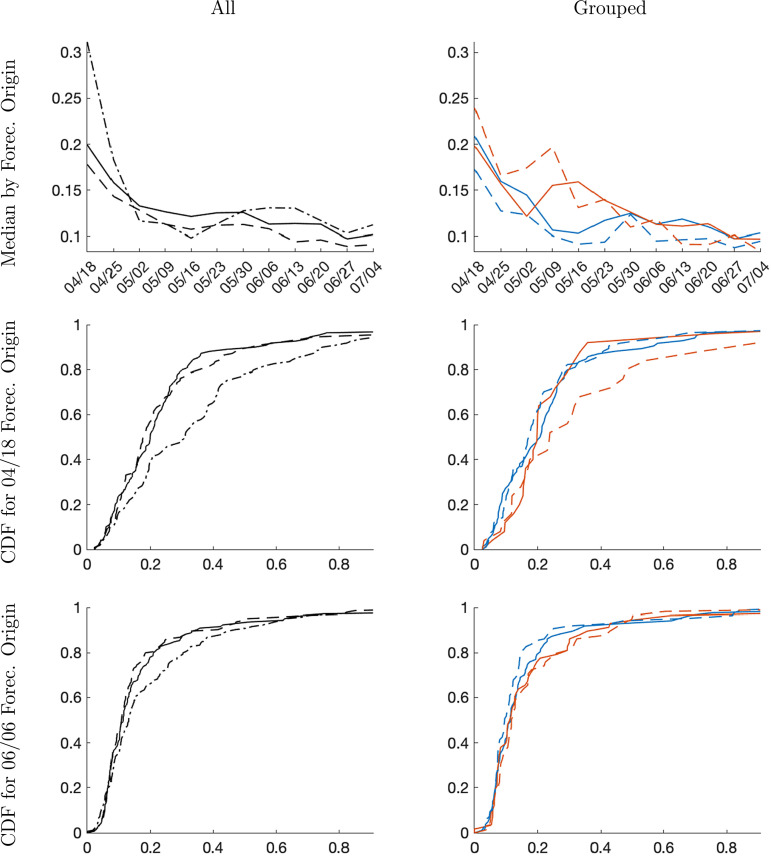
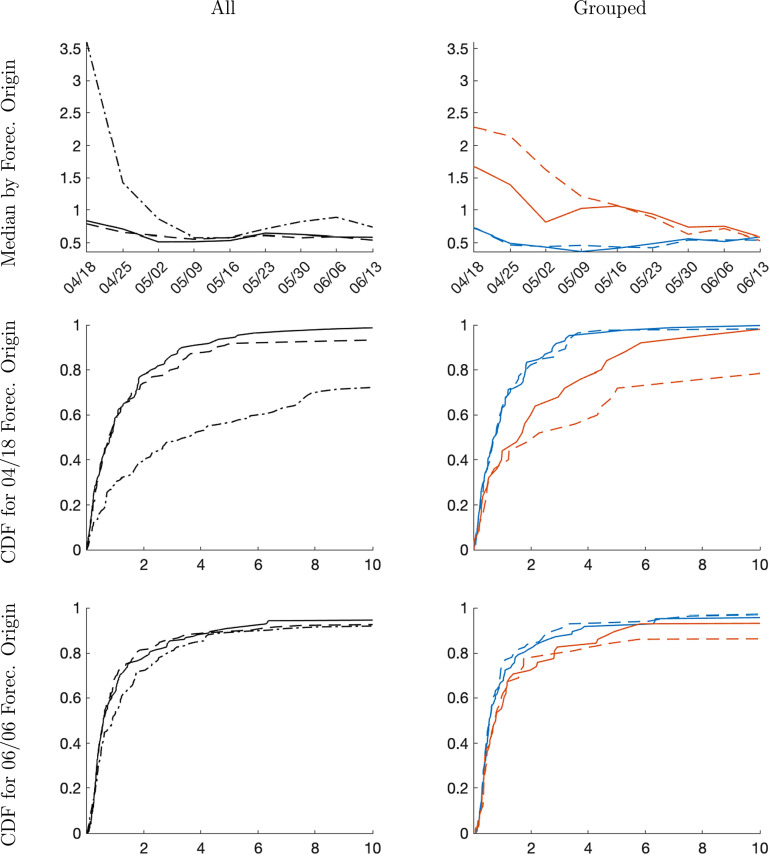
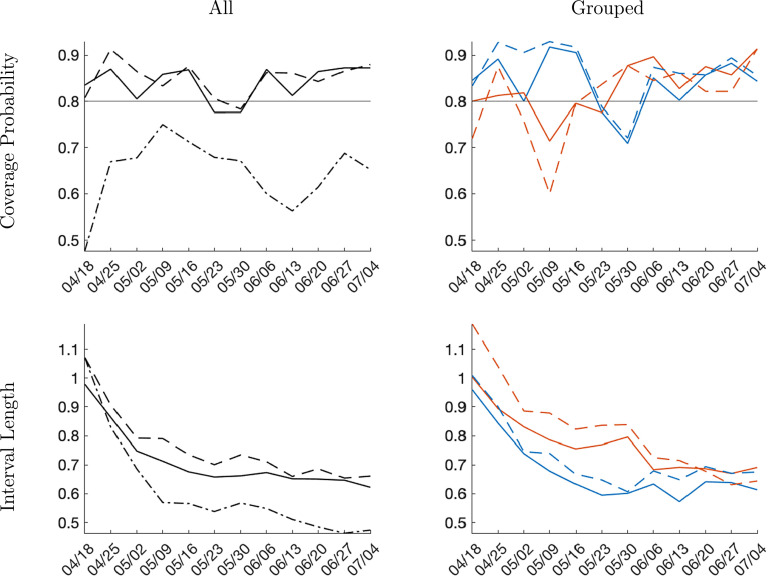
We use a dynamic panel data model to generate density forecasts for daily active Covid-19 infections for a panel of countries/regions. Our specification that assumes the growth rate of active infections can be represented by autoregressive fluctuations around a downward sloping deterministic trend function with a break. Our fully Bayesian approach allows us to flexibly estimate the cross-sectional distribution of slopes and then implicitly use this distribution as prior to construct Bayes forecasts for the individual time series. We find some evidence that information from locations with an early outbreak can sharpen forecast accuracy for late locations. There is generally a lot of uncertainty about the evolution of active infection, due to parameter and shock uncertainty, in particular before and around the peak of the infection path. Over a one-week horizon, the empirical coverage frequency of our interval forecasts is close to the nominal credible level. Weekly forecasts from our model are published at https://laurayuliu.com/covid19-panel-forecast/.
我们使用动态面板数据模型为一组国家/地区的每日新冠病毒活跃感染病例生成密度预测。我们的设定假设活跃感染病例的增长率可以由围绕具有断点的向下倾斜确定性趋势函数的自回归波动来表示。我们的全贝叶斯方法使我们能够灵活地估计斜率的横截面分布,然后隐含地将此分布用作先验,为各个时间序列构建贝叶斯预测。我们发现一些证据表明,来自疫情早期爆发地区的信息可以提高对疫情后期爆发地区的预测准确性。由于参数和冲击的不确定性,特别是在感染路径的峰值之前和峰值附近,活跃感染病例的演变通常存在很大的不确定性。在一周的时间范围内,我们区间预测的经验覆盖频率接近名义可信水平。我们模型的每周预测结果发布在https://laurayuliu.com/covid19-panel-forecast/ 。