Tröster Bernhard, Küblböck Karin
Austrian Foundation for Development Research (ÖFSE), Sensengasse 3, 1090 Vienna, Austria.
Eur J Dev Res. 2020;32(5):1430-1449. doi: 10.1057/s41287-020-00313-9. Epub 2020 Oct 21.
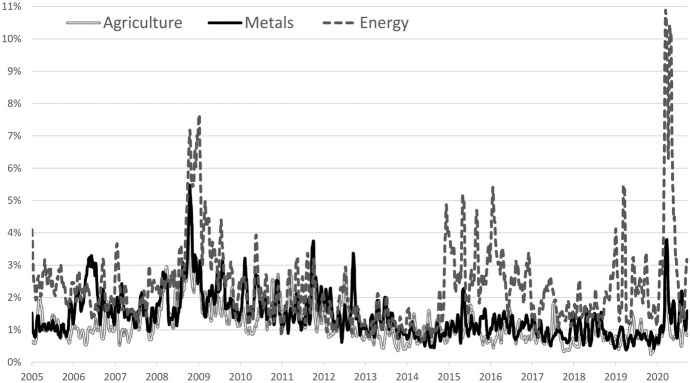
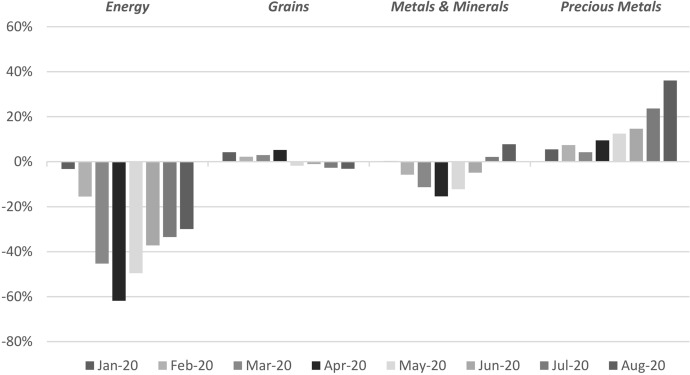
The global spread of COVID-19 represents a massive challenge for developing countries. Beyond the health crisis and the sudden stop of domestic economic activities, many countries face turmoil linked to commodity dependence. Commodity prices have reacted strongly to the crisis, reflecting changes in supply and demand due to policy measures to limit contagion. Commodity-dependent developing countries are therefore confronted with an unprecedented combination of shocks. However, the crisis has also exposed structural vulnerabilities of these countries linked above all to commodity price dynamics. In the context of a longstanding debate on commodities and development, we portray recent commodity price developments and underlying drivers and discuss implications for commodity-dependent countries, including the risks of depressed export earnings and of changing global production patterns in the long run. Responses to the crisis have to include measures to stabilize commodity prices as well as strategies for economic diversification.
新冠疫情的全球蔓延对发展中国家构成了巨大挑战。除了健康危机和国内经济活动的突然停滞,许多国家还面临与商品依赖相关的动荡。商品价格对危机反应强烈,反映了因限制疫情传播的政策措施导致的供需变化。因此,依赖商品的发展中国家面临着前所未有的冲击组合。然而,这场危机也暴露了这些国家的结构性脆弱性,这首先与商品价格动态有关。在关于商品与发展的长期辩论背景下,我们描绘了近期商品价格的发展情况及其潜在驱动因素,并讨论了对依赖商品的国家的影响,包括出口收入下降的风险以及长期全球生产模式变化的风险。应对危机的措施必须包括稳定商品价格的措施以及经济多元化战略。