Tu Yue, Fang Qi-Jun, Sun Wei, Liu Bu-Hui, Liu Ying-Lu, Wu Wei, Yee Hong-Yun, Yuan Can-Can, Wang Mei-Zi, Wan Zi-Yue, Tang Ren-Mao, Wan Yi-Gang, Tang Hai-Tao
Department of Traditional Chinese Medicine Health Preservation, Acupuncture, Moxibustion and Massage College, Health Preservation and Rehabilitation College, Nanjing University of Chinese Medicine, Nanjing, China.
Department of Traditional Chinese Medicine, Nanjing Drum Tower Hospital, The Affiliated Hospital of Nanjing University Medical School, Nanjing, China.
Front Pharmacol. 2020 Sep 30;11:566611. doi: 10.3389/fphar.2020.566611. eCollection 2020.
Recently, progression of chronic renal failure (CRF) has been closely associated with gut microbiota dysbiosis and intestinal metabolite-derived microinflammation. In China, total flavones of (TFA), a component of , has been widely used to delay CRF progression in clinics for the past two decades. However, the overall therapeutic mechanisms remain obscure. In this study, we designed experiments to investigate the renoprotective effects of TFA in CRF progression and its underlying mechanisms involved in gut microbiota and microinflammation, compared with febuxostat (FEB), a potent non-purine selective inhibitor of xanthine oxidase.
, the CRF rat models were induced by uninephrectomy, potassium oxonate, and proinflammatory diet, and received either TFA suspension, FEB, or vehicle after modeling for 28 days. , the RAW 264.7 cells were exposed to lipopolysaccharide (LPS) with or without TFA or FEB. Changes in parameters related to renal injury, gut microbiota dysbiosis, gut-derived metabolites, and microinflammation were analyzed . Changes in macrophage polarization and autophagy and its related signaling were analyzed both and .
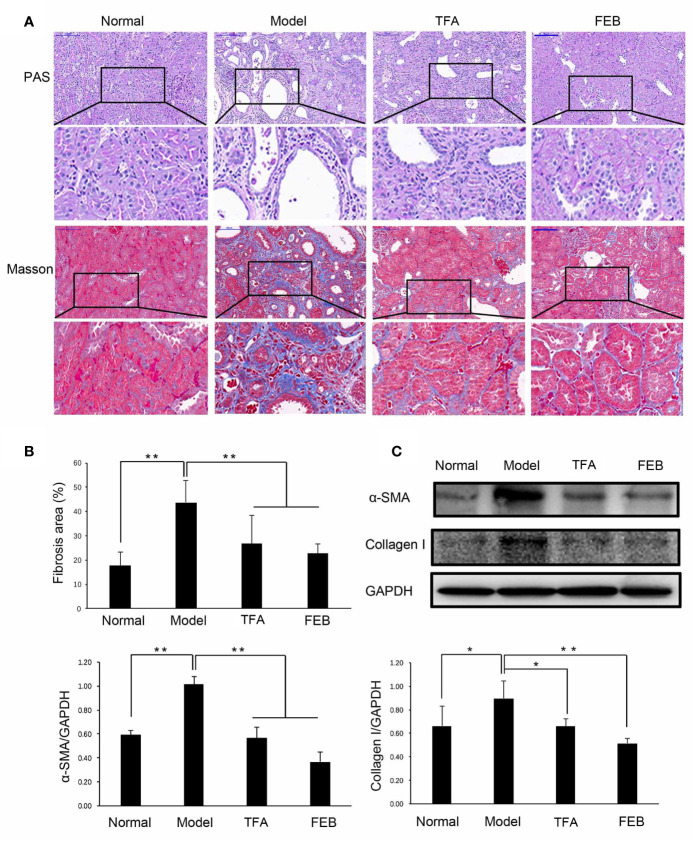
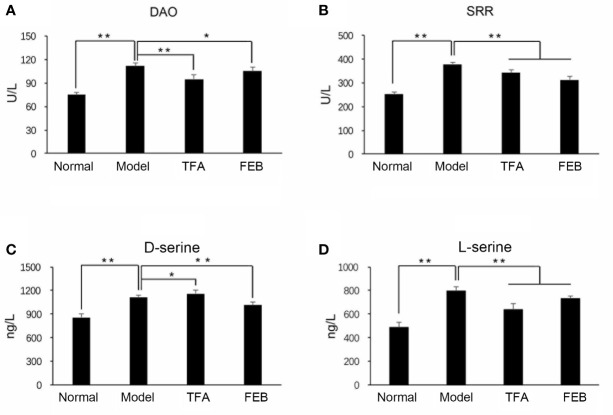
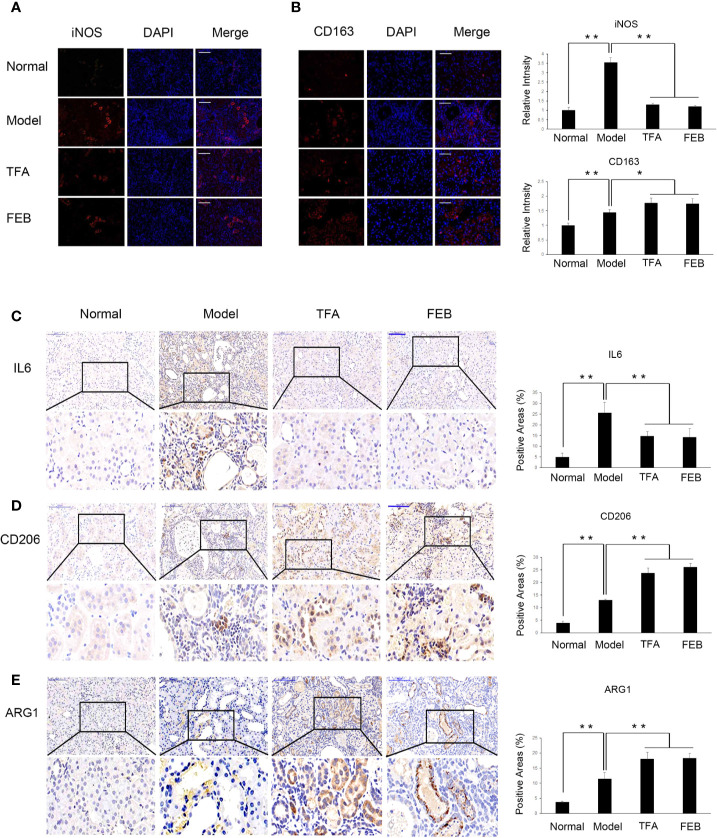
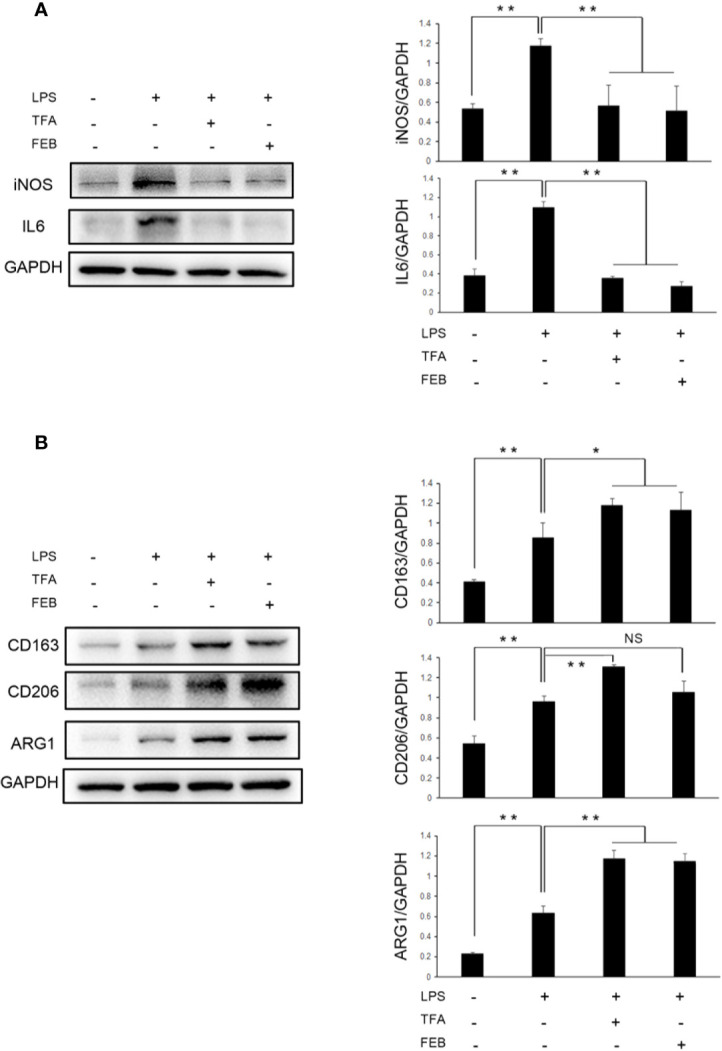
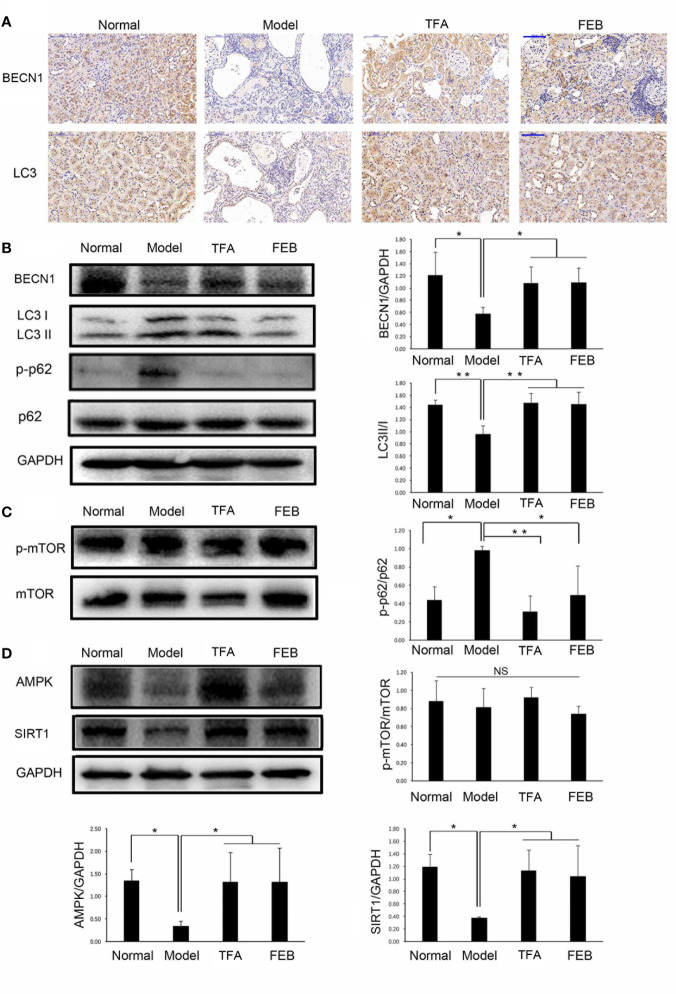
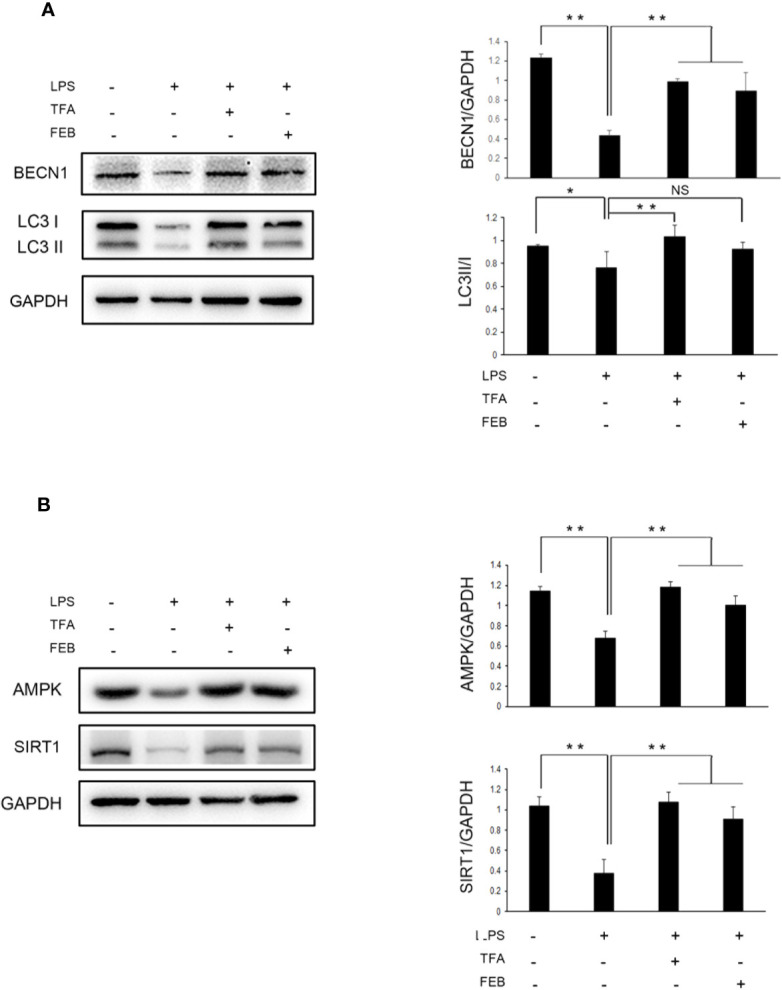
For the modified CRF model rats, the administration of TFA and FEB improved renal injury, including renal dysfunction and renal tubulointerstitial lesions; remodeled gut microbiota dysbiosis, including decreased and and increased ; regulated gut-derived metabolites, including d-amino acid oxidase, serine racemase, d-serine, and l-serine; inhibited microinflammation, including interleukin 1β (IL1β), tumor necrosis factor-α, and nuclear factor-κB; and modulated macrophage polarization, including markers of M1/M2 macrophages. More importantly, TFA and FEB reversed the expression of beclin1 (BECN1) and phosphorylation of p62 protein and light chain 3 (LC3) conversion in the kidneys by activating the adenosine monophosphate-activated protein kinase-sirtuin 1 (AMPK-SIRT1) signaling. Further, TFA and FEB have similar effects on macrophage polarization and autophagy and its related signaling .
In this study, we demonstrated that TFA, similar to FEB, exerts its renoprotective effects partially by therapeutically remodeling gut microbiota dysbiosis and inhibiting intestinal metabolite-derived microinflammation. This is achieved by adjusting autophagy-mediated macrophage polarization through AMPK-SIRT1 signaling. These findings provide more accurate information on the role of TFA in delaying CRF progression.
近年来,慢性肾衰竭(CRF)的进展与肠道微生物群失调和肠道代谢产物衍生的微炎症密切相关。在中国,过去二十年来,[植物名称]的总黄酮(TFA)作为[植物名称]的一种成分,已在临床上广泛用于延缓CRF的进展。然而,其总体治疗机制仍不清楚。在本研究中,我们设计实验,与黄嘌呤氧化酶的强效非嘌呤选择性抑制剂非布司他(FEB)相比,研究TFA在CRF进展中的肾脏保护作用及其涉及肠道微生物群和微炎症的潜在机制。
通过单侧肾切除、氧嗪酸钾和促炎饮食诱导建立CRF大鼠模型,建模28天后分别给予TFA悬浮液、FEB或赋形剂。将RAW 264.7细胞暴露于有或无TFA或FEB的脂多糖(LPS)中。分析与肾损伤、肠道微生物群失调、肠道衍生代谢产物和微炎症相关的参数变化。在体内和体外分析巨噬细胞极化和自噬及其相关信号的变化。
对于改良的CRF模型大鼠,给予TFA和FEB可改善肾损伤,包括肾功能障碍和肾小管间质病变;重塑肠道微生物群失调,包括[细菌名称1]和[细菌名称2]减少以及[细菌名称3]增加;调节肠道衍生代谢产物,包括d-氨基酸氧化酶、丝氨酸消旋酶、d-丝氨酸和l-丝氨酸;抑制微炎症,包括白细胞介素1β(IL1β)、肿瘤坏死因子-α和核因子-κB;并调节巨噬细胞极化,包括M1/M2巨噬细胞的标志物。更重要的是,TFA和FEB通过激活腺苷单磷酸激活蛋白激酶-沉默调节蛋白1(AMPK-SIRT1)信号通路,逆转了肾脏中beclin1(BECN1)的表达以及p62蛋白的磷酸化和轻链3(LC3)的转化。此外,TFA和FEB对巨噬细胞极化和自噬及其相关信号具有相似的作用。
在本研究中,我们证明TFA与FEB类似,部分通过治疗性重塑肠道微生物群失调和抑制肠道代谢产物衍生的微炎症发挥其肾脏保护作用。这是通过AMPK-SIRT1信号通路调节自噬介导的巨噬细胞极化来实现的。这些发现为TFA在延缓CRF进展中的作用提供了更准确的信息。