Park Ki Hyeong, Oh Seung-Yoon, Yoo Shinnam, Park Myung Soo, Fong Jonathan J, Lim Young Woon
School of Biological Sciences, Institute of Microbiology, Seoul National University, Seoul, South Korea.
Department of Biology and Chemistry, Changwon National University, Changwon, South Korea.
Front Microbiol. 2020 Sep 25;11:574146. doi: 10.3389/fmicb.2020.574146. eCollection 2020.
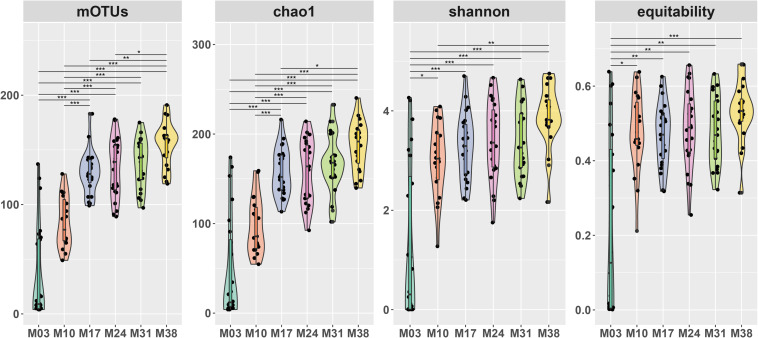
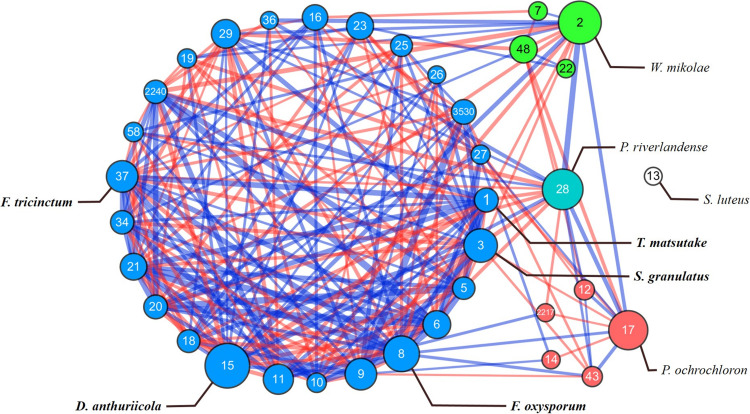
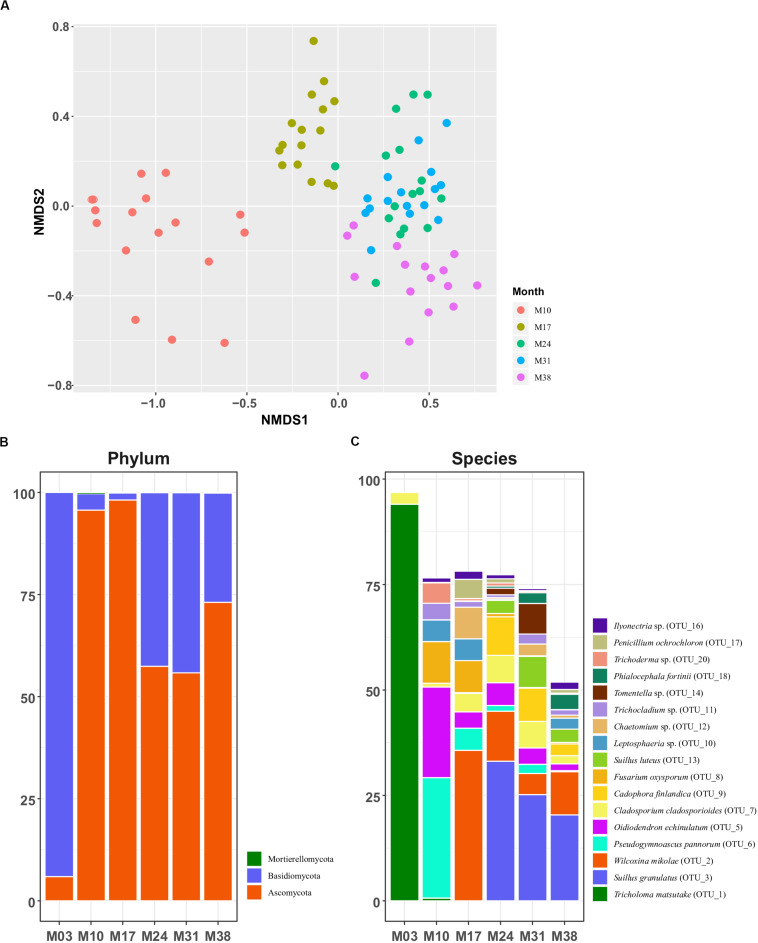
The pine mushroom (; Agaricales, Tricholomataceae) is an ectomycorrhizal fungus that produces a commercially valuable, edible mushrooms. Attempts to artificially cultivate has so far been unsuccessful. One method used to induce to produce fruiting bodies of in the wild is shiro (mycelial aggregations of ) transplantation. ectomycorrhization of with seedlings of has been successful, but field trials showed limited production of fruiting bodies. Few studies have been done to test what happens after transplantation in the wild, whether persists on the pine seedling roots or gets replaced by other fungi. Here, we investigated the composition and the interaction of the root fungal microbiome of seedlings inoculated with over a 3 year period after field transplantation, using high-throughput sequencing. We found a decline of colonization on pine roots and succession of mycorrhizal fungi as seedlings grew. Early on, roots were colonized by fast-growing, saprotrophic Ascomycota, then later replaced by early stage ectomycorrhiza such as . At the end, more competitive species dominated the host roots. Most of the major OTUs had negative or neutral correlation with , but several saprotrophic/plant pathogenic/mycoparasitic species in genera , , and had positive correlation with . Four keystone species were identified during succession; two species (, and ) had a positive correlation with , while the other two had a negative correlation (, ). These findings have important implications for further studies on the artificial cultivation of .
松口蘑(;伞菌目,白蘑科)是一种外生菌根真菌,能产生具有商业价值的可食用蘑菇。迄今为止,人工栽培的尝试均未成功。一种用于诱导其在野外产生子实体的方法是菌根菌索(松口蘑的菌丝聚集体)移植。松口蘑与赤松幼苗的外生菌根形成已获成功,但田间试验表明子实体产量有限。关于在野外移植后会发生什么,松口蘑是否能在赤松幼苗根上持续存在或被其他真菌取代,很少有研究进行测试。在此,我们使用高通量测序技术,调查了田间移植后3年期间接种松口蘑的赤松幼苗根系真菌微生物组的组成及其相互作用。我们发现随着赤松幼苗的生长,松口蘑在松根上的定殖减少,菌根真菌发生演替。早期,根系被快速生长的腐生子囊菌定殖,随后被诸如松口蘑等早期外生菌根取代。最后,更具竞争力的物种主导了宿主根系。大多数主要的操作分类单元与松口蘑呈负相关或中性相关,但在曲霉属、镰刀菌属和链格孢属中的几个腐生/植物致病/真菌寄生物种与松口蘑呈正相关。在演替过程中鉴定出四个关键物种;两个物种(丝膜菌属和红菇属)与松口蘑呈正相关,而另外两个呈负相关(蜡壳耳属和炭角菌属)。这些发现对松口蘑人工栽培的进一步研究具有重要意义。