Hao Ying, Chen Yuwen, He Xinlong, Yu Yongyang, Han Ruxia, Li Yang, Yang Chengli, Hu Danrong, Qian Zhiyong
State Key Laboratory of Biotherapy and Cancer Center West China Hospital Sichuan University, and Collaborative Innovation Center of Biotherapy Chengdu 610041 P. R. China.
Department of Gastrointestinal Surgery West China Hospital Sichuan University Chengdu 610041 P. R. China.
Adv Sci (Weinh). 2020 Sep 6;7(20):2001853. doi: 10.1002/advs.202001853. eCollection 2020 Oct.
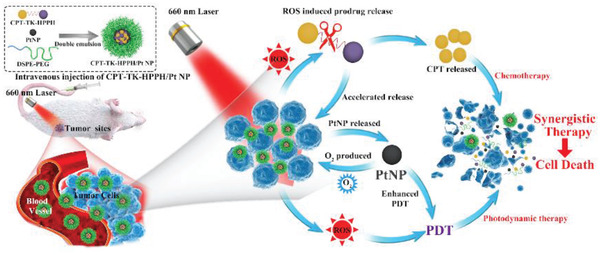
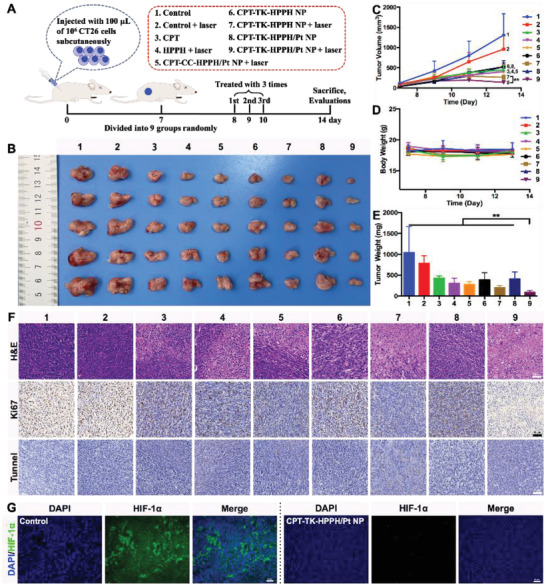
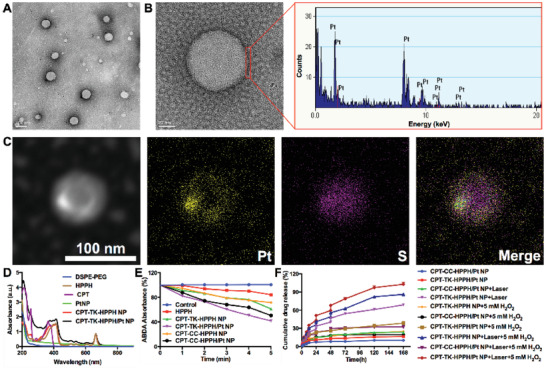
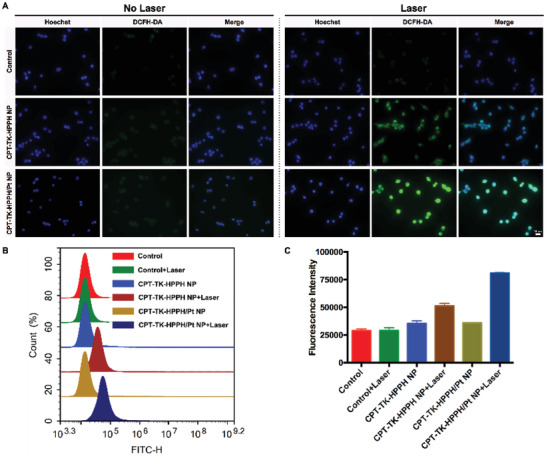
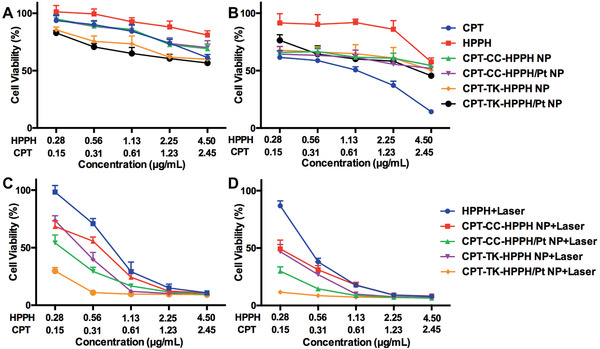
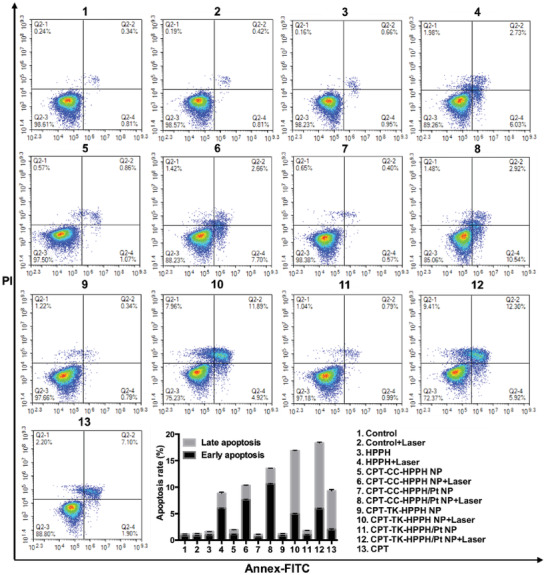
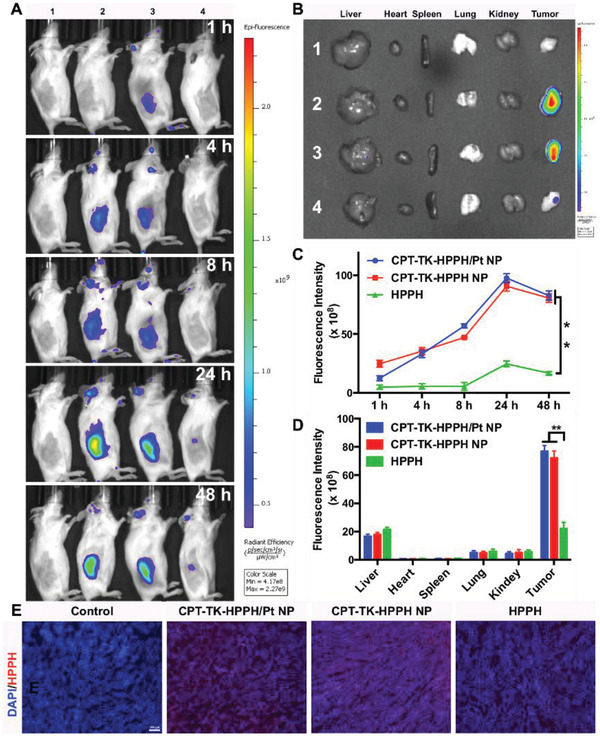
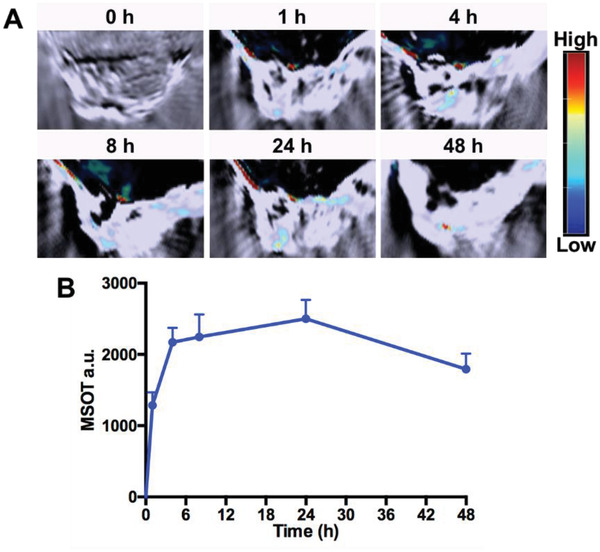
The combination of chemotherapy and photodynamic therapy (PDT) has promising potential in the synergistic treatment of cancer. However, chemotherapy and photodynamic synergistic therapy are impeded by uncontrolled chemotherapeutics release behavior, targeting deficiencies, and hypoxia-associated poor PDT efficacy in solid tumors. Here, a platinum nanozyme (PtNP) loaded reactive oxygen species (ROS)-responsive prodrug nanoparticle (CPT-TK-HPPH/Pt NP) is created to overcome these limitations. The ROS-responsive prodrug consists of a thioketal bond linked with camptothecin (CPT) and photosensitizer-2-(1-hexyloxyethyl)-2-devinyl pyropheophorbide-a (HPPH). The PtNP in CPT-TK-HPPH/Pt NP can efficiently catalyze the decomposition of hydrogen peroxide (HO) into oxygen to relieve hypoxia. The production of oxygen can satisfy the consumption of HPPH under 660 nm laser irradiation to attain the on-demand release of CPT and ensure enhanced photodynamic therapy. As a tumor diagnosis agent, the results of photoacoustic imaging and fluorescence imaging for CPT-TK-HPPH/Pt NP exhibit desirable long circulation and enhanced in vivo targeting. CPT-TK-HPPH/Pt NPs effectively inhibit tumor proliferation and growth in vitro and in vivo. CPT-TK-HPPH/Pt NP, with its excellent ROS-responsive drug release behavior and enhanced PDT efficiency can serve as a new cancer theranostic agent, and will further promote the research of chemophotodynamic synergistic cancer therapy.
化疗与光动力疗法(PDT)联合应用在癌症协同治疗方面具有广阔的潜力。然而,化疗与光动力协同疗法受到化疗药物释放行为不可控、靶向缺陷以及实体瘤中与缺氧相关的光动力疗法疗效不佳等因素的阻碍。在此,制备了一种负载铂纳米酶(PtNP)的活性氧(ROS)响应型前药纳米颗粒(CPT-TK-HPPH/Pt NP)以克服这些局限性。ROS响应型前药由与喜树碱(CPT)和光敏剂2-(1-己氧基乙基)-2-去乙烯基焦脱镁叶绿酸-a(HPPH)相连的硫代缩酮键组成。CPT-TK-HPPH/Pt NP中的PtNP能够有效地将过氧化氢(HO)催化分解为氧气以缓解缺氧。氧气的产生能够满足660 nm激光照射下HPPH的消耗,从而实现CPT的按需释放并确保增强的光动力疗法。作为一种肿瘤诊断剂,CPT-TK-HPPH/Pt NP的光声成像和荧光成像结果显示出良好的长循环特性以及增强的体内靶向性。CPT-TK-HPPH/Pt NPs在体外和体内均能有效抑制肿瘤增殖和生长。CPT-TK-HPPH/Pt NP凭借其优异的ROS响应型药物释放行为和增强的光动力疗法效率,可作为一种新型的癌症诊疗试剂,并将进一步推动化学-光动力协同癌症治疗的研究。