Tincopa Monica A
Division of Gastroenterology and Hepatology Department of Internal Medicine University of Michigan Ann Arbor Michigan USA.
Endocrinol Diabetes Metab. 2020 Aug 28;3(4):e00177. doi: 10.1002/edm2.177. eCollection 2020 Oct.
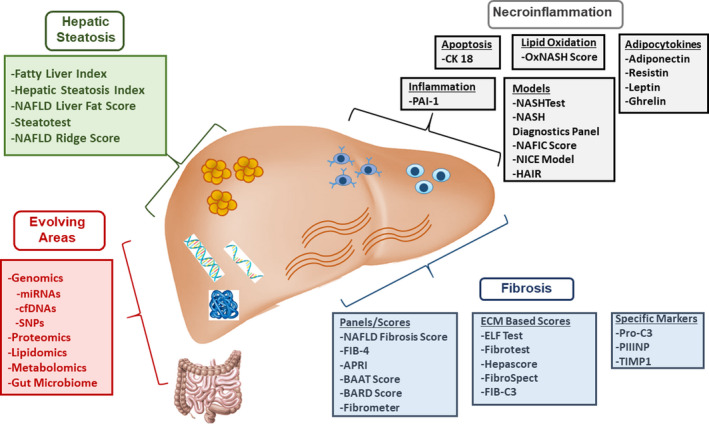
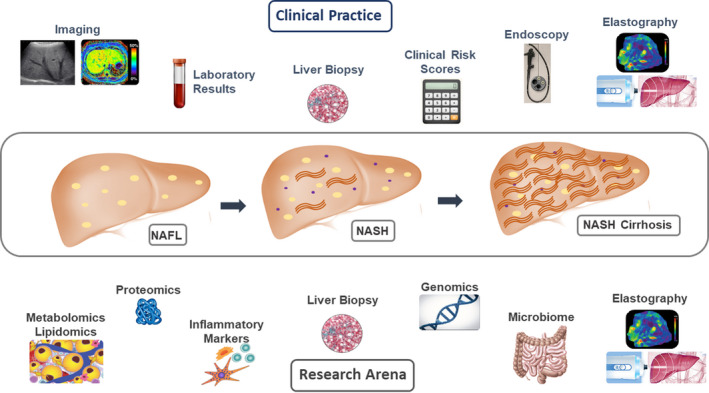
In the setting of the obesity epidemic, nonalcoholic fatty liver disease (NAFLD) has become one of the most prevalent forms of chronic liver disease worldwide. Approximately 25% of adults globally have NAFLD which includes those with NAFL, or simple steatosis, and individuals with nonalcoholic steatohepatitis (NASH) where inflammation, hepatocyte injury and potentially hepatic fibrosis are found in conjunction with steatosis. Individuals with NASH, particularly those with hepatic fibrosis, have higher rates of liver-related and overall mortality, making this distinction of significant clinical importance. One of the core challenges in current clinical practice is identifying this subset of individuals with NASH without the use of liver biopsy, the gold standard for both diagnostics and staging disease severity. Identifying noninvasive biomarkers, an accurately measured and reproducible parameter, would aide in identifying patients eligible for NASH pharmacotherapy clinical trials and to help tailor intensity of monitoring required.
In this review, we highlight both the currently available and novel diagnostic and interventional circulating biomarkers under investigation for NASH, underscoring their accuracy and limitations relevant to our patient population and current clinical practice.
在肥胖症流行的背景下,非酒精性脂肪性肝病(NAFLD)已成为全球最普遍的慢性肝病形式之一。全球约25%的成年人患有NAFLD,其中包括患有NAFL(即单纯性脂肪变性)的人,以及患有非酒精性脂肪性肝炎(NASH)的人,后者在脂肪变性的同时伴有炎症、肝细胞损伤以及潜在的肝纤维化。患有NASH的人,尤其是那些有肝纤维化的人,肝脏相关死亡率和总死亡率更高,因此这种区分具有重要的临床意义。当前临床实践中的核心挑战之一是在不进行肝活检(诊断和疾病严重程度分期的金标准)的情况下识别出患有NASH的这一亚组人群。识别非侵入性生物标志物(一个精确测量且可重复的参数)将有助于确定符合NASH药物治疗临床试验条件的患者,并有助于确定所需监测的强度。
方法、结果与结论:在本综述中,我们重点介绍了目前正在研究的用于NASH的现有和新型诊断及介入性循环生物标志物,强调了它们与我们的患者群体及当前临床实践相关的准确性和局限性。