Emerging Infectious Diseases Program, Duke-NUS Medical School, Singapore, Singapore.
Viral Research and Experimental Medicine Center, SingHealth/Duke-NUS, Singapore, Singapore.
Sci Rep. 2020 Oct 26;10(1):18219. doi: 10.1038/s41598-020-75088-4.
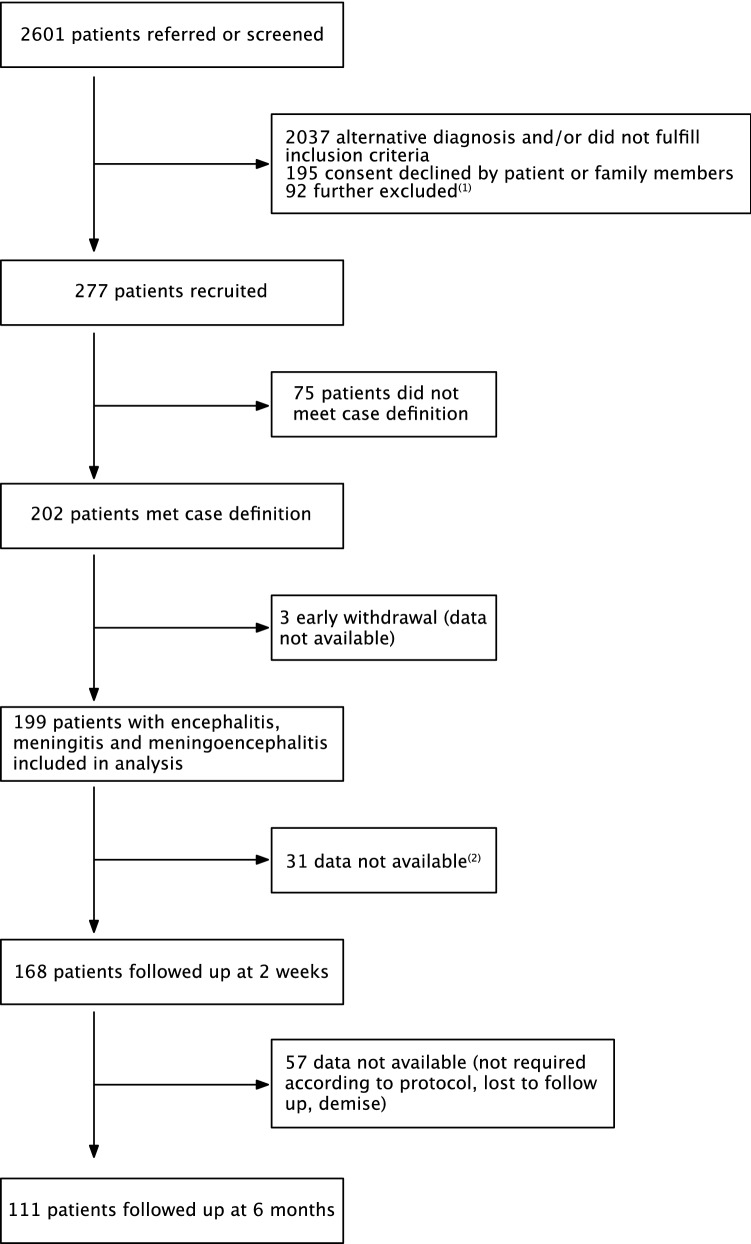
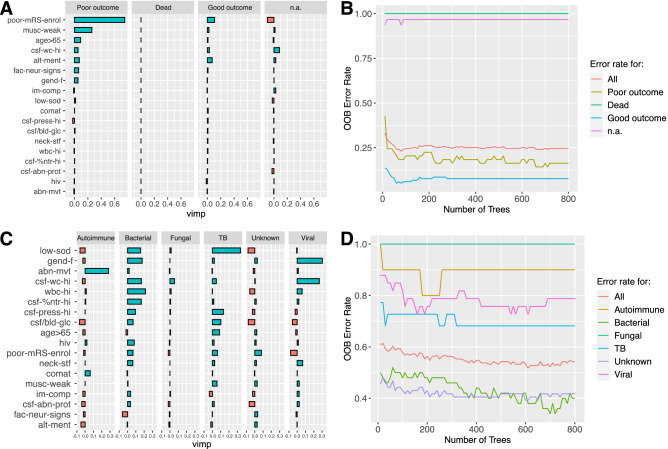
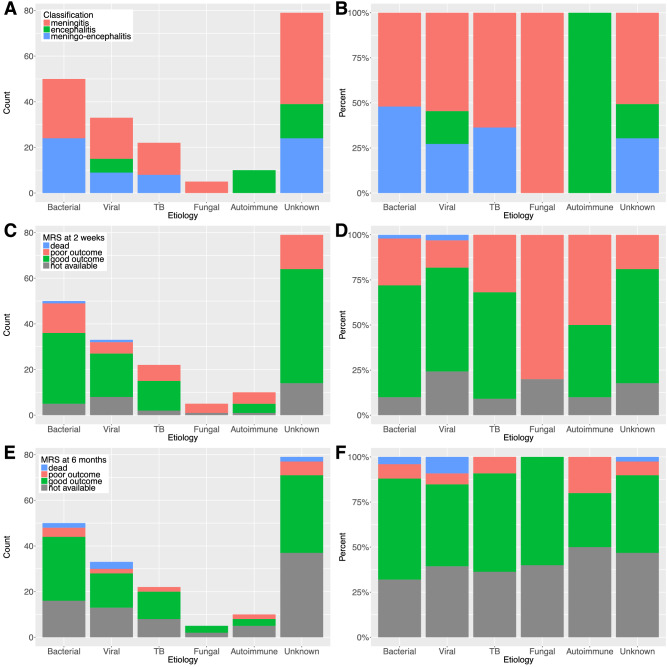
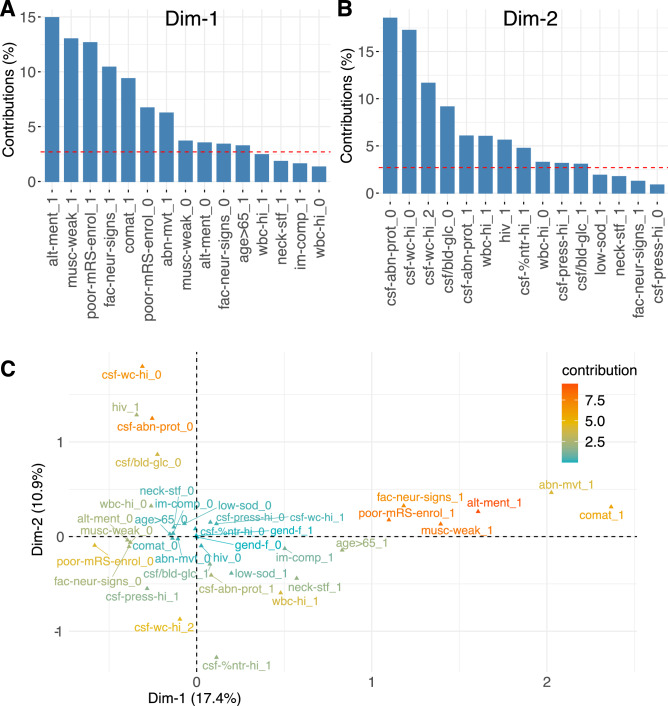
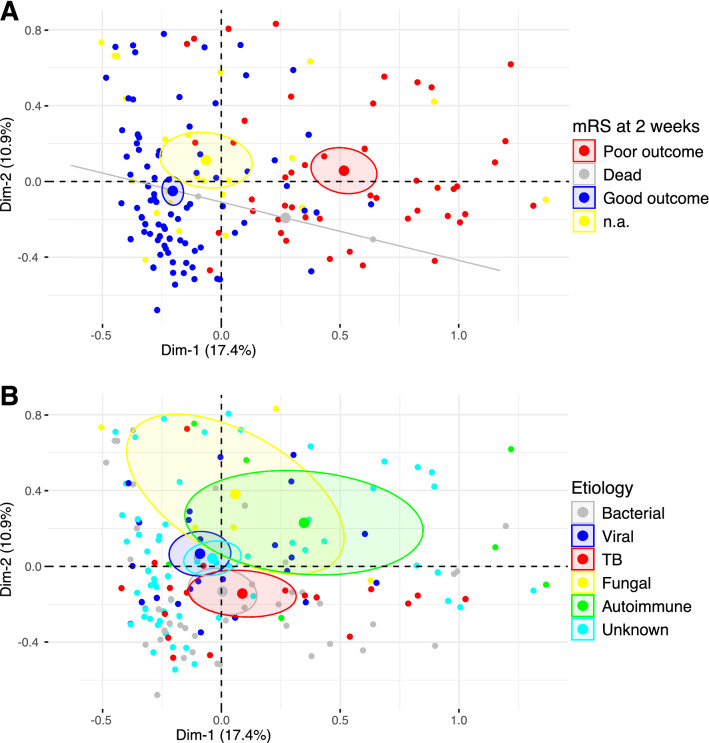
Central nervous system (CNS) infections cause substantial morbidity and mortality worldwide, with mounting concern about new and emerging neurologic infections. Stratifying etiologies based on initial clinical and laboratory data would facilitate etiology-based treatment rather than relying on empirical treatment. Here, we report the epidemiology and clinical outcomes of patients with CNS infections from a prospective surveillance study that took place between 2013 and 2016 in Singapore. Using multiple correspondence analysis and random forest, we analyzed the link between clinical presentation, laboratory results, outcome and etiology. Of 199 patients, etiology was identified as infectious in 110 (55.3%, 95%-CI 48.3-62.0), immune-mediated in 10 (5.0%, 95%-CI 2.8-9.0), and unknown in 79 patients (39.7%, 95%-CI 33.2-46.6). The initial presenting clinical features were associated with the prognosis at 2 weeks, while laboratory-related parameters were related to the etiology of CNS disease. The parameters measured were helpful to stratify etiologies in broad categories, but were not able to discriminate completely between all the etiologies. Our results suggest that while prognosis of CNS is clearly related to the initial clinical presentation, pinpointing etiology remains challenging. Bio-computational methods which identify patterns in complex datasets may help to supplement CNS infection diagnostic and prognostic decisions.
中枢神经系统(CNS)感染在全球范围内导致了大量的发病率和死亡率,人们越来越关注新出现的神经感染。根据初始临床和实验室数据对病因进行分层,将有助于进行病因治疗,而不是依赖经验性治疗。在这里,我们报告了 2013 年至 2016 年期间在新加坡进行的一项前瞻性监测研究中 CNS 感染患者的流行病学和临床结果。我们使用多元对应分析和随机森林分析了临床表现、实验室结果、预后和病因之间的联系。在 199 名患者中,110 名(55.3%,95%-CI 48.3-62.0)被确定为感染性病因,10 名(5.0%,95%-CI 2.8-9.0)为免疫介导性病因,79 名(39.7%,95%-CI 33.2-46.6)病因不明。初始表现的临床特征与 2 周时的预后相关,而实验室相关参数与 CNS 疾病的病因相关。所测量的参数有助于将病因进行广泛分类,但不能完全区分所有病因。我们的结果表明,虽然 CNS 的预后显然与初始临床表现有关,但确定病因仍然具有挑战性。生物计算方法可以识别复杂数据集中的模式,可能有助于辅助 CNS 感染的诊断和预后决策。