Institut de Recerca Sant Joan de Déu, Barcelona, Spain.
Clinical Biochemistry Department, Hospital Sant Joan de Déu, Passeig Sant Jan de Déu, 2, Esplugues de Llobregat, 08950, Barcelona, Spain.
Sci Rep. 2020 Oct 26;10(1):18291. doi: 10.1038/s41598-020-75500-z.
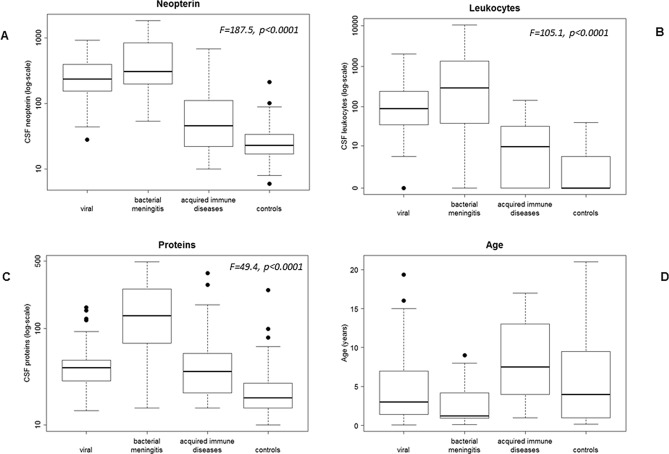
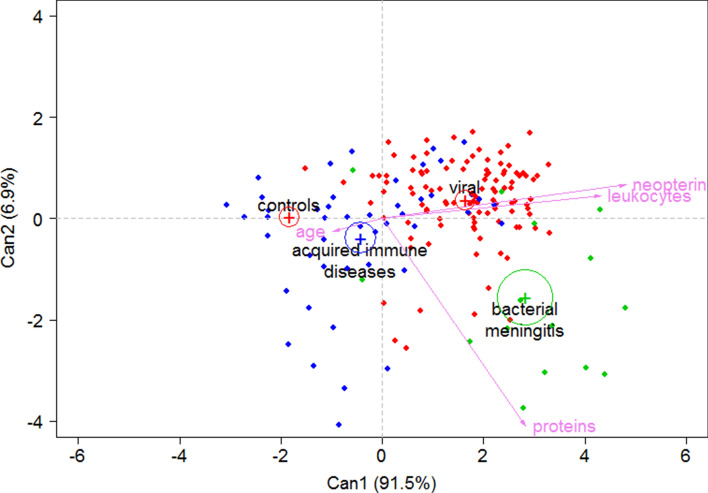
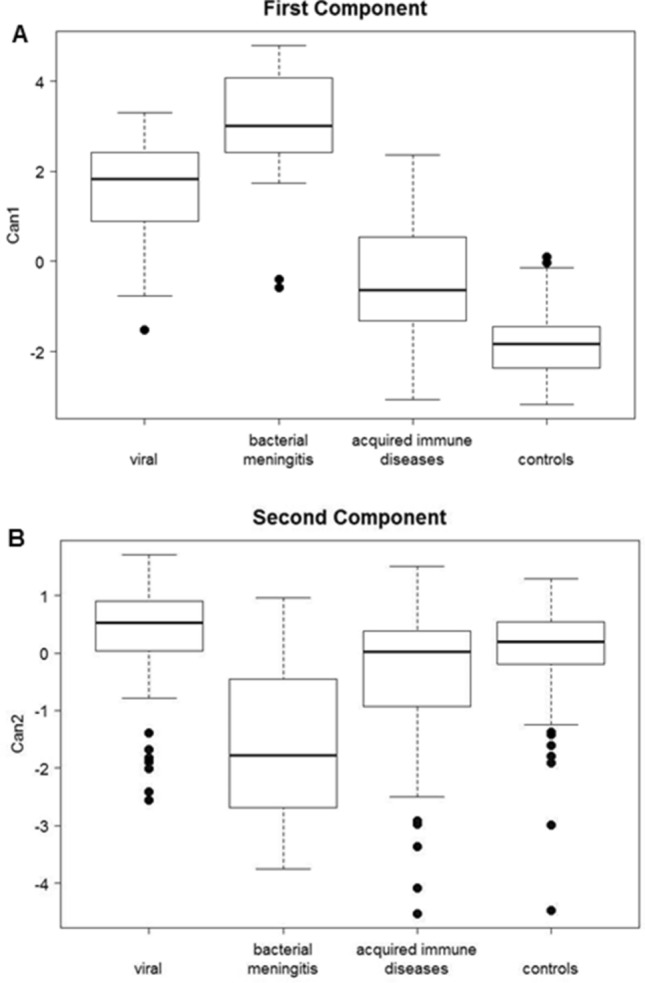
The elevation of neopterin in cerebrospinal fluid (CSF) has been reported in several neuroinflammatory disorders. However, it is not expected that neopterin alone can discriminate among different neuroinflammatory etiologies. We conducted an observational retrospective and case-control study to analyze the CSF biomarkers neopterin, total proteins, and leukocytes in a large cohort of pediatric patients with neuroinflammatory disorders. CSF samples from 277 subjects were included and classified into four groups: Viral meningoencephalitis, bacterial meningitis, acquired immune-mediated disorders, and patients with no-immune diseases (control group). CSF neopterin was analyzed with high-performance liquid chromatography. Microbiological diagnosis included bacterial CSF cultures and several specific real-time polymerase chain reactions. Molecular testing for multiple respiratory pathogens was also included. Antibodies against neuronal and glial proteins were tested. Canonical discriminant analysis of the three biomarkers was conducted to establish the best discriminant functions for the classification of the different clinical groups. Model validation was done by biomarker analyses in a new cohort of 95 pediatric patients. CSF neopterin displayed the highest values in the viral and bacterial infection groups. By applying canonical discriminant analysis, it was possible to classify the patients into the different groups. Validation analyses displayed good results for neuropediatric patients with no-immune diseases and for viral meningitis patients, followed by the other groups. This study provides initial evidence of a more efficient approach to promote the timely classification of patients with viral and bacterial infections and acquired autoimmune disorders. Through canonical equations, we have validated a new tool that aids in the early and differential diagnosis of these neuroinflammatory conditions.
脑脊液(CSF)中神经喋呤水平升高已在多种神经炎症性疾病中报道。然而,预期神经喋呤本身不能区分不同的神经炎症病因。我们进行了一项观察性回顾性病例对照研究,以分析大量神经炎症性疾病患儿的脑脊液生物标志物神经喋呤、总蛋白和白细胞。纳入了 277 例患者的 CSF 样本,并将其分为四组:病毒性脑膜脑炎、细菌性脑膜炎、获得性免疫介导性疾病和无免疫性疾病患者(对照组)。采用高效液相色谱法分析 CSF 神经喋呤。微生物学诊断包括细菌 CSF 培养和几种特定的实时聚合酶链反应。还包括对多种呼吸道病原体的分子检测。测试了针对神经元和神经胶质蛋白的抗体。对这三种生物标志物进行了典型判别分析,以建立用于不同临床组分类的最佳判别函数。通过对 95 例新儿科患者的生物标志物分析对模型进行了验证。CSF 神经喋呤在病毒和细菌感染组中显示出最高值。通过应用典型判别分析,可以将患者分类到不同的组中。验证分析显示对无免疫性疾病的神经儿科患者和病毒性脑膜炎患者的结果较好,其次是其他组。这项研究提供了一种更有效的方法来促进病毒和细菌感染以及获得性自身免疫性疾病患者及时分类的初步证据。通过典型方程,我们验证了一种新工具,该工具有助于这些神经炎症性疾病的早期和鉴别诊断。