Sydney Children's Hospital Network (SCHN), Australia; The University of New South Wales, Australia.
Sydney Children's Hospital Network (SCHN), Australia; The University of New South Wales, Australia.
Eur J Paediatr Neurol. 2019 Jan;23(1):204-213. doi: 10.1016/j.ejpn.2018.09.009. Epub 2018 Sep 28.
Neurological complications of influenza cause significant disease in children. Central nervous system inflammation, the presumed mechanism of influenza-associated encephalopathy, is difficult to detect. Characteristics of children presenting with severe neurological complications of influenza, and potential biomarkers of influenza-associated encephalopathy are described.
A multi-center, retrospective case-series of children with influenza and neurological complications during 2017 was performed. Enrolled cases met criteria for influenza-associated encephalopathy or had status epilepticus. Functional outcome at discharge was compared between groups using the Modified Rankin Scale (mRS).
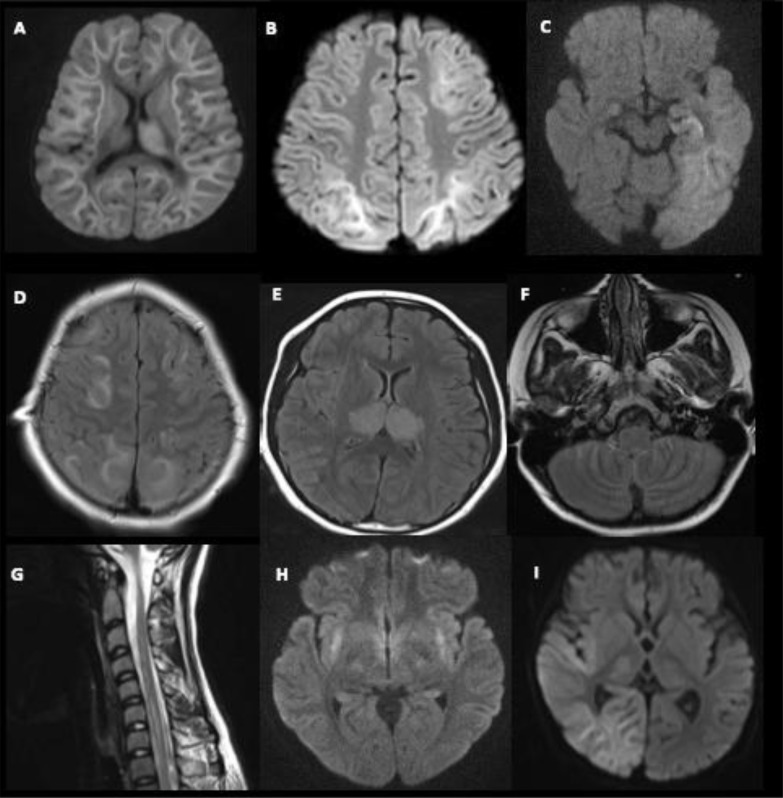
There were 22 children with influenza studied of whom 11/22 had encephalopathy and 11/22 had status epilepticus. Only one child had a documented influenza immunization. The biomarker CSF neopterin was tested in 10/11 children with encephalopathy and was elevated in 8/10. MRI was performed in all children with encephalopathy and was abnormal in 8 (73%). Treatment of children with encephalopathy was with corticosteroids or intravenous immunoglobulin in 9/11 (82%). In all cases oseltamivir use was low (59%) while admission to the intensive care unit was frequent (14/22, 66%). Clinical outcome at discharge was moderate to severe disability (mRS score > 2) in the majority of children with encephalopathy (7/11, 64%), including one child who died. Children with status epilepticus recovered to near-baseline function in all cases.
Raised CSF neopterin was present in most cases of encephalopathy, and along with diffusion restriction on MRI, is a useful diagnostic biomarker. Lack of seasonal influenza vaccination represents a missed opportunity to prevent illness in children, including severe neurological disease.
流感引起的神经系统并发症在儿童中导致严重疾病。中枢神经系统炎症是流感相关性脑病的推测机制,但难以检测。本研究描述了表现出严重流感相关神经系统并发症的儿童的特征,以及流感相关性脑病的潜在生物标志物。
对 2017 年期间发生流感和神经系统并发症的儿童进行了一项多中心回顾性病例系列研究。入组病例符合流感相关性脑病或癫痫持续状态的标准。采用改良 Rankin 量表(mRS)比较两组出院时的功能结局。
研究了 22 例流感患儿,其中 11/22 例有脑病,11/22 例有癫痫持续状态。只有 1 例患儿有记录的流感疫苗接种史。对 11 例脑炎患儿中的 10 例进行了脑脊液新蝶呤检测,其中 8 例升高。对所有脑炎患儿均行 MRI 检查,其中 8 例(73%)异常。脑炎患儿的治疗方法为皮质类固醇或静脉注射免疫球蛋白,其中 9/11 例(82%)。所有病例中奥司他韦的使用率均较低(59%),但进入重症监护病房的频率较高(14/22,66%)。脑炎患儿出院时的临床结局为中重度残疾(mRS 评分>2),其中 7/11 例(64%),包括 1 例死亡患儿。癫痫持续状态患儿的功能均恢复至接近基线。
大多数脑炎患儿的脑脊液新蝶呤升高,结合 MRI 上的弥散受限,是一种有用的诊断生物标志物。缺乏季节性流感疫苗接种是预防儿童患病(包括严重神经系统疾病)的一个错失的机会。