School of Basic Medical Sciences, Shanghai University of Traditional Chinese Medicine, Shanghai, China.
School of Public Health, Shanghai University of Traditional Chinese Medicine, Shanghai, China.
PLoS One. 2020 Oct 27;15(10):e0241202. doi: 10.1371/journal.pone.0241202. eCollection 2020.
Banxia Xiexin decoction (BXD), a classical formula of traditional Chinese medicine (TCM), has been wildly used for chronic atrophic gastritis (CAG) patients with the cold-heat complex syndrome in China, and achieved satisfied effects. However, the clinical effects of it remains unclear.
The purpose of this article is to evaluate the clinical efficacy and safety of BXD for CAG treatment.
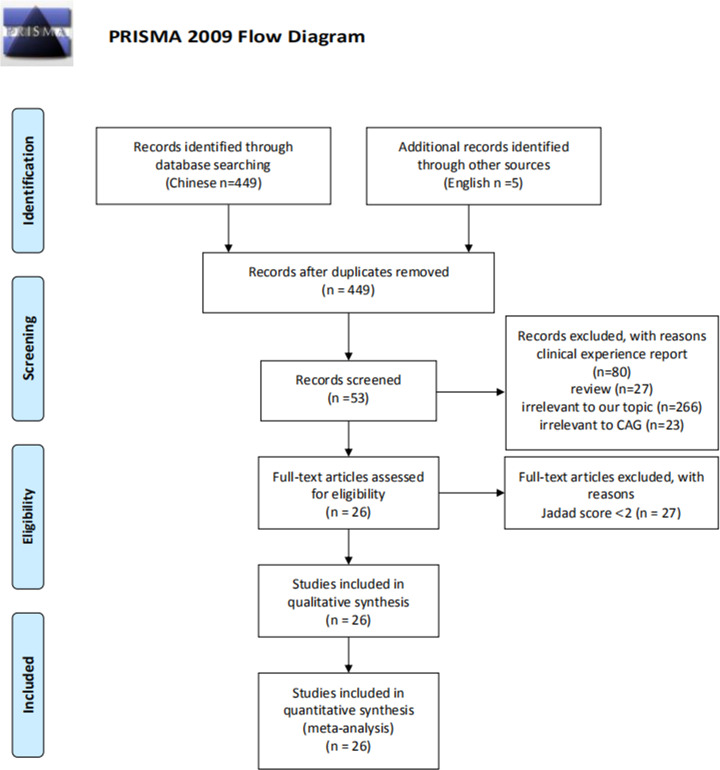
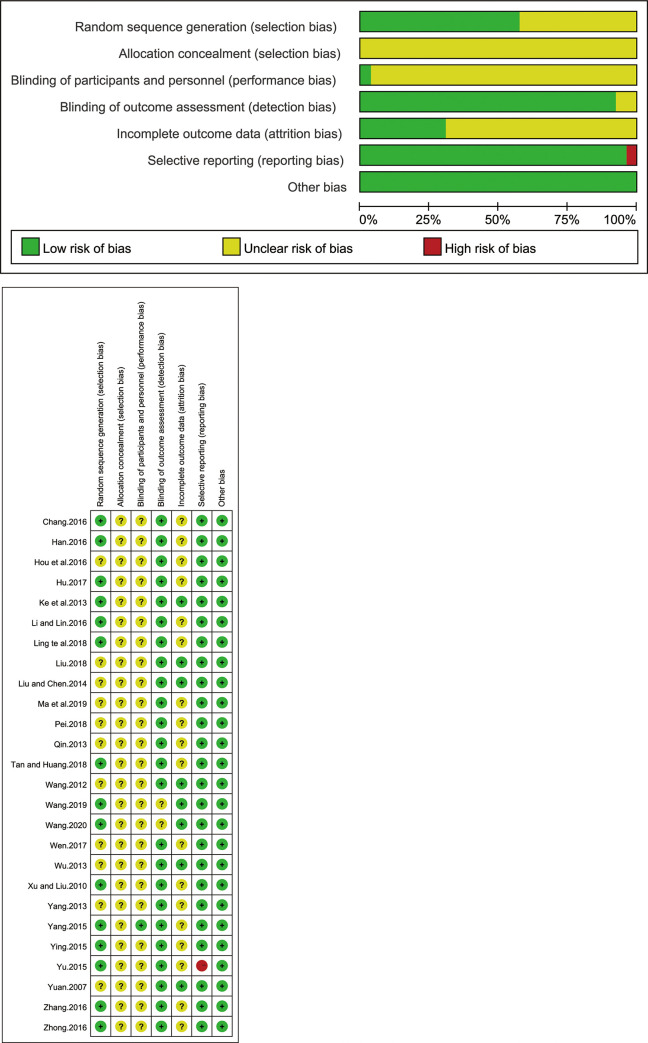
We searched seven electronic databases including Ovid, Embase, PubMed, Cochrane Library, Wan-fang database, VIP (Chinese Scientific Journals Database) and CNKI (China National Knowledge Infrastructure) from their inception to September 21, 2020. We used Jadad scale and Cochrane Collaboration's risk of bias tool to make evaluation of methodological quality. Revman 5.3 statistical software was used for statistical processing to evaluate the clinical efficacy and safety of BXD.
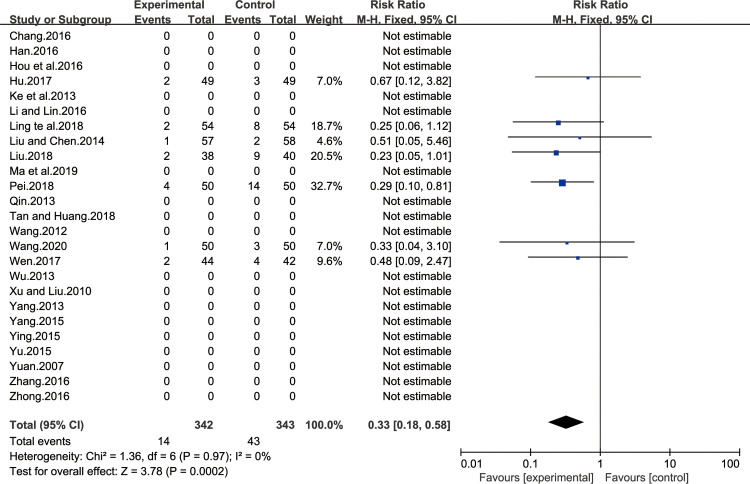
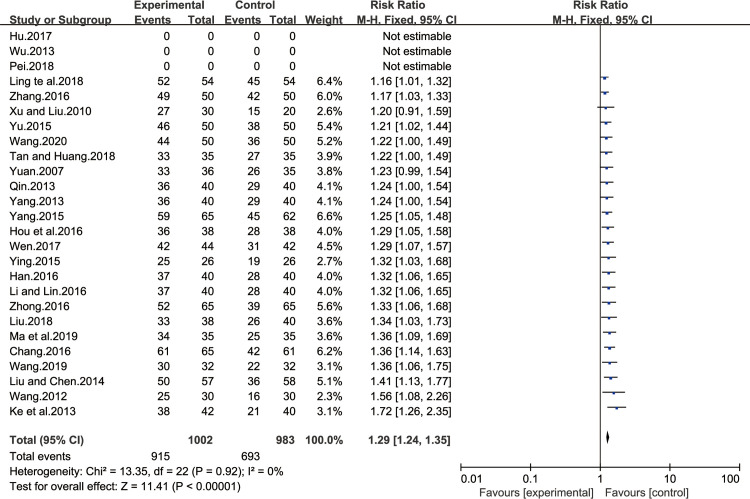
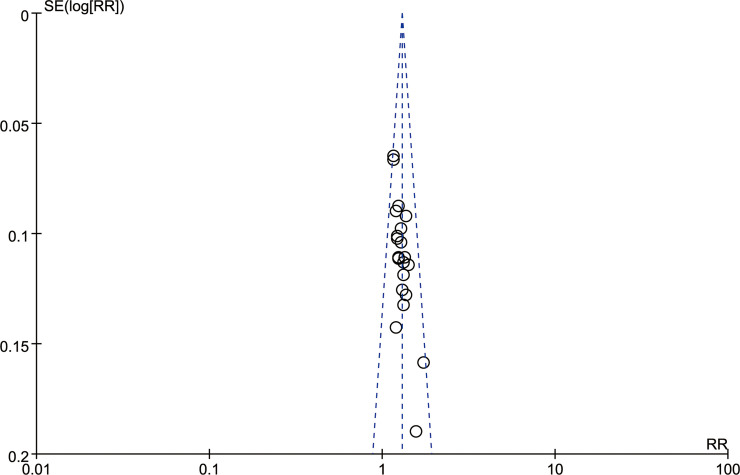
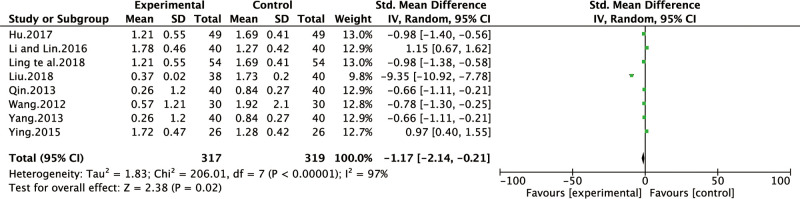
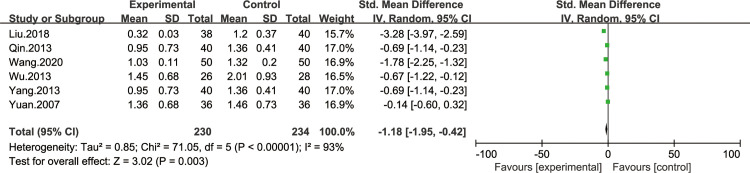
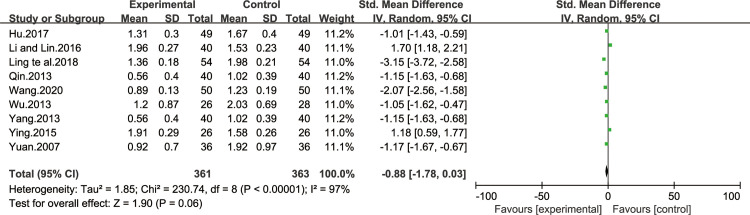
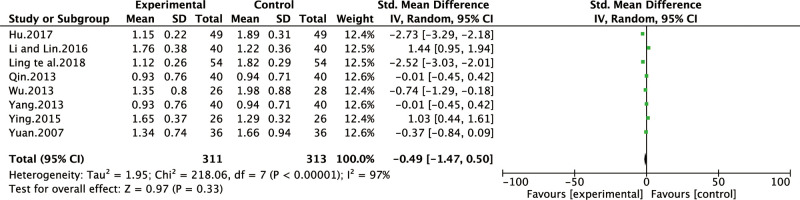
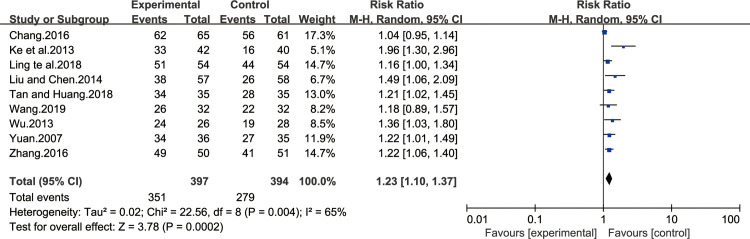
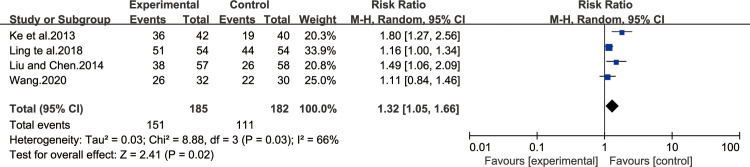
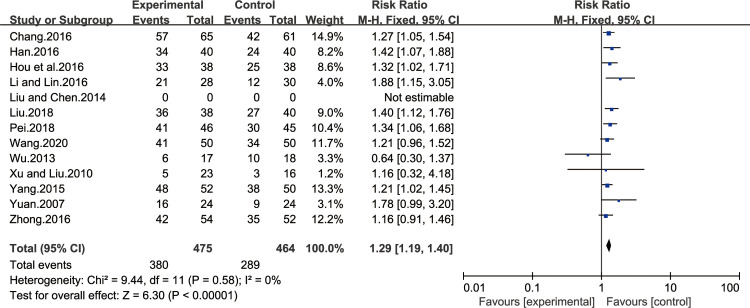
26 randomized controlled trials (RCTs) totaling 1985 patients were identified for analysis. Meta-analysis showed that BXD treatment was more effective (RR 1.29; 95%CI 1.24, 1.35; P<0.00001) and safe (MD 0.33; 95%CI 0.18, 0.58; P = 0.0002) than Chinese patent medicine + western medicine. Furthermore, BXD had improvement on symptoms scores such as stomach distending pain, and belching. Besides, BXD was more effective in inhibiting Helicobacter Pylori (HP), improving HP-related inflammation, and relieving the degree of glandular atrophy, intestinal metaplasia (IM), and dysplasia of gastric mucosa (GM).
The meta-analysis showed that BXD was more effective and safer for CAG patients than the control group. However, due to limitations of methodological quality and small sample size of the included studies, further standardized research of rigorous design should be needed.
半夏泻心汤(BXD)是一种经典的中药方剂,在中国被广泛用于治疗寒热错杂型慢性萎缩性胃炎(CAG)患者,并取得了满意的疗效。然而,其临床疗效尚不清楚。
本文旨在评估 BXD 治疗 CAG 的临床疗效和安全性。
我们检索了 7 个电子数据库,包括 Ovid、Embase、PubMed、Cochrane 图书馆、万方数据库、维普(中国科技期刊数据库)和中国知网(CNKI),检索时间从建库至 2020 年 9 月 21 日。我们使用 Jadad 量表和 Cochrane 协作风险偏倚工具对方法学质量进行评估。采用 RevMan 5.3 统计软件进行统计处理,评估 BXD 的临床疗效和安全性。
共纳入 26 项随机对照试验(RCTs),总计 1985 例患者。Meta 分析结果显示,BXD 治疗组的疗效优于中西药对照组(RR 1.29;95%CI 1.24,1.35;P<0.00001),安全性更高(MD 0.33;95%CI 0.18,0.58;P = 0.0002)。此外,BXD 还能改善胃脘胀闷疼痛、嗳气等症状评分。并且,BXD 对抑制幽门螺杆菌(HP)、改善 HP 相关炎症、缓解腺体萎缩、肠上皮化生(IM)和胃黏膜异型增生(GM)程度的疗效优于对照组。
Meta 分析结果表明,BXD 治疗 CAG 患者的疗效优于对照组,安全性更高。但由于纳入研究的方法学质量有限,且样本量较小,需要进一步开展严格设计的标准化研究。