Hampson Daniel P, Gong Shiyang, Xie Yi
Business School, University of International Business and Economics, Rm. 813, Bld. Keyan, Huixindongjie #10, Chaoyang District, 100029, China.
Business School, University of International Business and Economics, Rm. 522, Bld. Ningyuan, Huixindongjie #10, Chaoyang District, 100029, China.
J Bus Res. 2021 Aug;132:693-704. doi: 10.1016/j.jbusres.2020.10.032. Epub 2020 Oct 22.
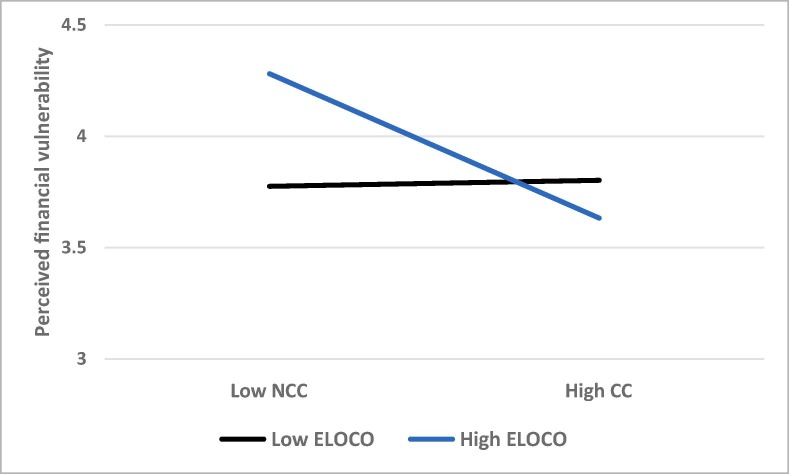
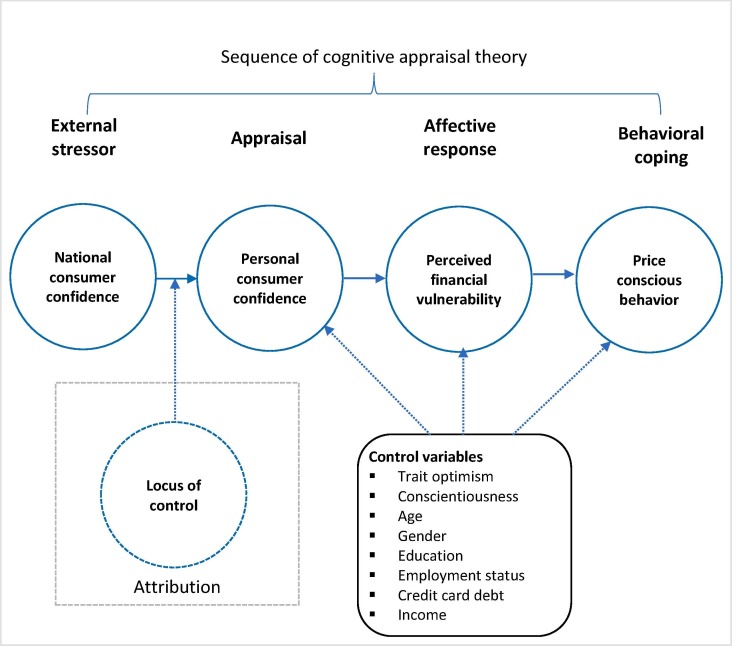
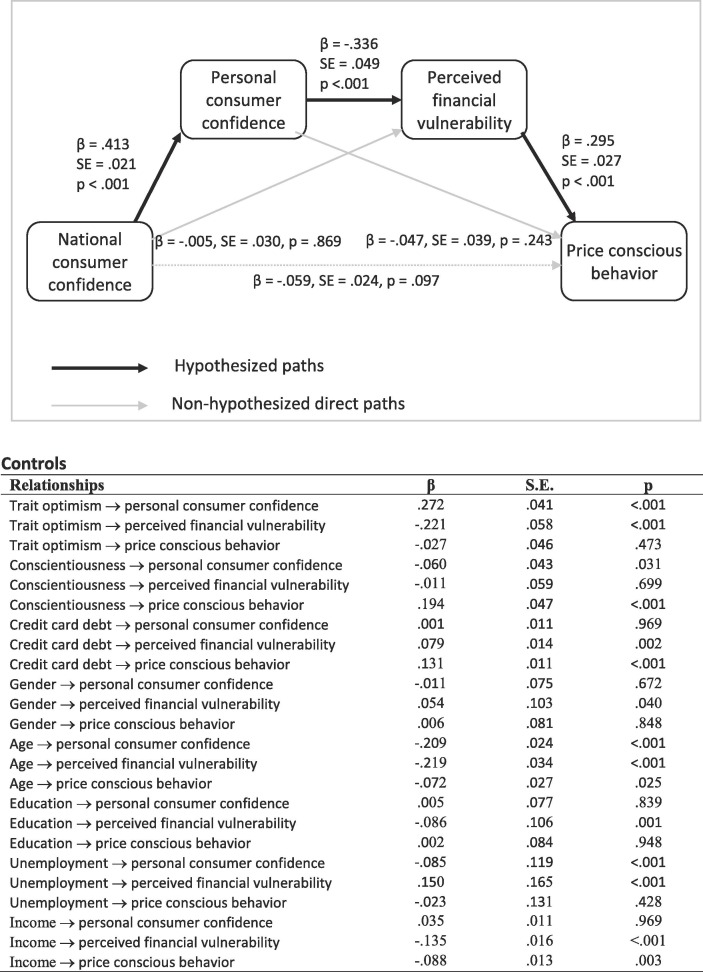
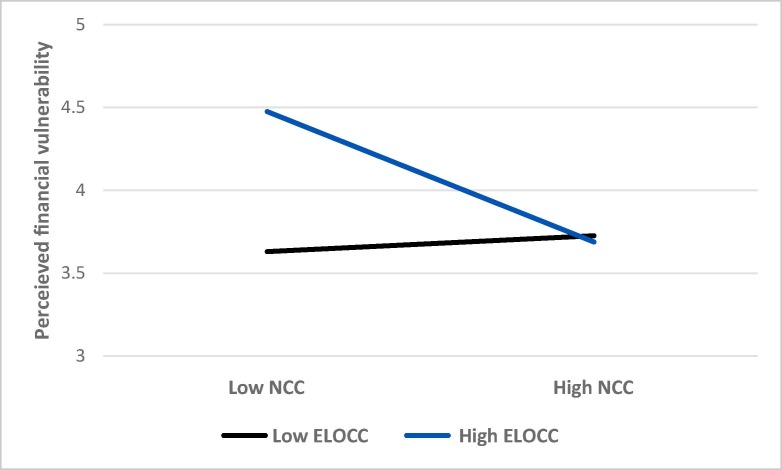
Despite their ubiquity in academic and commercial research, evidence of the usefulness of consumer confidence indices is mixed. To contribute to this debate, we examine the psychological mechanisms through which consumer confidence does (and does not) affect consumer behavior. We develop a conceptual model, which we test via structural equation modelling and moderated mediation analysis, using data from a sample of US consumers (n = 1,090). Rather than conceptualize consumer confidence as a single construct, our study is the first to distinguish between and . Consistent with cognitive appraisal theory, personal consumer confidence mediates the relationship between national consumer confidence and perceived financial vulnerability, which in turn leads to increased price conscious behavior. Drawing on attribution theory, we find that external locus of control enhances the effects of national consumer confidence. We provide practical advice to economic forecasters, business analysts, marketers, and financial educators.
尽管消费者信心指数在学术研究和商业研究中普遍存在,但其有用性的证据却参差不齐。为了推动这一辩论,我们研究了消费者信心影响(以及不影响)消费者行为的心理机制。我们构建了一个概念模型,并通过结构方程建模和调节中介分析进行检验,使用的是来自美国消费者样本(n = 1,090)的数据。我们的研究并非将消费者信心概念化为单一结构,而是首次区分了 和 。与认知评估理论一致,个人消费者信心在国家消费者信心与感知财务脆弱性之间起中介作用,进而导致价格意识行为增加。借鉴归因理论,我们发现外部控制点会增强国家消费者信心的影响。我们为经济预测者、商业分析师、营销人员和金融教育工作者提供了实用建议。