The Research Center for Aging, Affiliated Friendship Plastic Surgery Hospital of Nanjing Medical University, Nanjing 210029, China.
Department of Burns and Plastic Surgery, The Drum Tower Clinical Medical College, Affiliated Drum Tower Hospital, Nanjing Medical University, Nanjing 210008, China.
Int J Biol Sci. 2020 Aug 19;16(14):2712-2726. doi: 10.7150/ijbs.48169. eCollection 2020.
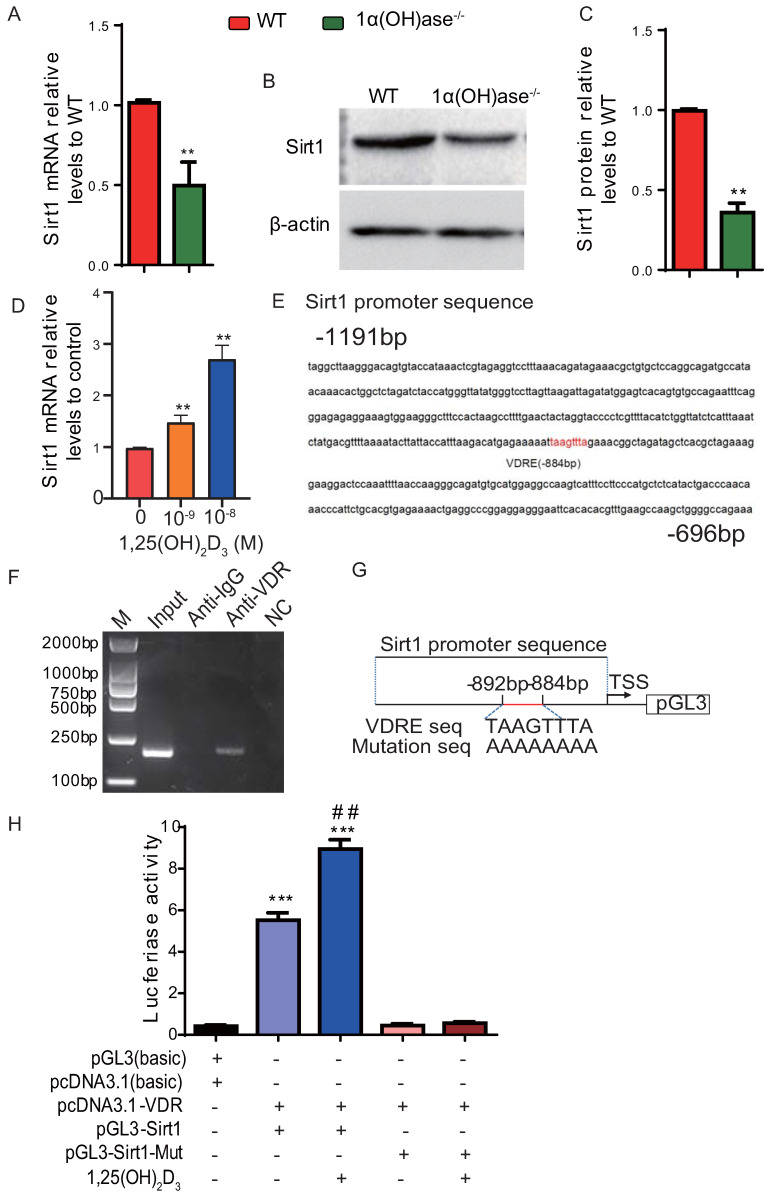
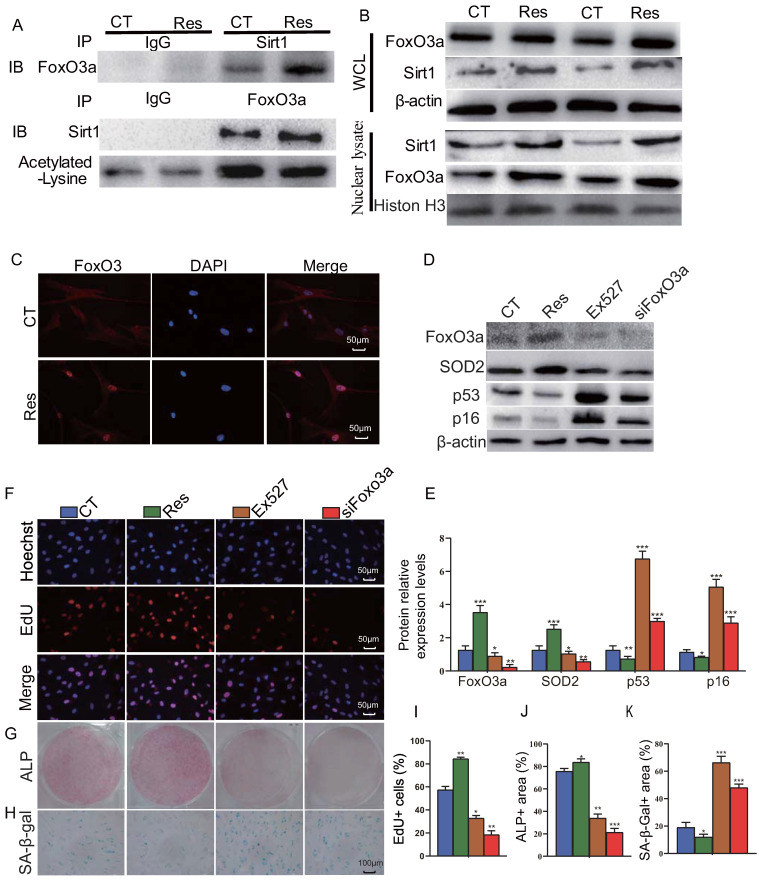
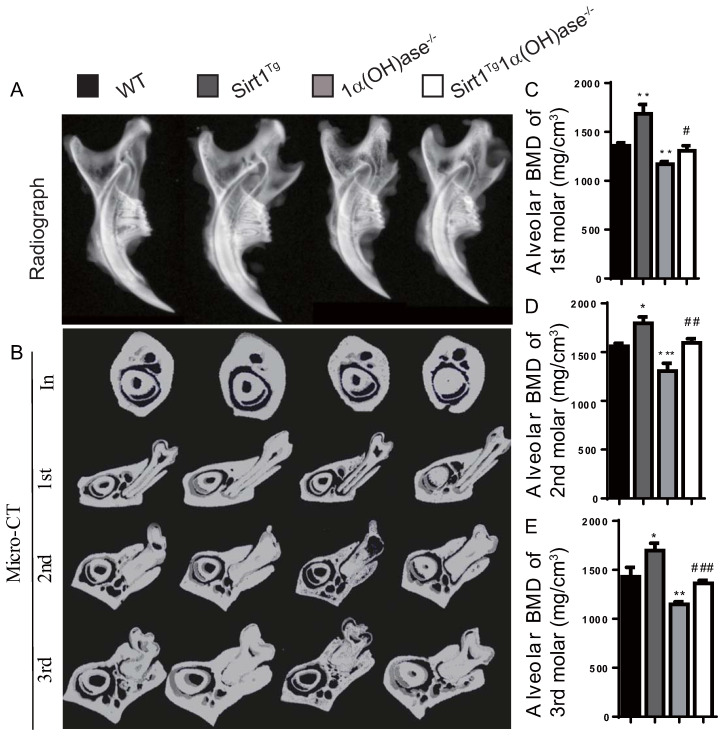
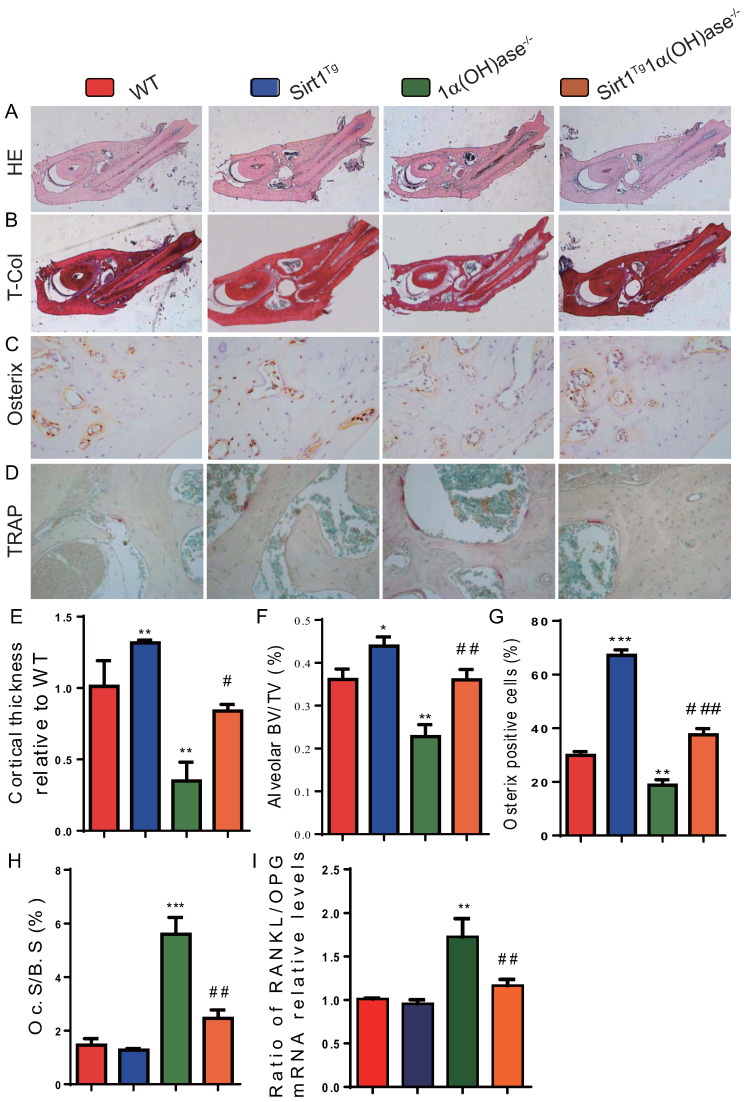
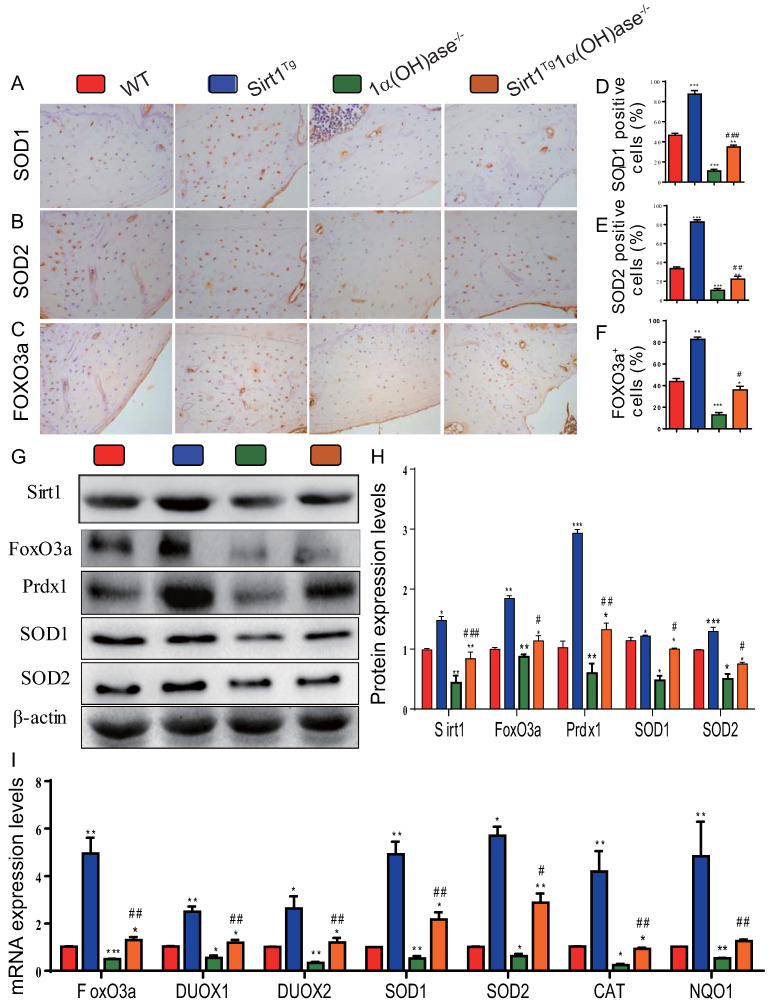
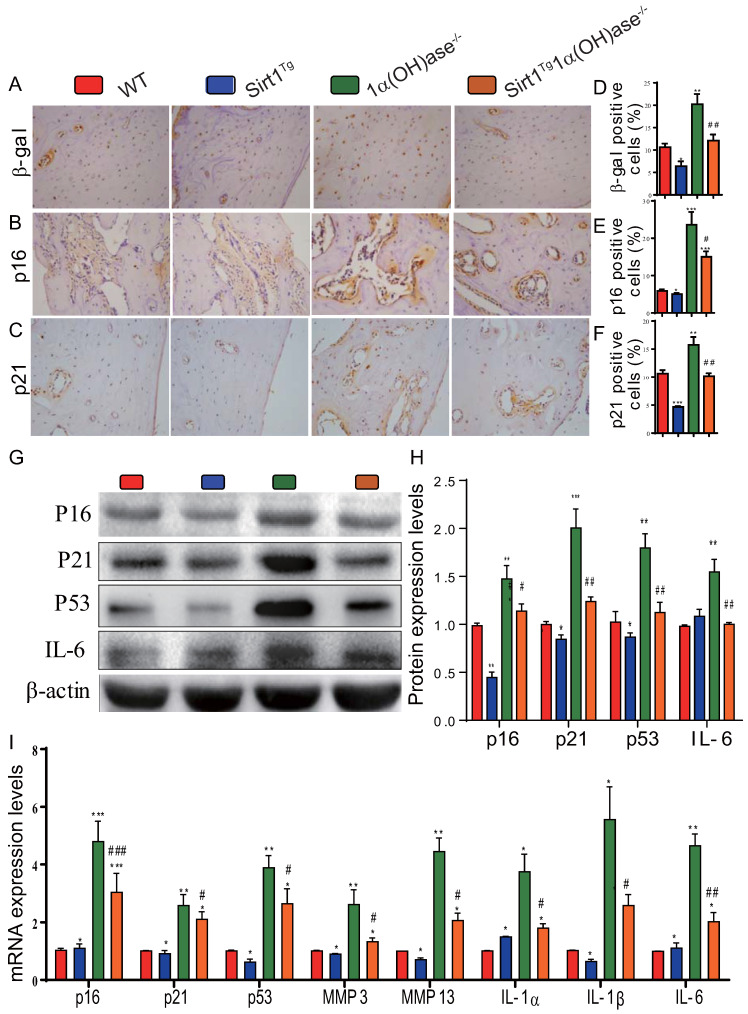
It has been reported that 1,25 dihydroxyvitamin D [1,25(OH)D] deficiency leads to the loss of mandibular bone, however the mechanism is unclear. We investigated whether the Sirt1/FOXO3a signaling pathway is involved in this process. Using a 1,25(OH)D deficiency model induced by genetic deletion in mice of 25-hydroxyvitamin D-1α hydroxylase [1α(OH)ase mice]. We first documented a sharp reduction of expression levels of Sirt1 in the 1α(OH)ase mice . Next, we demonstrated dose-dependent upregulation of Sirt1 by treatment with exogenous 1,25(OH)D. We then identified a functional VDR binding site in the Sirt1 promoter. By crossing Prx1-Sirt1 transgenic mice with 1α(OH)ase mice we demonstrated that the overexpression of Sirt1 in mesenchymal stem cells (MSCs) greatly improved the 1α(OH)ase mandibular bone loss phenotype by increasing osteoblastic bone formation and reducing osteoclastic bone resorption. In mechanistic studies, we showed, in 1α(OH)ase mice, decreases of Sirt1 and FoxO3a, an increase in oxidative stress as reflected by a reduction of the antioxidant enzymes peroxiredoxin1 (Prdx1), SOD1 and SOD2 expression, and an increase of markers for osteocyte senescence and senescence associated secretory phenotypes (SASP), including β-galactosidase (β-gal), p16, p53 and p21. The targeted overexpression of Sirt1 in the 1α(OH)ase mice restored the expression levels of these molecules. Finally, we demonstrated that a Sirt1 agonist can upregulate FOXO3a activity by increasing deacetylation and nuclear translocation. Overall, results from this study support the concept that targeted increases in Sirt1/FOXO3a signaling levels can greatly improve the bone loss caused by 1,25(OH)D deficiency.
有报道称,1,25 二羟维生素 D [1,25(OH)D] 缺乏会导致下颌骨丢失,但机制尚不清楚。我们研究了 Sirt1/FOXO3a 信号通路是否参与了这一过程。我们使用 25-羟维生素 D-1α 羟化酶 [1α(OH)ase 小鼠] 基因缺失诱导的 1,25(OH)D 缺乏模型。我们首先记录了 1α(OH)ase 小鼠中 Sirt1 的表达水平急剧下降。接下来,我们证明了外源性 1,25(OH)D 处理可使 Sirt1 呈剂量依赖性上调。然后,我们在 Sirt1 启动子中鉴定了一个功能性 VDR 结合位点。通过将 Prx1-Sirt1 转基因小鼠与 1α(OH)ase 小鼠杂交,我们证明了骨髓间充质干细胞 (MSCs) 中 Sirt1 的过表达通过增加成骨细胞骨形成和减少破骨细胞骨吸收,极大地改善了 1α(OH)ase 下颌骨丢失表型。在机制研究中,我们在 1α(OH)ase 小鼠中发现 Sirt1 和 FoxO3a 减少,氧化应激增加,反映在抗氧化酶过氧化物酶 1 (Prdx1)、SOD1 和 SOD2 表达减少,以及成骨细胞衰老和衰老相关分泌表型 (SASP) 的标志物增加,包括β-半乳糖苷酶 (β-gal)、p16、p53 和 p21。在 1α(OH)ase 小鼠中靶向过表达 Sirt1 恢复了这些分子的表达水平。最后,我们证明 Sirt1 激动剂可以通过增加去乙酰化和核转位来上调 FOXO3a 活性。总之,这项研究的结果支持了这样一种概念,即靶向增加 Sirt1/FOXO3a 信号水平可以极大地改善 1,25(OH)D 缺乏引起的骨丢失。