
E3 泛素连接酶 NEDD4 家族调控网络与心血管疾病。
E3 Ubiquitin ligase NEDD4 family‑regulatory network in cardiovascular disease.
机构信息
Department of Cardiology, the First Hospital of China Medical University, Shenyang, Liaoning, P.R. China.
Staff scientist, Center for Molecular Medicine National Heart Lung and Blood Institute, National Institutes of Health, the United States.
出版信息
Int J Biol Sci. 2020 Aug 21;16(14):2727-2740. doi: 10.7150/ijbs.48437. eCollection 2020.
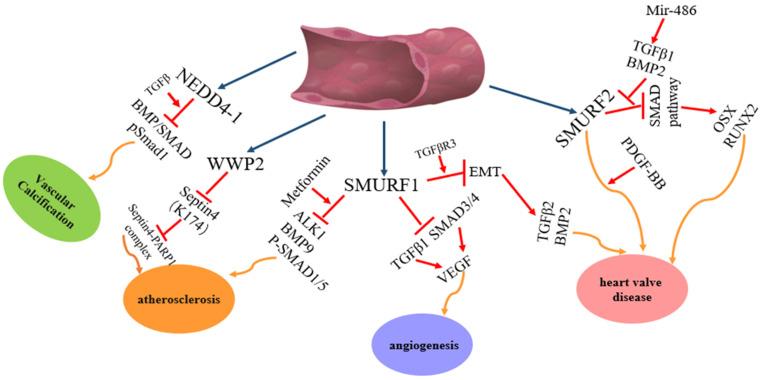
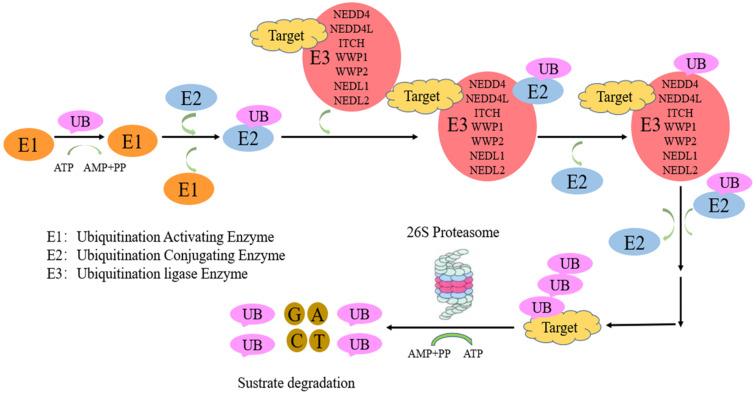
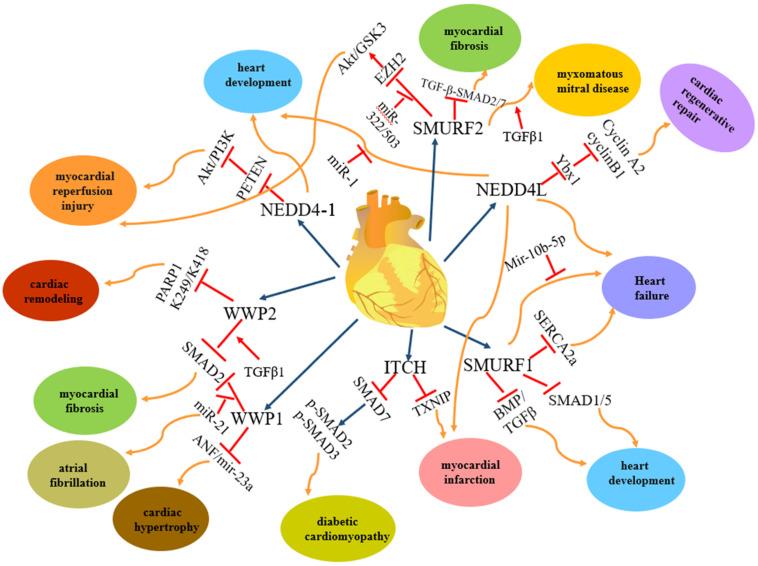
Protein ubiquitination represents a critical modification occurring after translation. E3 ligase catalyzes the covalent binding of ubiquitin to the protein substrate, which could be degraded. Ubiquitination as an important protein post-translational modification is closely related to cardiovascular disease. The NEDD4 family, belonging to HECT class of E3 ubiquitin ligases can recognize different substrate proteins, including PTEN, ENaC, Nav1.5, SMAD2, PARP1, Septin4, ALK1, SERCA2a, TGFβR3 and so on, via the WW domain to catalyze ubiquitination, thus participating in multiple cardiovascular-related disease such as hypertension, arrhythmia, myocardial infarction, heart failure, cardiotoxicity, cardiac hypertrophy, myocardial fibrosis, cardiac remodeling, atherosclerosis, pulmonary hypertension and heart valve disease. However, there is currently no review comprehensively clarifying the important role of NEDD4 family proteins in the cardiovascular system. Therefore, the present review summarized recent studies about NEDD4 family members in cardiovascular disease, providing novel insights into the prevention and treatment of cardiovascular disease. In addition, assessing transgenic animals and performing gene silencing would further identify the ubiquitination targets of NEDD4. NEDD4 quantification in clinical samples would also constitute an important method for determining NEDD4 significance in cardiovascular disease.
蛋白质泛素化是翻译后发生的一种重要修饰。E3 连接酶催化泛素与蛋白质底物的共价结合,从而导致蛋白质被降解。泛素化作为一种重要的蛋白质翻译后修饰,与心血管疾病密切相关。NEDD4 家族属于 HECT 类 E3 泛素连接酶,可以通过 WW 结构域识别不同的底物蛋白,包括 PTEN、ENaC、Nav1.5、SMAD2、PARP1、Septin4、ALK1、SERCA2a、TGFβR3 等,从而催化泛素化,参与多种心血管相关疾病,如高血压、心律失常、心肌梗死、心力衰竭、心脏毒性、心肌肥厚、心肌纤维化、心脏重构、动脉粥样硬化、肺动脉高压和心脏瓣膜病。然而,目前尚无综述全面阐明 NEDD4 家族蛋白在心血管系统中的重要作用。因此,本综述总结了 NEDD4 家族成员在心血管疾病中的最新研究进展,为心血管疾病的防治提供了新的思路。此外,评估转基因动物和进行基因沉默将进一步确定 NEDD4 的泛素化靶标。在临床样本中检测 NEDD4 的含量也将成为确定 NEDD4 在心血管疾病中意义的重要方法。
 Zotero 插件