Cuesta-Mateos Carlos, Fuentes Patricia, Schrader Alexandra, Juárez-Sánchez Raquel, Loscertales Javier, Mateu-Albero Tamara, Vega-Piris Lorena, Espartero-Santos Marina, Marcos-Jimenez Ana, Sánchez-López Blanca Andrea, Pérez-García Yaiza, Jungherz Dennis, Oberbeck Sebastian, Wahnschaffe Linus, Kreutzman Anna, Andersson Emma I, Mustjoki Satu, Faber Edgar, Urzainqui Ana, Fresno Manuel, Stamatakis Kostantino, Alfranca Arantzazu, Terrón Fernando, Herling Marco, Toribio María Luisa, Muñoz-Calleja Cecilia
Immunology Department, Hospital Universitario de La Princesa, IIS-IP, C/ Diego de León 62, 28006 Madrid, Spain.
IMMED S.L., Immunological and Medicinal Products, Madrid, Spain.
Biomark Res. 2020 Oct 24;8:54. doi: 10.1186/s40364-020-00234-z. eCollection 2020.
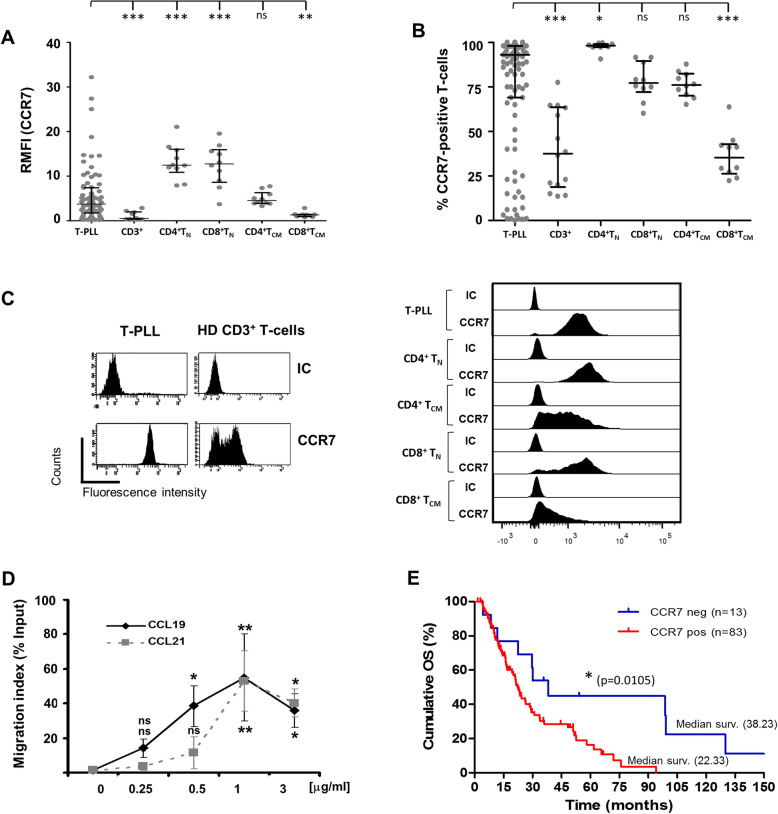
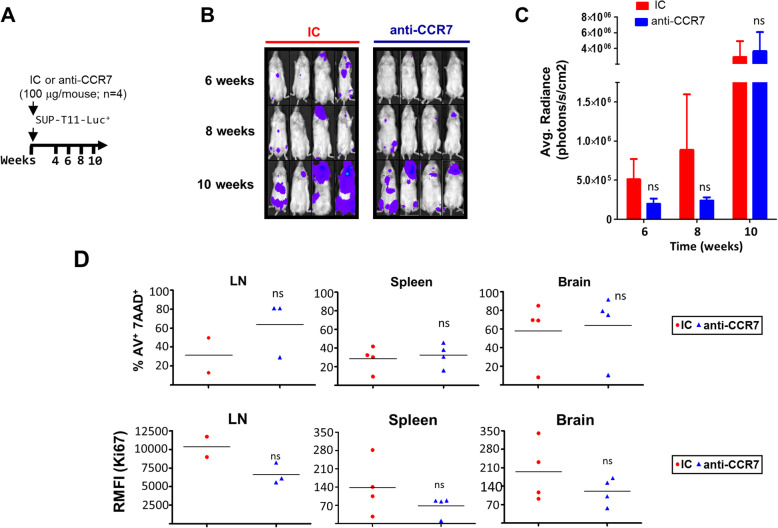
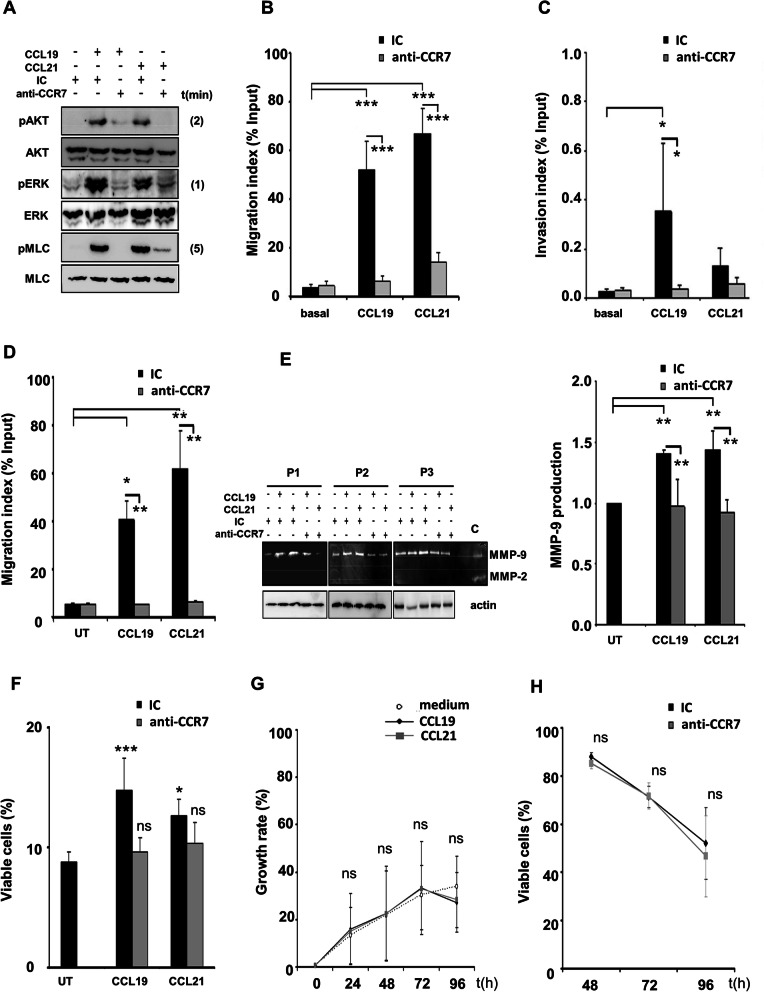
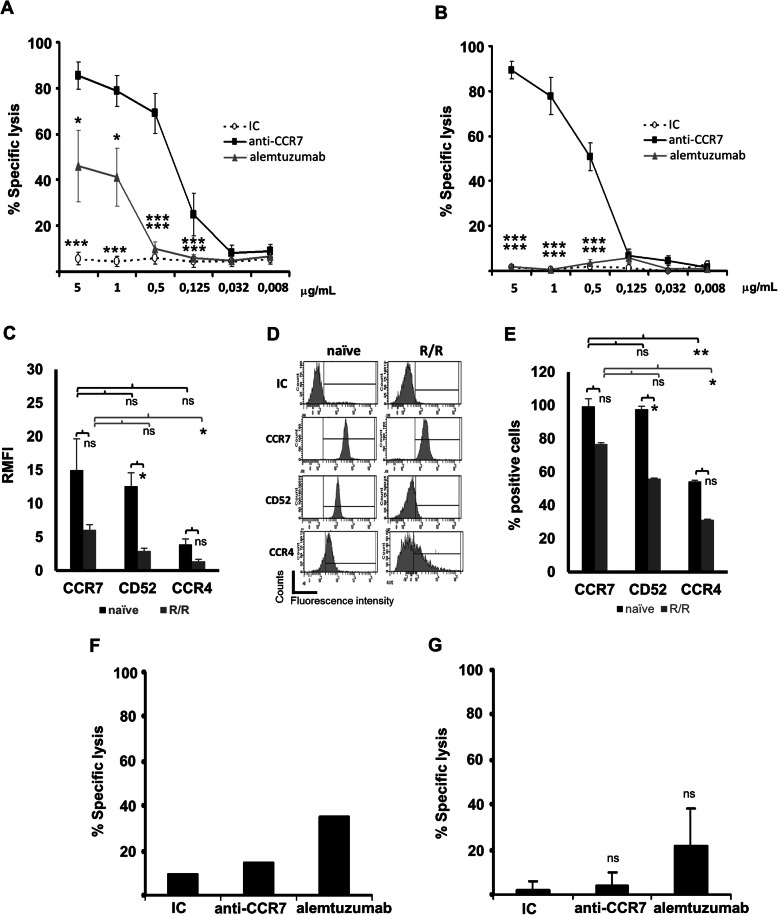
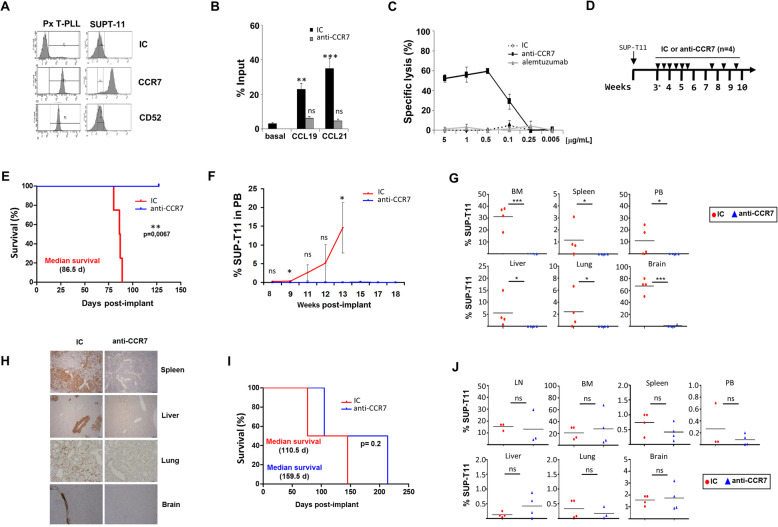
T-cell prolymphocytic leukemia (T-PLL) is a poor prognostic disease with very limited options of efficient therapies. Most patients are refractory to chemotherapies and despite high response rates after alemtuzumab, virtually all patients relapse. Therefore, there is an unmet medical need for novel therapies in T-PLL. As the chemokine receptor CCR7 is a molecule expressed in a wide range of malignancies and relevant in many tumor processes, the present study addressed the biologic role of this receptor in T-PLL. Furthermore, we elucidated the mechanisms of action mediated by an anti-CCR7 monoclonal antibody (mAb) and evaluated whether its anti-tumor activity would warrant development towards clinical applications in T-PLL. Our results demonstrate that CCR7 is a prognostic biomarker for overall survival in T-PLL patients and a functional receptor involved in the migration, invasion, and survival of leukemic cells. Targeting CCR7 with a mAb inhibited ligand-mediated signaling pathways and induced tumor cell killing in primary samples. In addition, directing antibodies against CCR7 was highly effective in T-cell leukemia xenograft models. Together, these findings make CCR7 an attractive molecule for novel mAb-based therapeutic applications in T-PLL, a disease where recent drug screen efforts and studies addressing new compounds have focused on chemotherapy or small molecules.
accompanies this paper at 10.1186/s40364-020-00234-z.
T 细胞原淋巴细胞白血病(T-PLL)是一种预后不良的疾病,有效治疗选择非常有限。大多数患者对化疗耐药,尽管阿仑单抗治疗后缓解率较高,但几乎所有患者都会复发。因此,T-PLL 对新型疗法存在未满足的医疗需求。由于趋化因子受体 CCR7 在多种恶性肿瘤中表达且在许多肿瘤进程中发挥作用,本研究探讨了该受体在 T-PLL 中的生物学作用。此外,我们阐明了抗 CCR7 单克隆抗体(mAb)介导的作用机制,并评估其抗肿瘤活性是否值得开发用于 T-PLL 的临床应用。我们的结果表明,CCR7 是 T-PLL 患者总生存的预后生物标志物,也是参与白血病细胞迁移、侵袭和存活的功能性受体。用 mAb 靶向 CCR7 可抑制配体介导的信号通路,并在原代样本中诱导肿瘤细胞杀伤。此外,针对 CCR7 的抗体在 T 细胞白血病异种移植模型中非常有效。总之,这些发现使 CCR7 成为 T-PLL 中基于新型 mAb 治疗应用的有吸引力的分子,在这种疾病中,最近的药物筛选努力和针对新化合物的研究主要集中在化疗或小分子上。
与本文一同发表于 10.1186/s40364-020-00234-z。