Department of Internal Medicine, University of Michigan, Ann Arbor, MI 48109, USA.
Department of Pathology, University of Illinois Chicago, Chicago, IL 60607, USA.
Int J Mol Sci. 2023 Jul 28;24(15):12106. doi: 10.3390/ijms241512106.
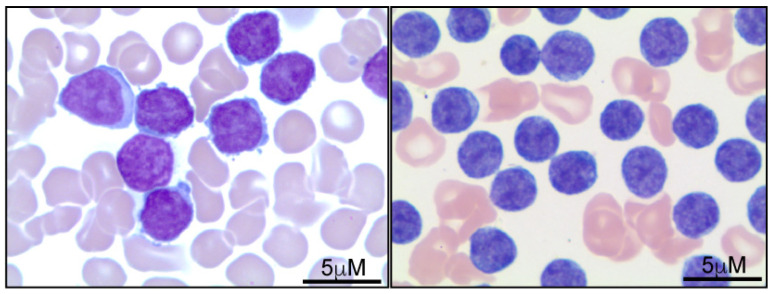
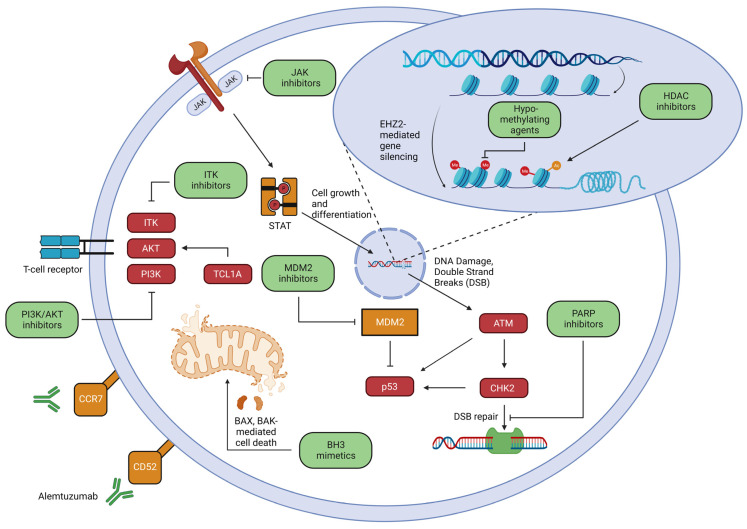
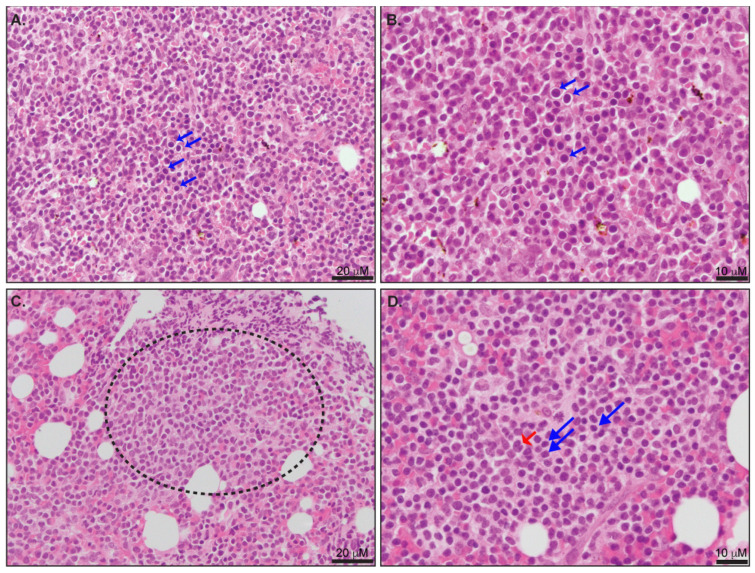
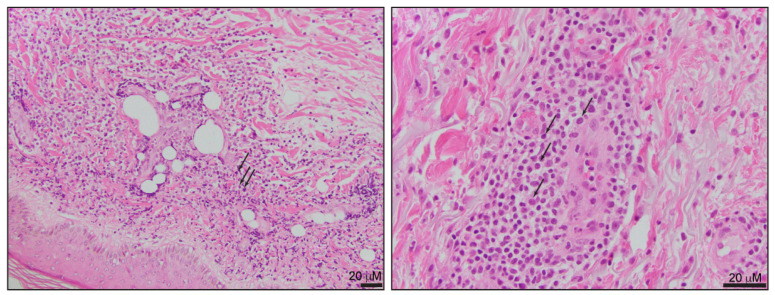
T-cell prolymphocytic leukemia (T-PLL) is a rare and aggressive neoplasm of mature T-cells. Most patients with T-PLL present with lymphocytosis, anemia, thrombocytopenia, and hepatosplenomegaly. Correct identification of T-PLL is essential because treatment for this disease is distinct from that of other T-cell neoplasms. In 2019, the T-PLL International Study Group (TPLL-ISG) established criteria for the diagnosis, staging, and assessment of response to treatment of T-PLL with the goal of harmonizing research efforts and supporting clinical decision-making. T-PLL pathogenesis is commonly driven by T-cell leukemia 1 () overexpression and loss, genetic alterations that are incorporated into the TPLL-ISG diagnostic criteria. The cooperativity between family members and is seemingly unique to T-PLL across the spectrum of T-cell neoplasms. The role of the T-cell receptor, its downstream kinases, and JAK/STAT signaling are also emerging themes in disease pathogenesis and have obvious therapeutic implications. Despite improved understanding of disease pathogenesis, alemtuzumab remains the frontline therapy in the treatment of naïve patients with indications for treatment given its high response rate. Unfortunately, the responses achieved are rarely durable, and the majority of patients are not candidates for consolidation with hematopoietic stem cell transplantation. Improved understanding of T-PLL pathogenesis has unveiled novel therapeutic vulnerabilities that may change the natural history of this lymphoproliferative neoplasm and will be the focus of this concise review.
T 细胞前淋巴细胞白血病(T-PLL)是一种罕见且侵袭性的成熟 T 细胞肿瘤。大多数 T-PLL 患者表现为淋巴细胞增多、贫血、血小板减少和肝脾肿大。正确识别 T-PLL 至关重要,因为这种疾病的治疗方法与其他 T 细胞肿瘤不同。2019 年,T-PLL 国际研究组(TPLL-ISG)建立了 T-PLL 的诊断、分期和治疗反应评估标准,旨在协调研究工作并支持临床决策。T-PLL 的发病机制通常由 T 细胞白血病 1 () 过表达和缺失驱动,这些遗传改变被纳入 TPLL-ISG 诊断标准。在整个 T 细胞肿瘤谱中, 家族成员之间的协同作用和 似乎是 T-PLL 所特有的。T 细胞受体及其下游激酶和 JAK/STAT 信号通路的作用也在疾病发病机制中崭露头角,并具有明显的治疗意义。尽管对疾病发病机制的理解有所提高,但由于其高反应率,阿仑单抗仍然是治疗有治疗指征的初治患者的一线治疗药物。不幸的是,所获得的反应很少是持久的,而且大多数患者不符合进行造血干细胞移植巩固治疗的条件。对 T-PLL 发病机制的深入了解揭示了新的治疗弱点,这可能会改变这种淋巴增生性肿瘤的自然病史,这将是本次简明综述的重点。