Chen Fang-Fang, Li Zheng, Ma Dawei, Yu Qiang
Chinese Academy of Sciences, Shanghai Institute of Materia Medica, Shanghai, China.
University of Chinese Academy of Sciences, Beijing, China.
Oncoimmunology. 2020 Oct 14;9(1):1831153. doi: 10.1080/2162402X.2020.1831153.
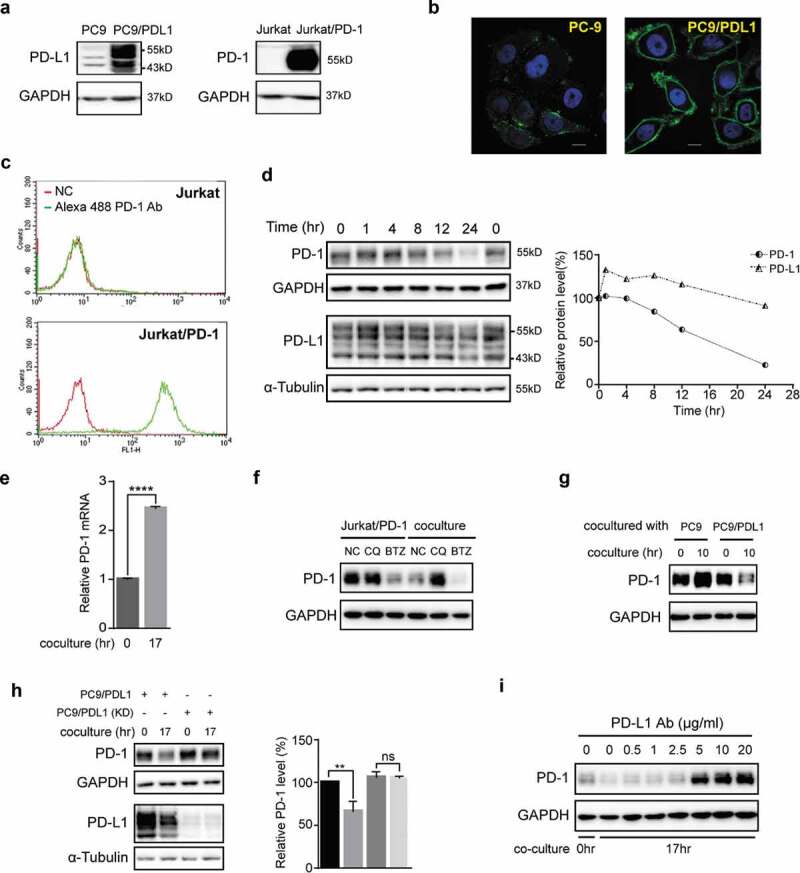
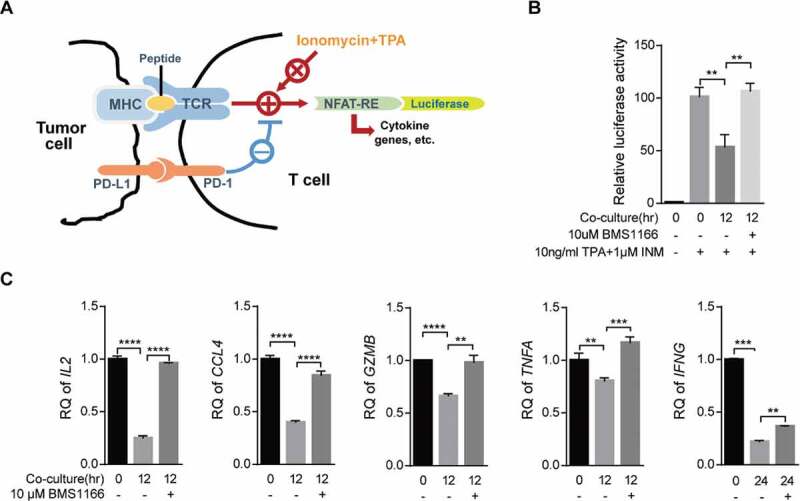
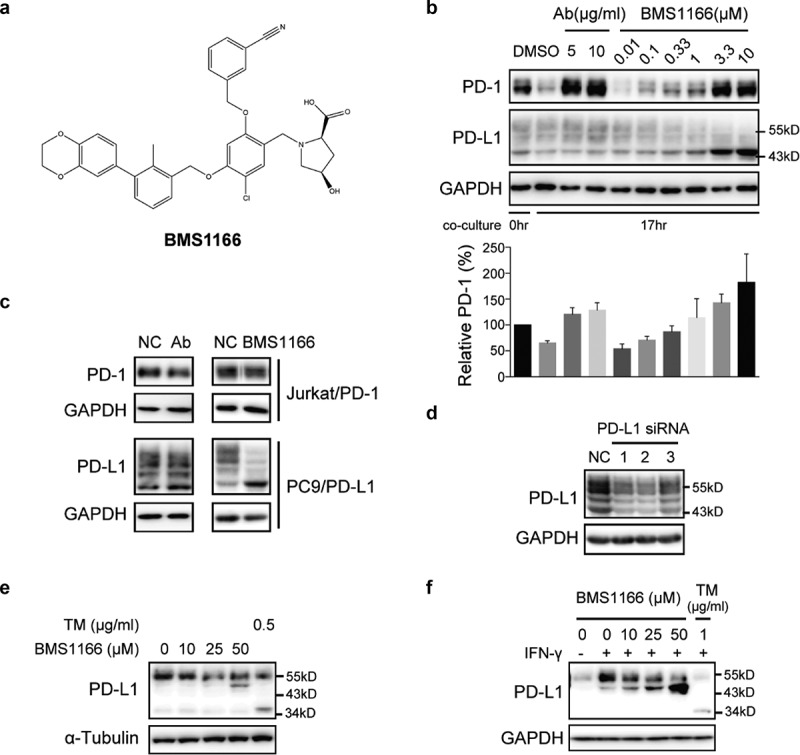
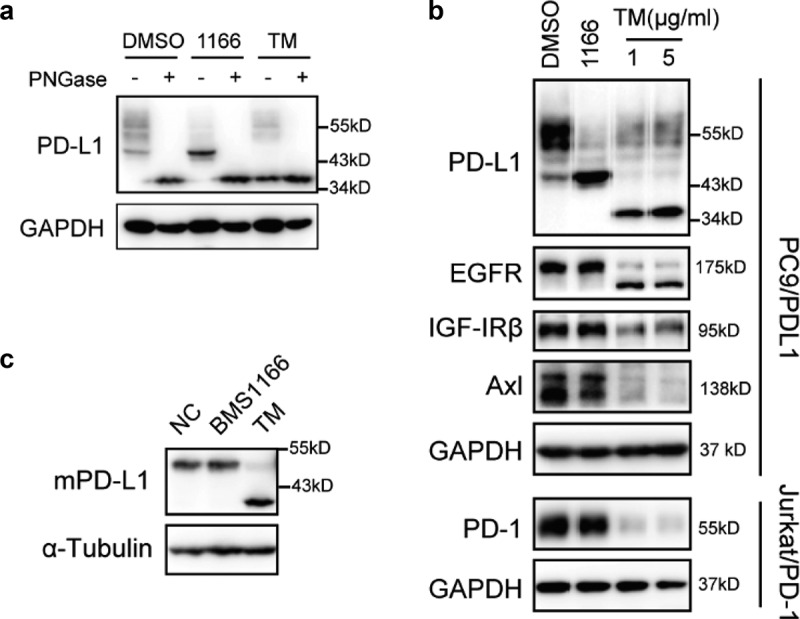
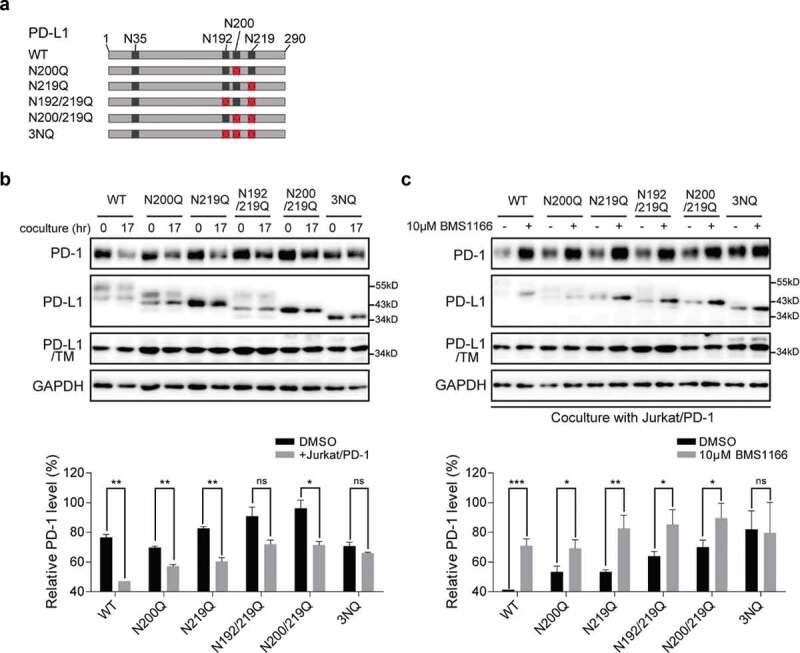
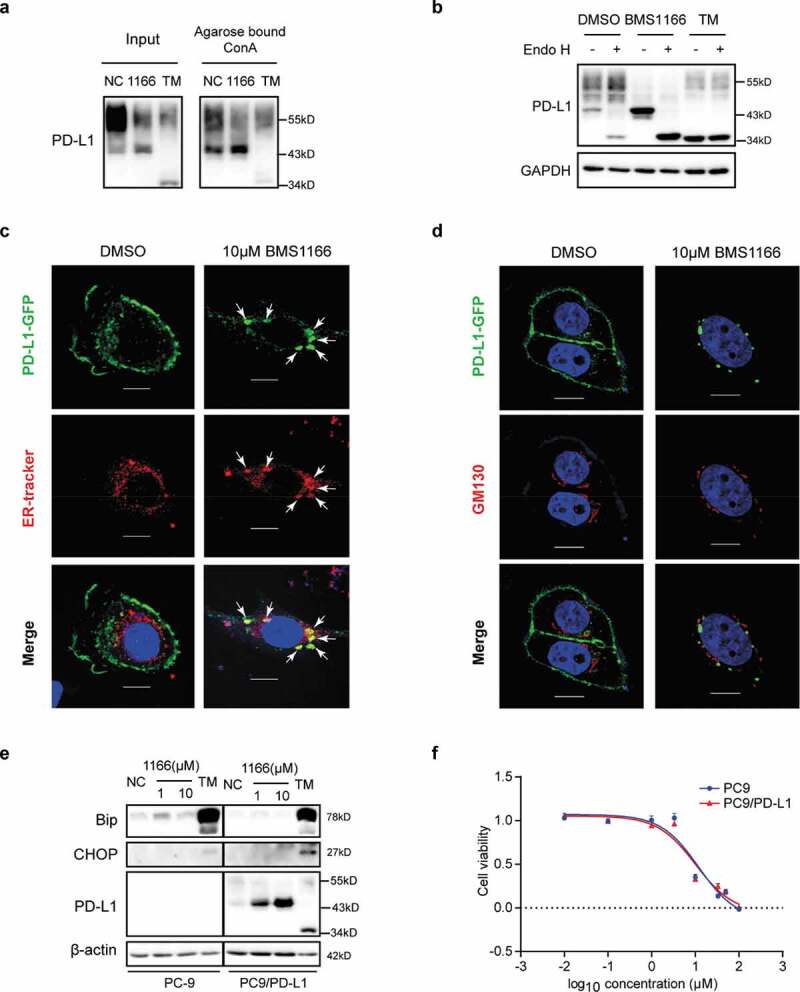
Therapeutic monoclonal antibodies against the PD-L1/PD-1 (programmed death ligand-1/programmed cell death protein-1) axis have achieved great successes in cancer treatments, but the development of small-molecule immunomodulators of the pathway has lagged far behind. We established a cellular coculture assay with two stable transfectant cell lines, a PD-L1-expressing tumor cell line PC9/PD-L1 and a PD-1-expressing T cell line Jurkat/PD-1. Western blotting analyses were used to monitor the PD-L1/PD-1 interaction and signaling. We analyzed PD-L1 glycosylation by lectin binding assay and glycosidase digestion, and examined subcellular localization of PD-L1 by immunocytochemical staining. Luciferase assay and real-time PCR were used to evaluate T cell activation in the coculture experiments. We found that coculturing of the PC9/PD-L1 cells with the Jurkat/PD-1 cells induced a lysosomal degradation of PD-1. A small-molecule PD-L1 inhibitor BMS1166 developed by Bristol-Myers Squibb inhibited the coculture-induced PD-1 degradation through a unique mechanism. BMS1166 specifically affected PD-L1 glycosylation and prevented transporting of the under-glycosylated form of PD-L1 from endoplasmic reticulum (ER) to Golgi, leading to accumulation of PD-L1 in ER. In doing so, BMS1166 blocked PD-L1/PD-1 signaling. Coculturing PD-L1-expressing cells with PD-1-expressing cells induced degradation of PD-1, which could be used as a readout to identify inhibitors of PD-L1/PD-1 signaling. The small-molecule PD-L1 inhibitor BMS1166 abolished the glycosylation and maturation of PD-L1 by blocking its exporting from ER to Golgi. Our study discovered a new strategy to identify inhibitors of the PD-L1/PD-1 signaling pathway and to develop new drugs for the treatment of cancer.
针对PD-L1/PD-1(程序性死亡配体-1/程序性细胞死亡蛋白-1)轴的治疗性单克隆抗体在癌症治疗中取得了巨大成功,但该通路小分子免疫调节剂的开发却远远滞后。我们建立了一种细胞共培养试验,使用两种稳定转染细胞系,一种表达PD-L1的肿瘤细胞系PC9/PD-L1和一种表达PD-1的T细胞系Jurkat/PD-1。采用蛋白质印迹分析来监测PD-L1/PD-1相互作用及信号传导。我们通过凝集素结合试验和糖苷酶消化分析PD-L1糖基化,并通过免疫细胞化学染色检查PD-L1的亚细胞定位。在共培养实验中,使用荧光素酶测定法和实时PCR评估T细胞活化。我们发现,PC9/PD-L1细胞与Jurkat/PD-1细胞共培养会诱导PD-1的溶酶体降解。百时美施贵宝公司研发的小分子PD-L1抑制剂BMS1166通过一种独特机制抑制共培养诱导的PD-1降解。BMS1166特异性影响PD-L1糖基化,并阻止糖基化不足形式的PD-L1从内质网(ER)转运至高尔基体,导致PD-L1在内质网中积累。这样一来,BMS1166阻断了PD-L1/PD-1信号传导。将表达PD-L1的细胞与表达PD-1的细胞共培养会诱导PD-1降解,这可作为一种读数来鉴定PD-L1/PD-1信号传导抑制剂。小分子PD-L1抑制剂BMS1166通过阻止PD-L1从内质网输出至高尔基体,消除了PD-L1的糖基化和成熟。我们的研究发现了一种新策略,可用于鉴定PD-L1/PD-1信号通路抑制剂并开发治疗癌症的新药。