Centre for Stem Cell Research, Universiti Tunku Abdul Rahman, Kajang 43000, Malaysia.
Postgraduate Programme, Department of Preclinical Sciences, Faculty of Medicine and Health Sciences, Universiti Tunku Abdul Rahman, Kajang 43000, Malaysia.
Int J Mol Sci. 2020 Oct 23;21(21):7864. doi: 10.3390/ijms21217864.
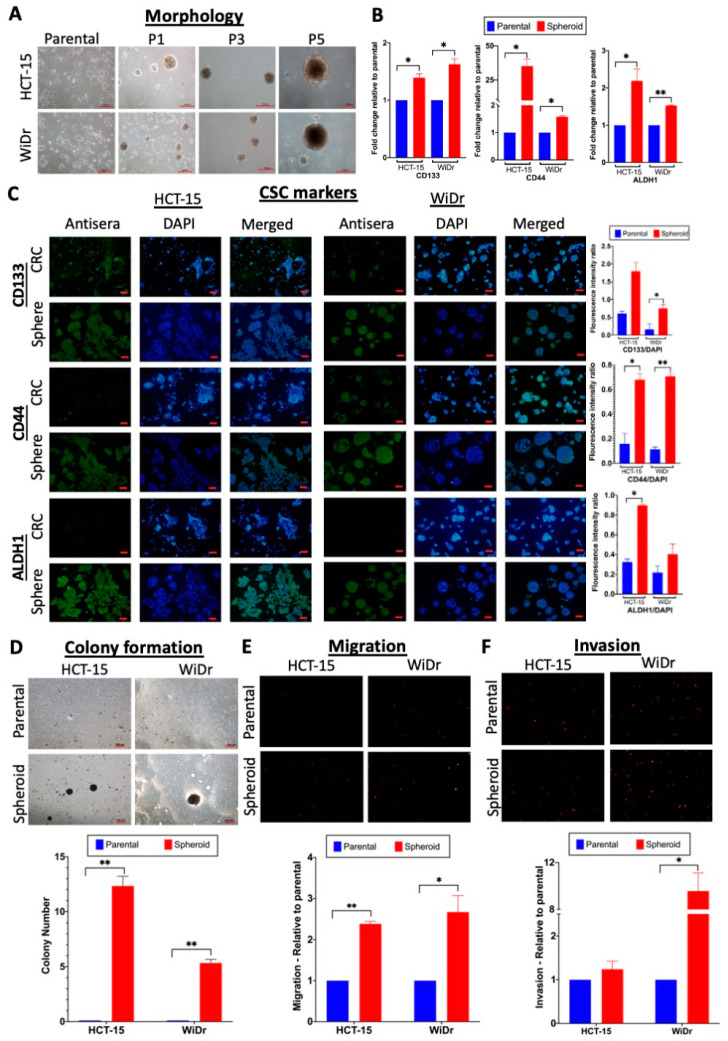
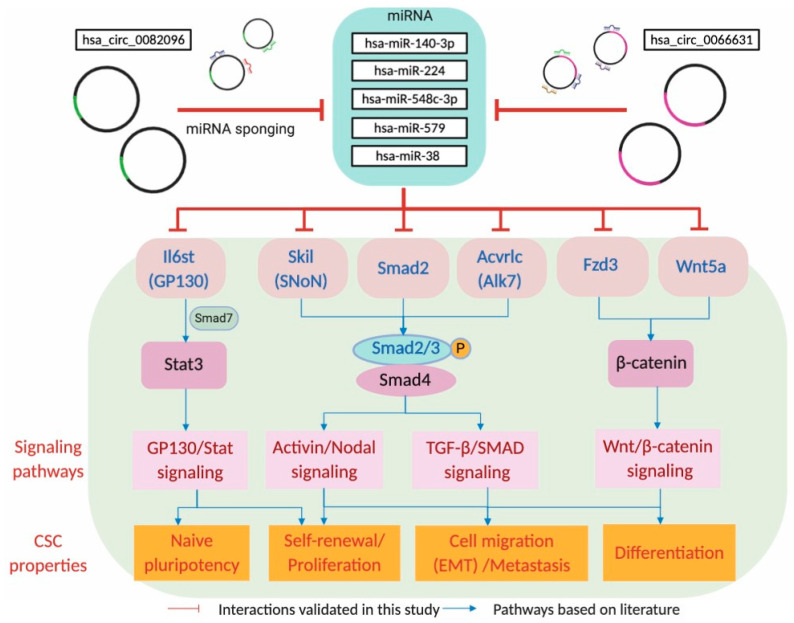
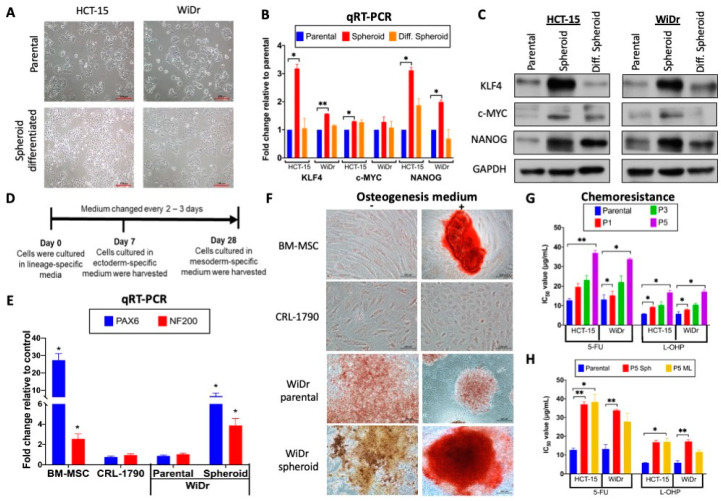
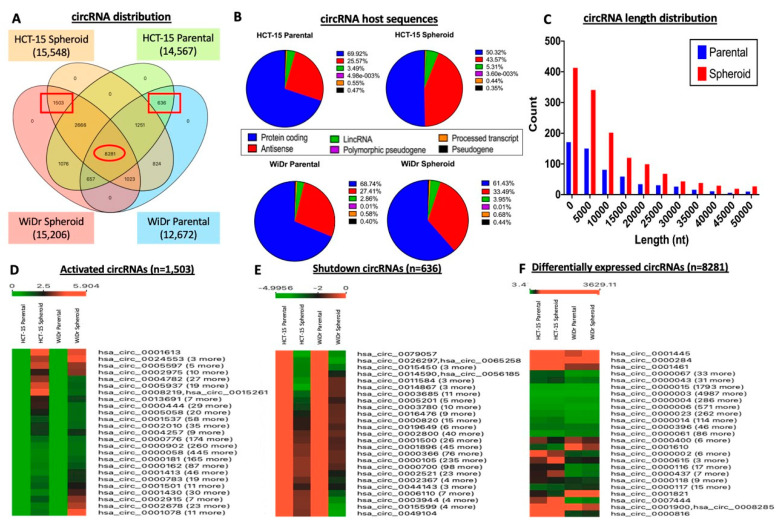
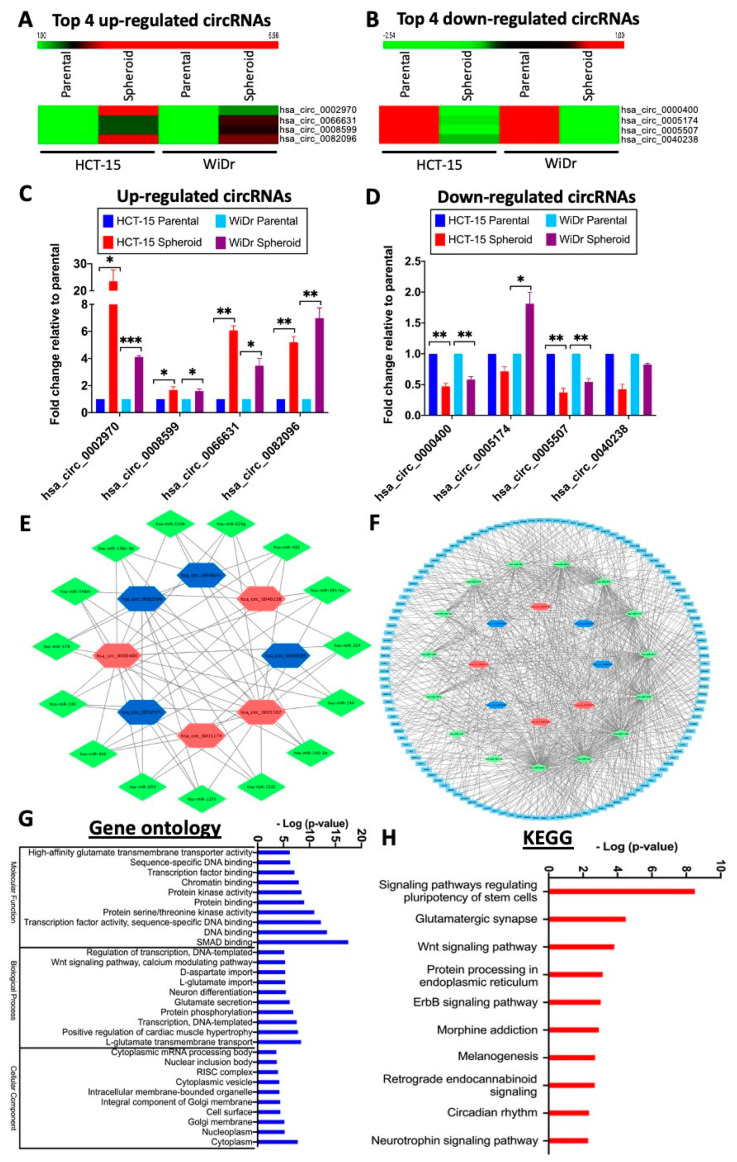
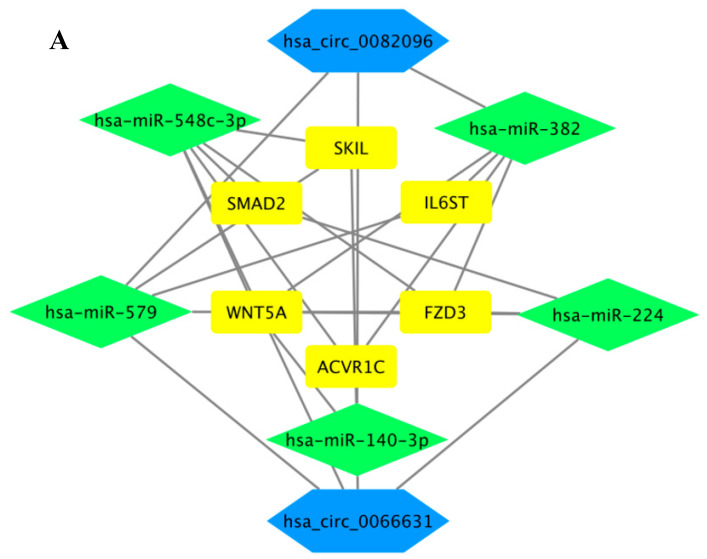
Spheroidal cancer cell cultures have been used to enrich cancer stem cells (CSC), which are thought to contribute to important clinical features of tumors. This study aimed to map the regulatory networks driven by circular RNAs (circRNAs) in CSC-enriched colorectal cancer (CRC) spheroid cells. The spheroid cells established from two CRC cell lines acquired stemness properties in pluripotency gene expression and multi-lineage differentiation capacity. Genome-wide sequencing identified 1503 and 636 circRNAs specific to the CRC parental and spheroid cells, respectively. In the CRC spheroids, algorithmic analyses unveiled a core network of mRNAs involved in modulating stemness-associated signaling pathways, driven by a circRNA-microRNA (miRNA)-mRNA axis. The two major circRNAs, hsa_circ_0066631 and hsa_circ_0082096, in this network were significantly up-regulated in expression levels in the spheroid cells. The two circRNAs were predicted to target and were experimentally shown to down-regulate miR-140-3p, miR-224, miR-382, miR-548c-3p and miR-579, confirming circRNA sponging of the targeted miRNAs. Furthermore, the affected miRNAs were demonstrated to inhibit degradation of six mRNA targets, viz. ACVR1C/ALK7, FZD3, IL6ST/GP130, SKIL/SNON, SMAD2 and WNT5, in the CRC spheroid cells. These mRNAs encode proteins that are reported to variously regulate the GP130/Stat, Activin/Nodal, TGF-β/SMAD or Wnt/β-catenin signaling pathways in controlling various aspects of CSC stemness. Using the CRC spheroid cell model, the novel circRNA-miRNA-mRNA axis mapped in this work forms the foundation for the elucidation of the molecular mechanisms of the complex cellular and biochemical processes that determine CSC stemness properties of cancer cells, and possibly for designing therapeutic strategies for CRC treatment by targeting CSC.
球形癌细胞培养物已被用于富集癌症干细胞(CSC),这些细胞被认为有助于肿瘤的重要临床特征。本研究旨在绘制 CSC 富集的结直肠癌细胞(CRC)球体细胞中环状 RNA(circRNA)驱动的调控网络。从两个 CRC 细胞系建立的球体细胞在多能基因表达和多谱系分化能力方面获得了干性特征。全基因组测序分别鉴定出 CRC 亲本细胞和球体细胞中特异的 1503 个和 636 个 circRNA。在 CRC 球体中,算法分析揭示了一个由 circRNA-miRNA-mRNA 轴驱动的涉及调节干性相关信号通路的 mRNAs 的核心网络。该网络中的两个主要 circRNA,hsa_circ_0066631 和 hsa_circ_0082096,在球体细胞中的表达水平显著上调。这两个 circRNA 被预测为靶向并通过实验证明下调 miR-140-3p、miR-224、miR-382、miR-548c-3p 和 miR-579,证实了靶向 miRNA 的 circRNA 海绵作用。此外,受影响的 miRNA 被证明抑制了六个 mRNA 靶标,即 ACVR1C/ALK7、FZD3、IL6ST/GP130、SKIL/SNON、SMAD2 和 WNT5,在 CRC 球体细胞中的降解。这些 mRNA 编码的蛋白质据报道在不同程度上调节 GP130/Stat、Activin/Nodal、TGF-β/SMAD 或 Wnt/β-catenin 信号通路,以控制癌症干细胞干性的各个方面。使用 CRC 球体细胞模型,本工作中绘制的新型 circRNA-miRNA-mRNA 轴为阐明决定癌细胞 CSC 干性的复杂细胞和生化过程的分子机制奠定了基础,并可能为针对 CSC 设计 CRC 治疗的治疗策略提供了依据。