Xue Vivian Weiwen, Chung Jeff Yat-Fai, Córdoba Cristina Alexandra García, Cheung Alvin Ho-Kwan, Kang Wei, Lam Eric W-F, Leung Kam-Tong, To Ka-Fai, Lan Hui-Yao, Tang Patrick Ming-Kuen
Department of Anatomical and Cellular Pathology, State Key Laboratory of Translational Oncology, The Chinese University of Hong Kong, Hong Kong 999077, China.
Department of Surgery and Cancer, Imperial College London, Hammersmith Hospital Campus, London W12 0NN, UK.
Cancers (Basel). 2020 Oct 23;12(11):3099. doi: 10.3390/cancers12113099.
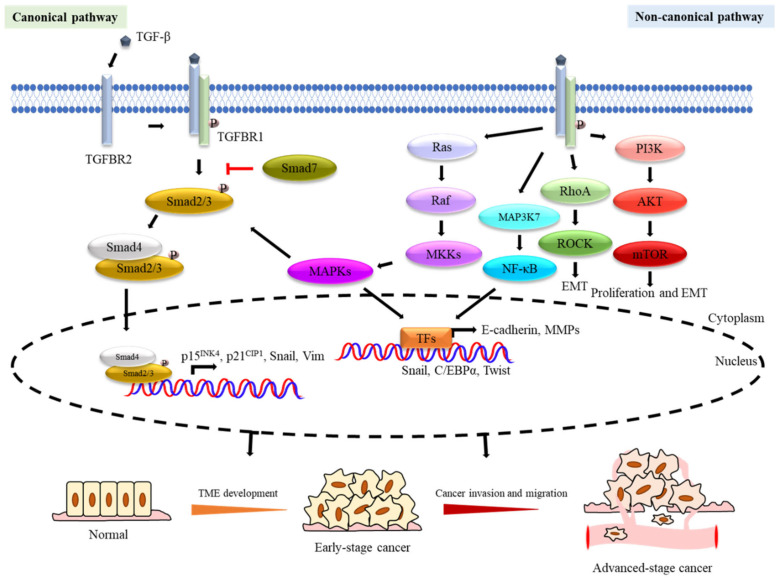
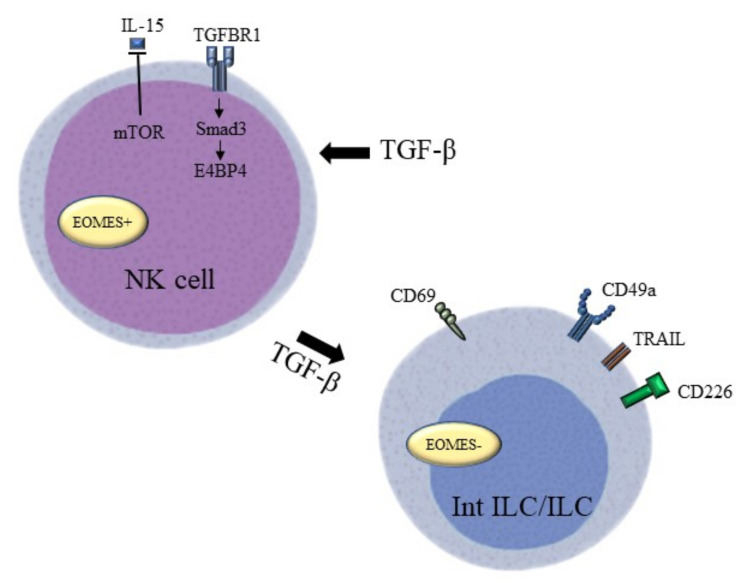
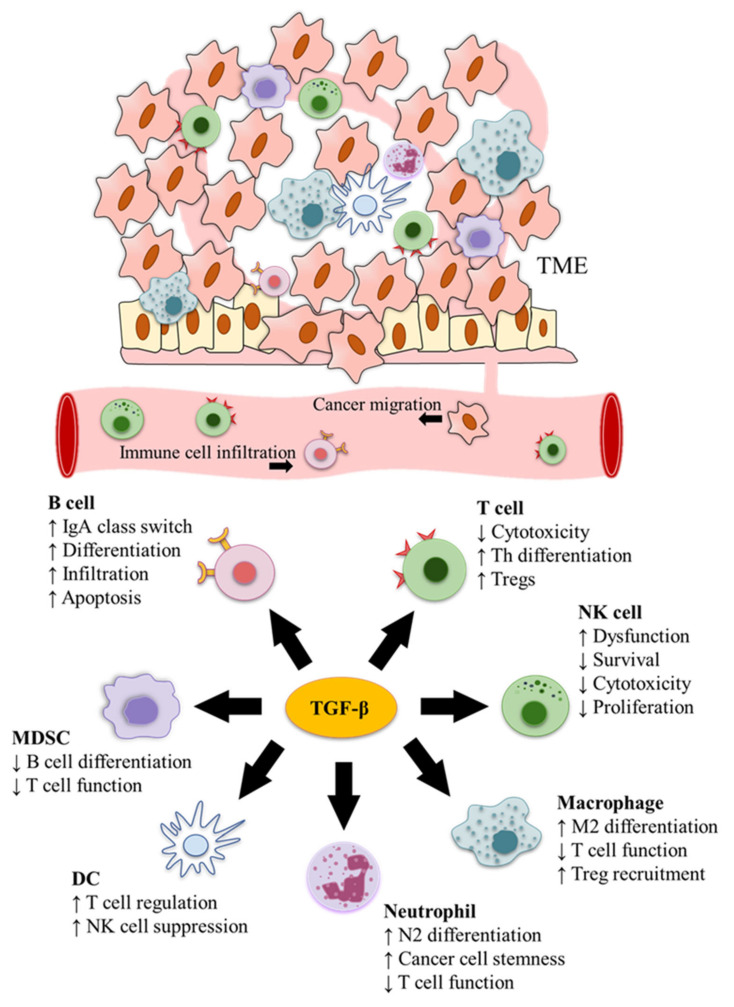
Transforming growth factor-β (TGF-β) was originally identified as an anti-tumour cytokine. However, there is increasing evidence that it has important roles in the tumour microenvironment (TME) in facilitating cancer progression. TGF-β actively shapes the TME via modulating the host immunity. These actions are highly cell-type specific and complicated, involving both canonical and non-canonical pathways. In this review, we systemically update how TGF-β signalling acts as a checkpoint regulator for cancer immunomodulation. A better appreciation of the underlying pathogenic mechanisms at the molecular level can lead to the discovery of novel and more effective therapeutic strategies for cancer.
转化生长因子-β(TGF-β)最初被鉴定为一种抗肿瘤细胞因子。然而,越来越多的证据表明,它在肿瘤微环境(TME)中对促进癌症进展具有重要作用。TGF-β通过调节宿主免疫来积极塑造TME。这些作用具有高度的细胞类型特异性且复杂,涉及经典和非经典途径。在本综述中,我们系统地更新了TGF-β信号如何作为癌症免疫调节的检查点调节剂。在分子水平上更好地理解潜在的致病机制可以导致发现新的、更有效的癌症治疗策略。