Pittari Elisabetta, Moio Luigi, Arapitsas Panagiotis, Curioni Andrea, Gerbi Vincenzo, Parpinello Giuseppina Paola, Ugliano Maurizio, Piombino Paola
Department of Agricultural Sciences, Division of Vine and Wine Sciences, University of Naples Federico II, 83100 Avellino, Italy.
Department of Food Quality and Nutrition, Research and Innovation Centre, Fondazione Edmund Mach (FEM), San Michele all'Adige, 38010 Trentino, Italy.
Foods. 2020 Oct 24;9(11):1530. doi: 10.3390/foods9111530.
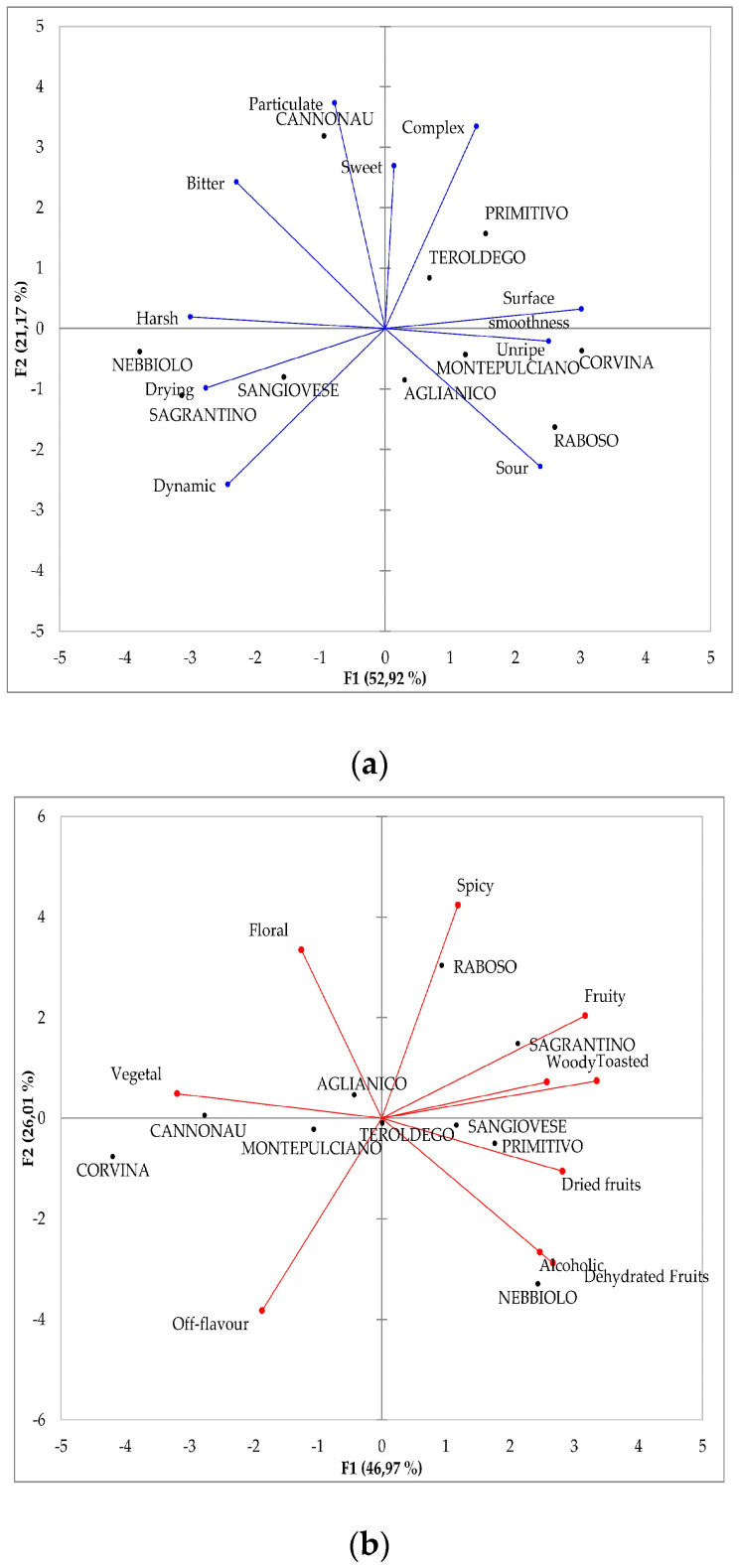
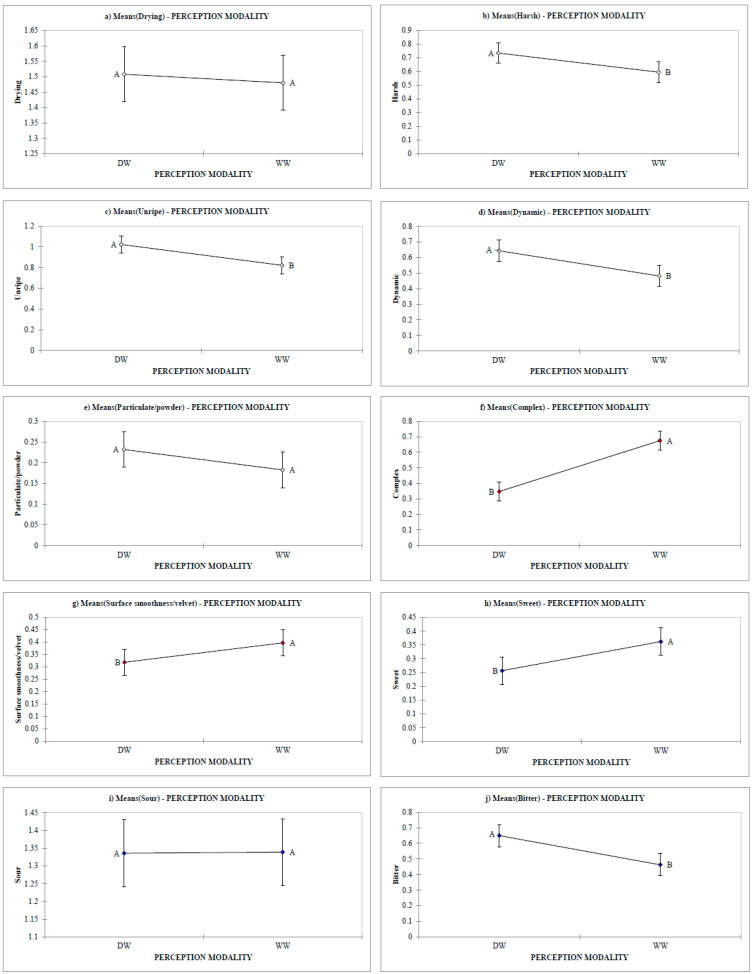
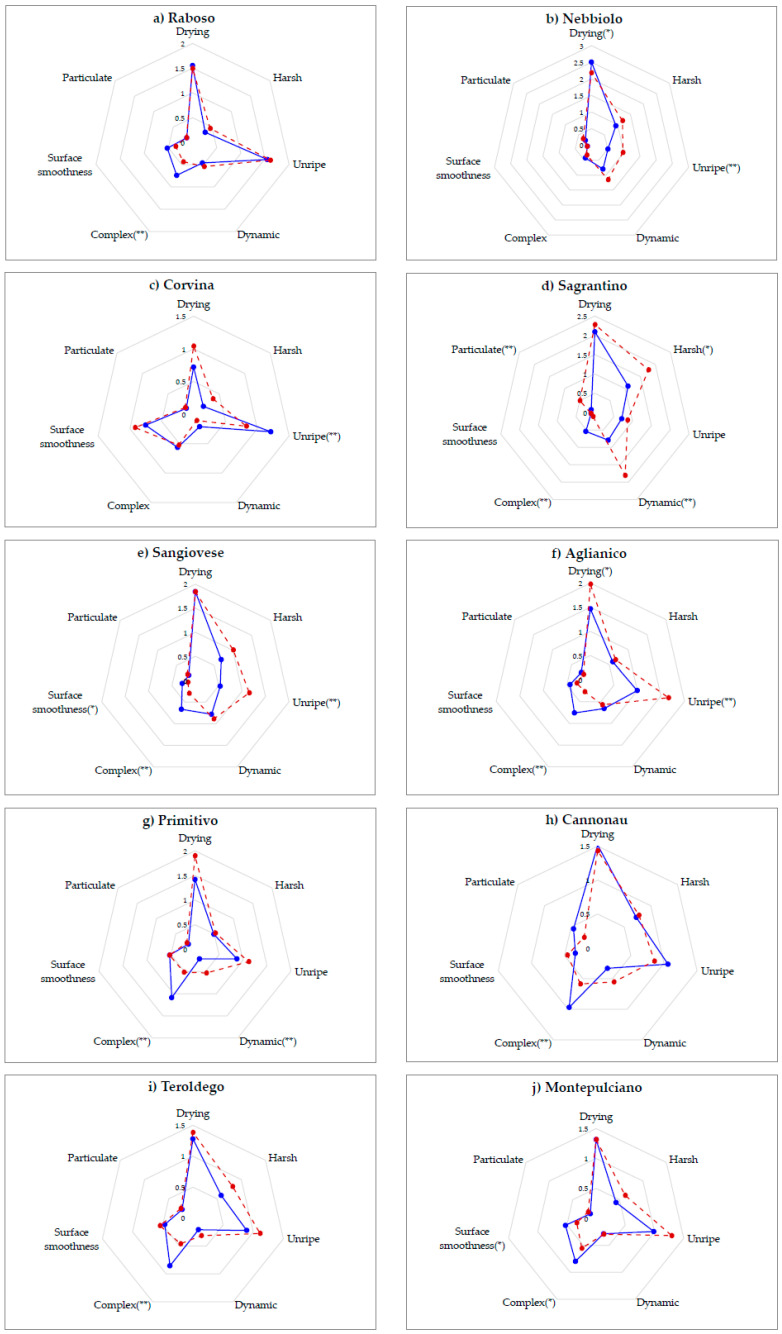
This work aimed at investigating red wine olfactory-oral cross-modal interactions, and at testing their impact on the correlations between sensory and chemical variables. Seventy-four Italian red whole wines (WWs) from 10 varieties, and corresponding deodorized wines (DWs), were evaluated by sensory descriptive assessment. Total phenols, proanthocyanidins, ethanol, reducing sugars, pH, titratable and volatile acidity were determined. PCA results highlighted different sensory features of the 10 wine types. ANOVAs ( < 0.05) showed that olfactory cues might play modulation effects on the perception of in-mouth sensations with 7 (harsh, unripe, dynamic, complex, surface smoothness, sweet, and bitter) out of 10 oral descriptors significantly affected by odours. Three weak but significant positive correlations (Pearson, < 0.0001) were statistically found and supported in a cognitive dimension: spicy and complex; dehydrated fruits and drying; vegetal and unripe. In the absence of volatiles, correlation coefficients between sensory and chemical parameters mostly increased. Proanthocyanidins correlated well with drying and dynamic astringency, showing highest coefficients (r > 0.7) in absence of olfactory-oral interactions. Unripe astringency did not correlate with polyphenols supporting the idea that this sub-quality is a multisensory feeling greatly impacted by odorants. Results support the significance of cross-modal interactions during red wine tasting, confirming previous findings and adding new insights on astringency sub-qualities and their predictive parameters.
这项研究旨在探究红葡萄酒的嗅觉-口腔跨模态相互作用,并测试它们对感官变量与化学变量之间相关性的影响。通过感官描述性评估,对来自10个品种的74种意大利红全葡萄酒(WWs)以及相应的脱臭葡萄酒(DWs)进行了评价。测定了总酚、原花青素、乙醇、还原糖、pH值、可滴定酸度和挥发酸度。主成分分析(PCA)结果突出了10种葡萄酒类型不同的感官特征。方差分析(<0.05)表明,嗅觉线索可能对口腔内感觉的感知起到调节作用,10个口腔描述词中有7个( harsh、未成熟、动态、复杂、表面光滑度、甜和苦)受到气味的显著影响。在认知维度上,统计发现并支持了三个微弱但显著的正相关(皮尔逊相关系数,<0.0001):辛辣与复杂;脱水水果与干燥感;植物性与未成熟。在没有挥发性物质的情况下,感官参数与化学参数之间的相关系数大多增加。原花青素与干燥和动态涩味相关性良好,在没有嗅觉-口腔相互作用时显示出最高系数(r>0.7)。未成熟涩味与多酚类物质不相关,这支持了这种次品质是一种受气味剂极大影响的多感官感觉的观点。研究结果支持了红葡萄酒品尝过程中跨模态相互作用的重要性,证实了先前的发现,并为涩味次品质及其预测参数提供了新的见解。