Laboratory for Cellular Function Conversion Technology, RIKEN Center for Integrative Medical Sciences, Yokohama, Japan.
Laboratory of Veterinary Radiology, Department of Veterinary Medicine, College of Bioresource Sciences, Nihon University, Fujisawa, Japan.
Front Immunol. 2020 Oct 7;11:579266. doi: 10.3389/fimmu.2020.579266. eCollection 2020.
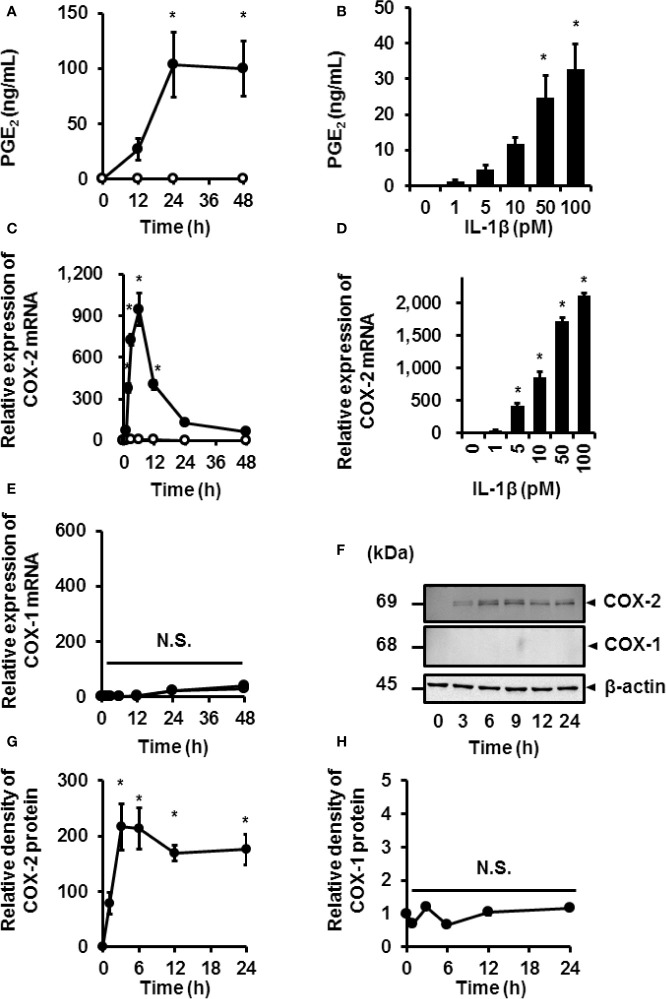
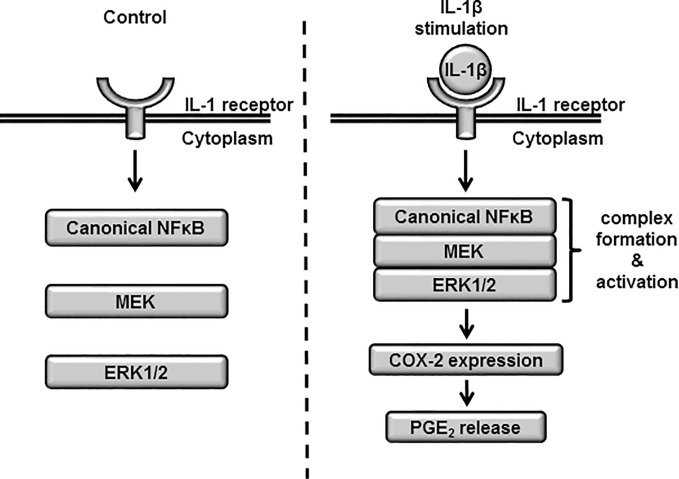
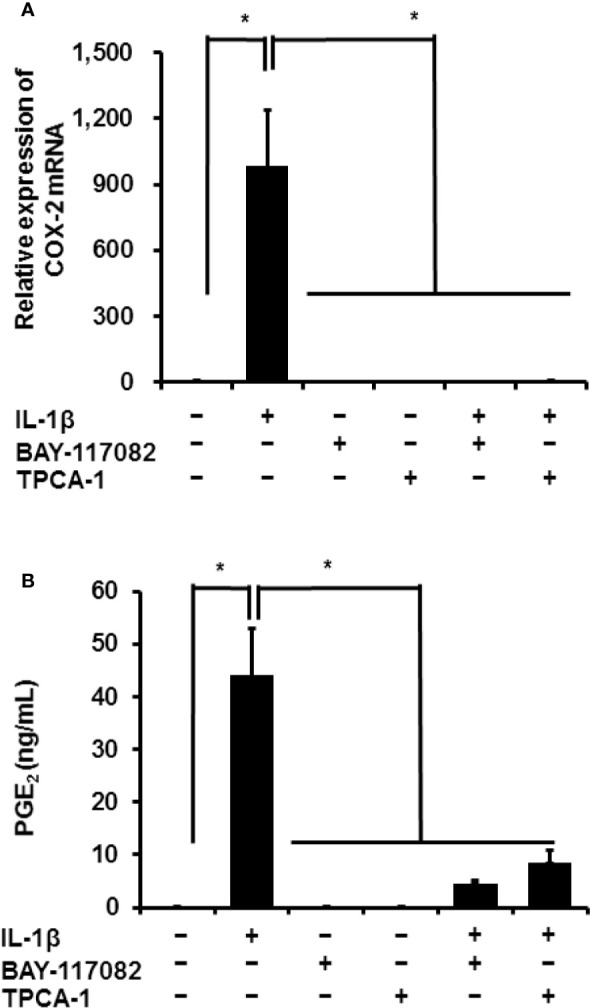
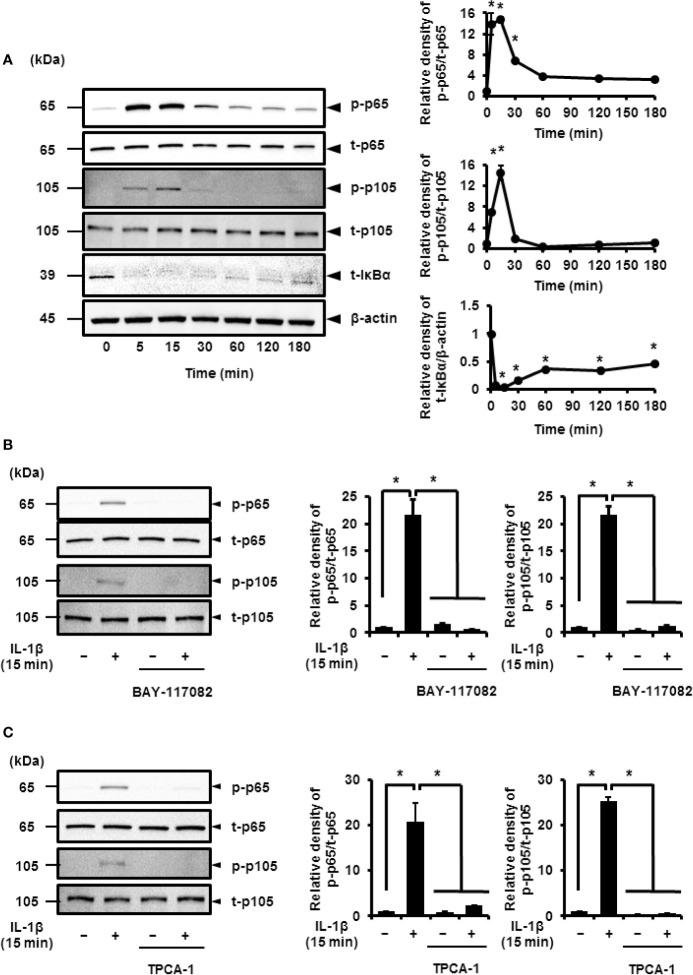
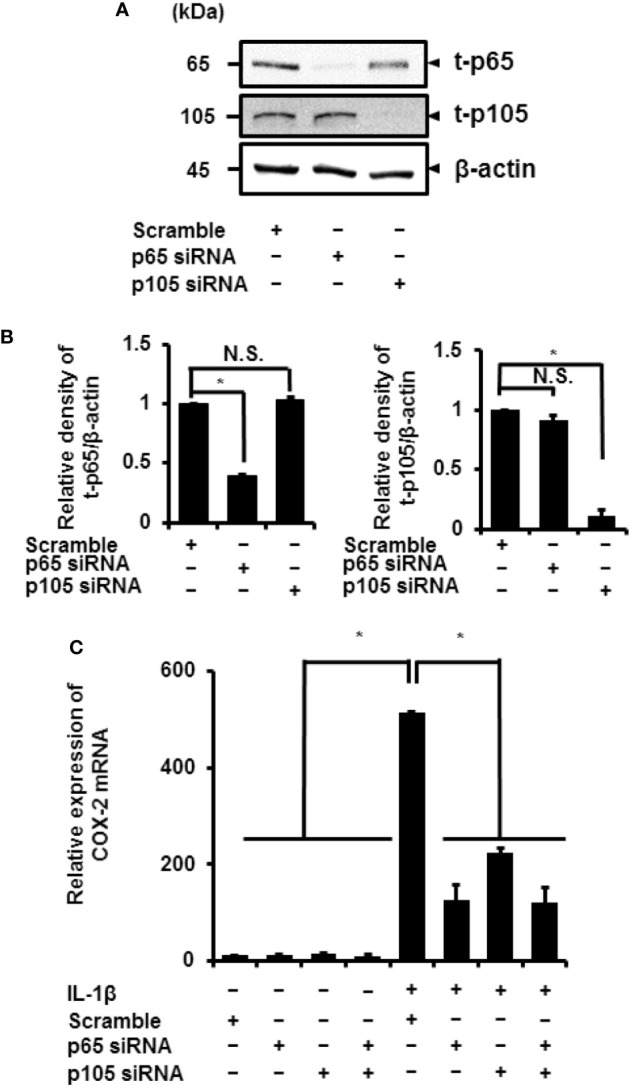
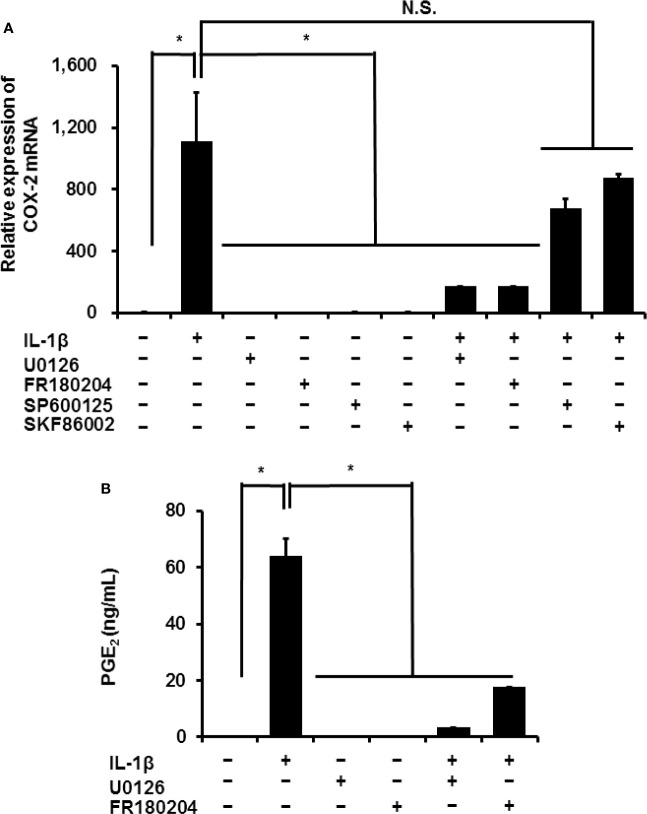
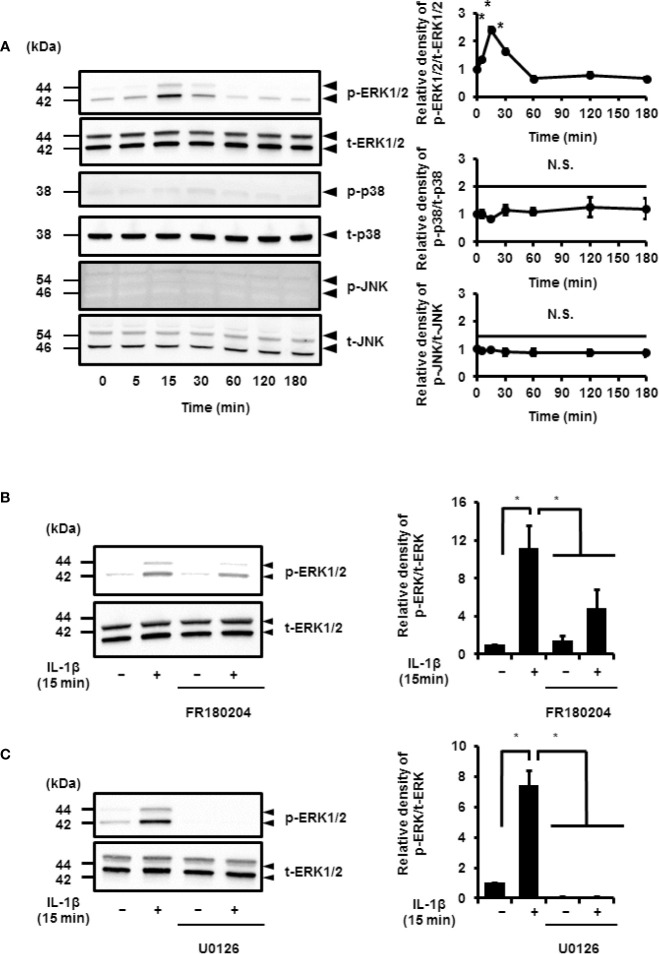
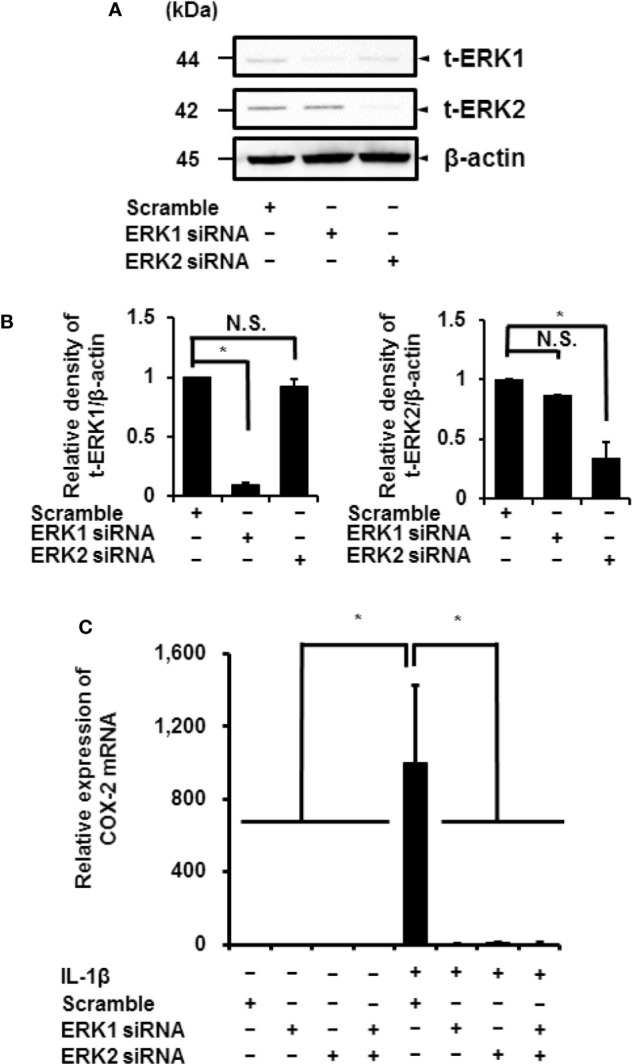
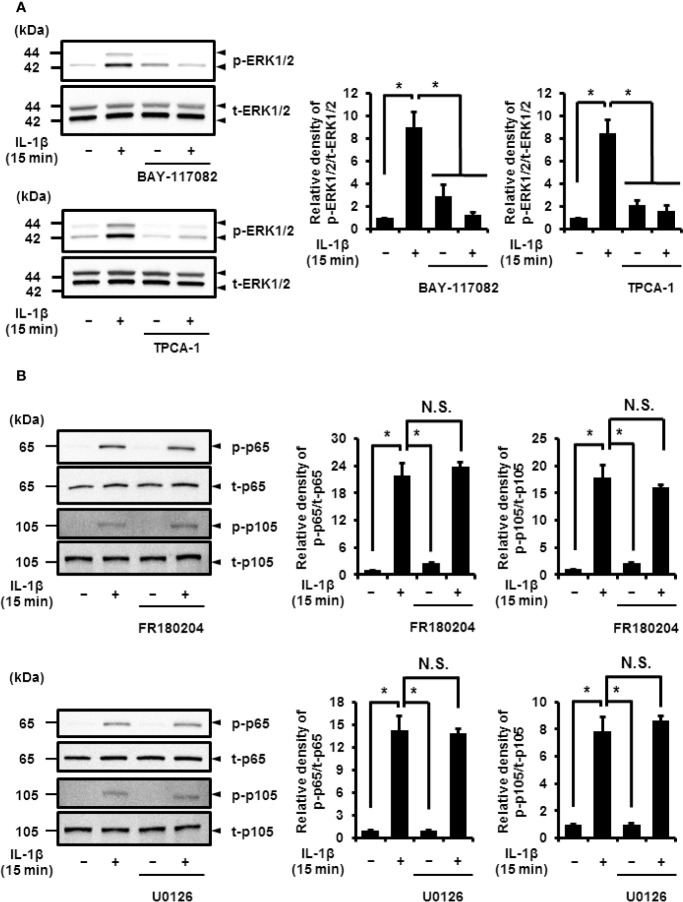
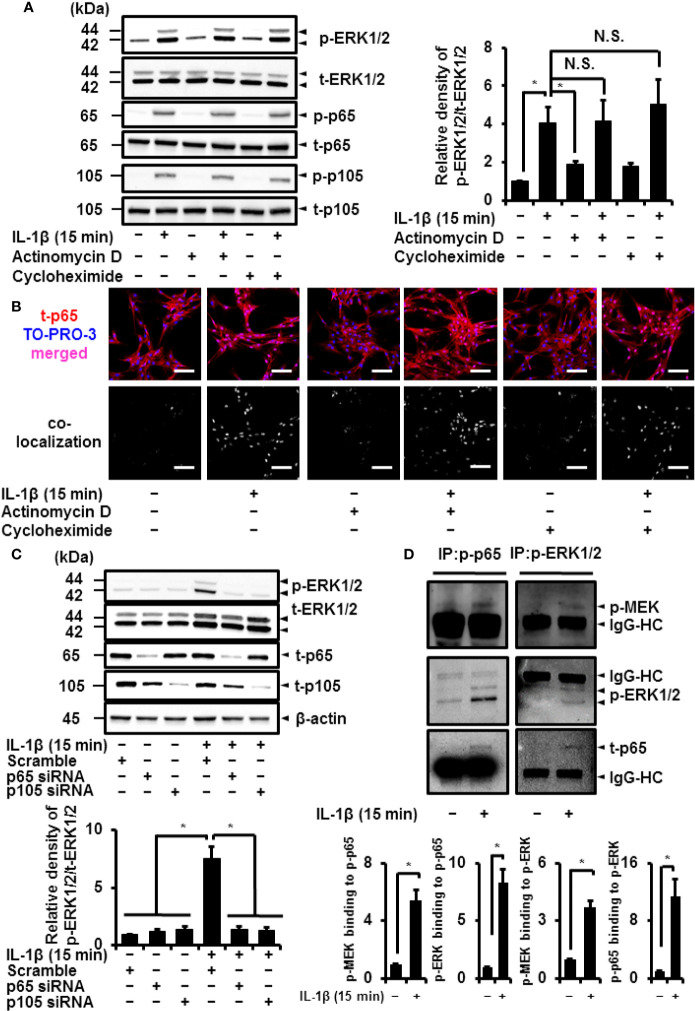
The pro-inflammatory cytokine interleukin 1 (IL-1) induces the synthesis of prostaglandin E by upregulating cyclooxygenase-2 (COX-2) in the synovial tissue of individuals with autoimmune diseases, such as rheumatoid arthritis (RA). IL-1-mediated stimulation of NF-B and MAPK signaling is important for the pathogenesis of RA; however, crosstalk(s) between NF-B and MAPK signaling remains to be understood. In this study, we established a model for IL-1-induced synovitis and investigated the role of NF-B and MAPK signaling in synovitis. We observed an increase in the mRNA and protein levels of COX-2 and prostaglandin E release in cells treated with IL-1. NF-B and ERK1/2 inhibitors significantly reduced IL-1-induced COX-2 expression. IL-1 induced the phosphorylation of canonical NF-B complex (p65 and p105) and degradation of IB. IL-1 also induced ERK1/2 phosphorylation but did not affect the phosphorylation levels of p38 MAPK and JNK. IL-1 failed to induce COX-2 expression in cells transfected with siRNA for p65, p105, ERK1, or ERK2. Notably, NF-B inhibitors reduced IL-1-induced ERK1/2 phosphorylation; however, the ERK1/2 inhibitor had no effect on the phosphorylation of the canonical NF-B complex. Although transcription and translation inhibitors had no effect on IL-1-induced ERK1/2 phosphorylation, the silencing of canonical NF-B complex in siRNA-transfected fibroblasts prevented IL-1-induced phosphorylation of ERK1/2. Taken together, our data indicate the importance of the non-transcriptional/translational activity of canonical NF-B in the activation of ERK1/2 signaling involved in the IL-1-induced development of autoimmune diseases affecting the synovial tissue, such as RA.
促炎细胞因子白细胞介素 1(IL-1)通过上调自身免疫性疾病(如类风湿关节炎(RA))患者滑膜组织中环氧化酶-2(COX-2)的合成来诱导前列腺素 E 的产生。IL-1 介导的 NF-B 和 MAPK 信号转导的刺激对于 RA 的发病机制很重要;然而,NF-B 和 MAPK 信号转导之间的串扰仍然需要进一步研究。在本研究中,我们建立了一个 IL-1 诱导的滑膜炎模型,并研究了 NF-B 和 MAPK 信号转导在滑膜炎中的作用。我们观察到用 IL-1 处理的细胞中 COX-2 的 mRNA 和蛋白水平以及前列腺素 E 的释放增加。NF-B 和 ERK1/2 抑制剂显著降低了 IL-1 诱导的 COX-2 表达。IL-1 诱导了经典 NF-B 复合物(p65 和 p105)的磷酸化和 IB 的降解。IL-1 还诱导了 ERK1/2 的磷酸化,但不影响 p38 MAPK 和 JNK 的磷酸化水平。在转染了 p65、p105、ERK1 或 ERK2 的 siRNA 的细胞中,IL-1 未能诱导 COX-2 表达。值得注意的是,NF-B 抑制剂降低了 IL-1 诱导的 ERK1/2 磷酸化;然而,ERK1/2 抑制剂对经典 NF-B 复合物的磷酸化没有影响。尽管转录和翻译抑制剂对 IL-1 诱导的 ERK1/2 磷酸化没有影响,但在 siRNA 转染的成纤维细胞中沉默经典 NF-B 复合物可阻止 IL-1 诱导的 ERK1/2 磷酸化。总之,我们的数据表明经典 NF-B 的非转录/翻译活性在激活与影响滑膜组织的自身免疫性疾病(如 RA)相关的 IL-1 诱导的 ERK1/2 信号转导中具有重要作用。