Lu Sizhao, Jolly Austin J, Strand Keith A, Dubner Allison M, Mutryn Marie F, Moulton Karen S, Nemenoff Raphael A, Majesky Mark W, Weiser-Evans Mary Cm
Division of Renal Diseases and Hypertension, Department of Medicine, and.
Division of Cardiology, Department of Medicine, and.
JCI Insight. 2020 Dec 3;5(23):139445. doi: 10.1172/jci.insight.139445.
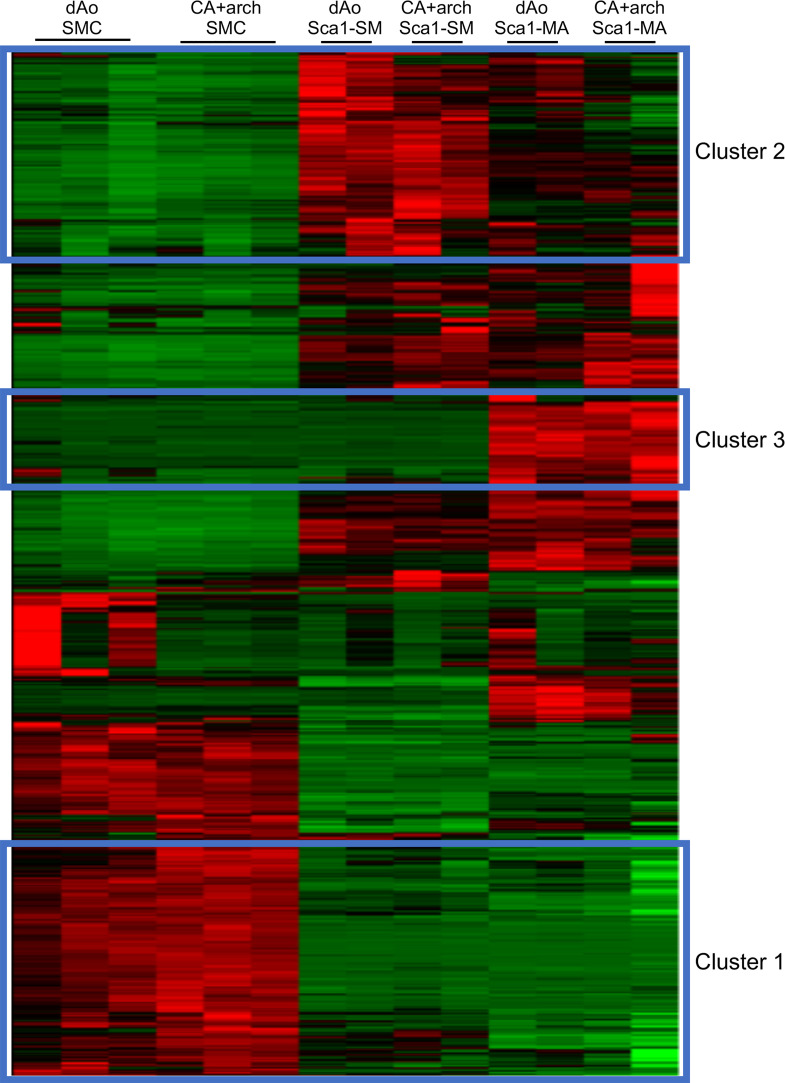
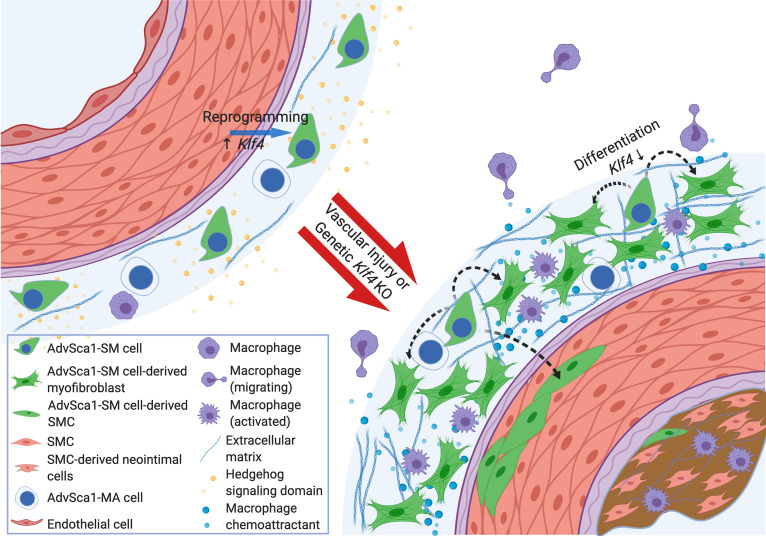
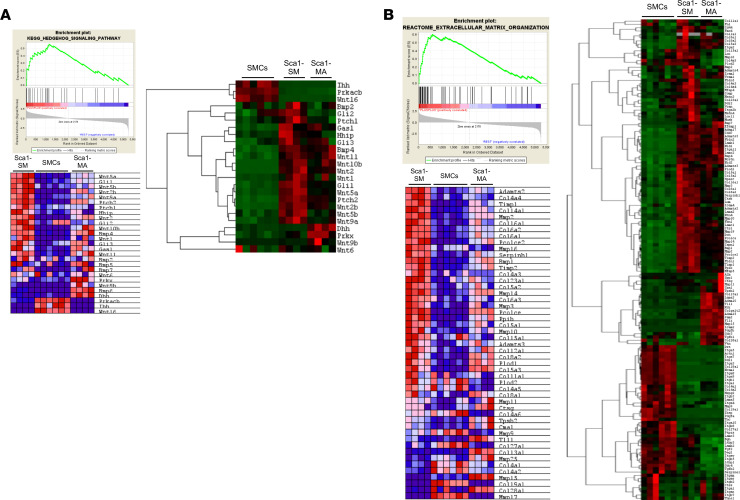
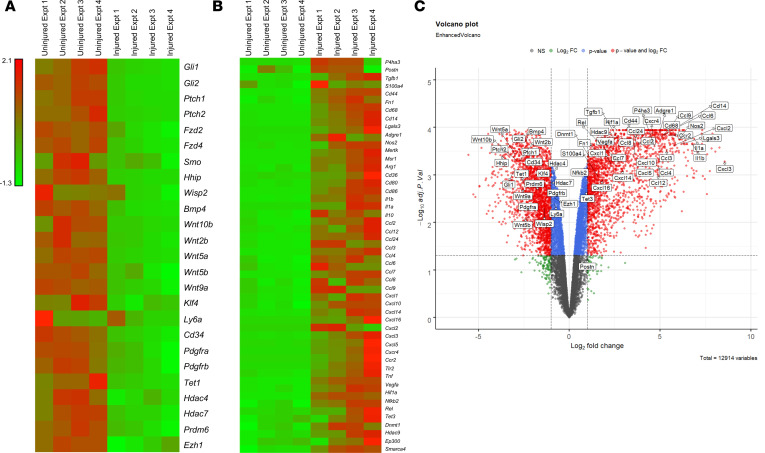
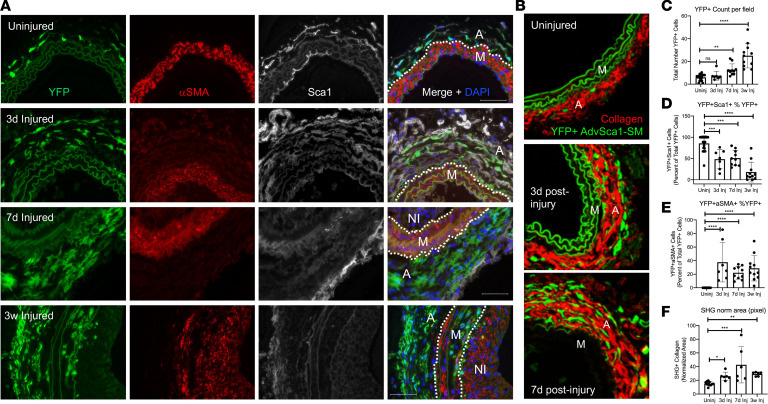
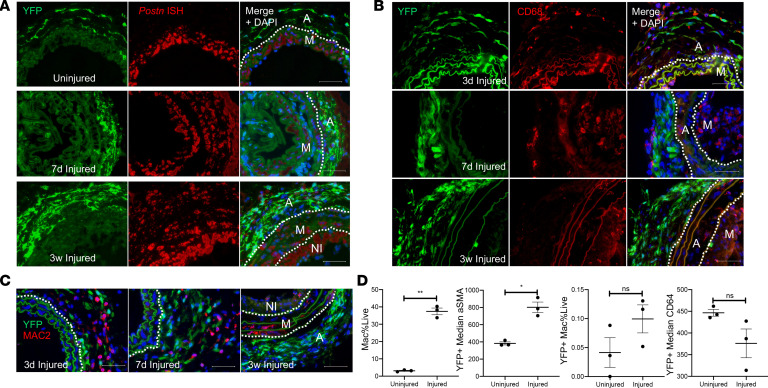
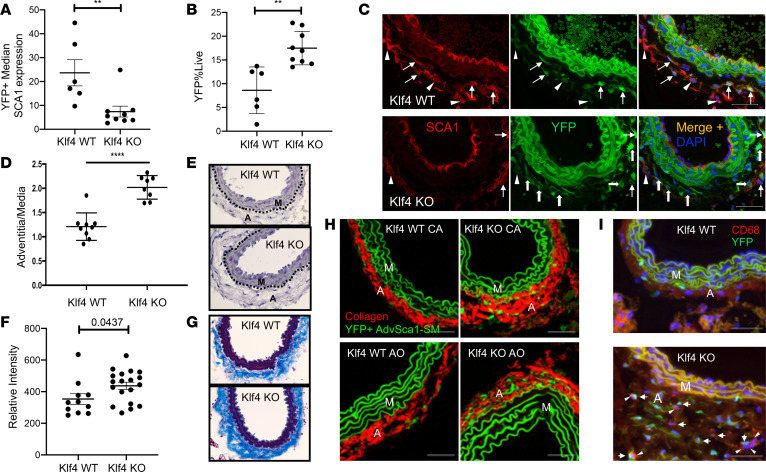
Resident vascular adventitial SCA1+ progenitor (AdvSca1) cells are essential in vascular development and injury. However, the heterogeneity of AdvSca1 cells presents a unique challenge in understanding signaling pathways orchestrating their behavior in homeostasis and injury responses. Using smooth muscle cell (SMC) lineage-tracing models, we identified a subpopulation of AdvSca1 cells (AdvSca1-SM) originating from mature SMCs that undergo reprogramming in situ and exhibit a multipotent phenotype. Here we employed lineage tracing and RNA-sequencing to define the signaling pathways regulating SMC-to-AdvSca1-SM cell reprogramming and AdvSca1-SM progenitor cell phenotype. Unbiased hierarchical clustering revealed that genes related to hedgehog/WNT/beta-catenin signaling were significantly enriched in AdvSca1-SM cells, emphasizing the importance of this signaling axis in the reprogramming event. Leveraging AdvSca1-SM-specific expression of GLI-Kruppel family member GLI1 (Gli1), we generated Gli1-CreERT2-ROSA26-YFP reporter mice to selectively track AdvSca1-SM cells. We demonstrated that physiologically relevant vascular injury or AdvSca1-SM cell-specific Kruppel-like factor 4 (Klf4) depletion facilitated the proliferation and differentiation of AdvSca1-SM cells to a profibrotic myofibroblast phenotype rather than macrophages. Surprisingly, AdvSca1-SM cells selectively contributed to adventitial remodeling and fibrosis but little to neointima formation. Together, these findings strongly support therapeutics aimed at preserving the AdvSca1-SM cell phenotype as a viable antifibrotic approach.
驻留血管外膜SCA1+祖细胞(AdvSca1)在血管发育和损伤中至关重要。然而,AdvSca1细胞的异质性给理解协调其在稳态和损伤反应中行为的信号通路带来了独特挑战。利用平滑肌细胞(SMC)谱系追踪模型,我们鉴定出了AdvSca1细胞的一个亚群(AdvSca1-SM),其起源于成熟SMC,这些SMC在原位进行重编程并表现出多能表型。在这里,我们采用谱系追踪和RNA测序来定义调节SMC向AdvSca1-SM细胞重编程以及AdvSca1-SM祖细胞表型的信号通路。无偏层次聚类显示,与刺猬信号通路/ WNT /β-连环蛋白信号相关的基因在AdvSca1-SM细胞中显著富集,强调了该信号轴在重编程事件中的重要性。利用AdvSca1-SM特异性表达的GLI-Kruppel家族成员GLI1(Gli1),我们构建了Gli1-CreERT2-ROSA26-YFP报告基因小鼠,以选择性追踪AdvSca1-SM细胞。我们证明,生理相关的血管损伤或AdvSca1-SM细胞特异性的Kruppel样因子4(Klf4)缺失促进了AdvSca1-SM细胞增殖并分化为促纤维化的肌成纤维细胞表型,而非巨噬细胞表型。令人惊讶的是,AdvSca1-SM细胞选择性地促进外膜重塑和纤维化,但对新生内膜形成的贡献很小。总之,这些发现有力地支持了旨在保留AdvSca1-SM细胞表型作为一种可行的抗纤维化方法的治疗策略。