State Key Laboratory for Pharmaceutical Biotechnology, College of Life Sciences, Nanjing University, Nanjing 210093, China.
College of Life Sciences, Northwest University, Xi'an 710069, China.
Int J Mol Sci. 2020 Oct 27;21(21):7963. doi: 10.3390/ijms21217963.
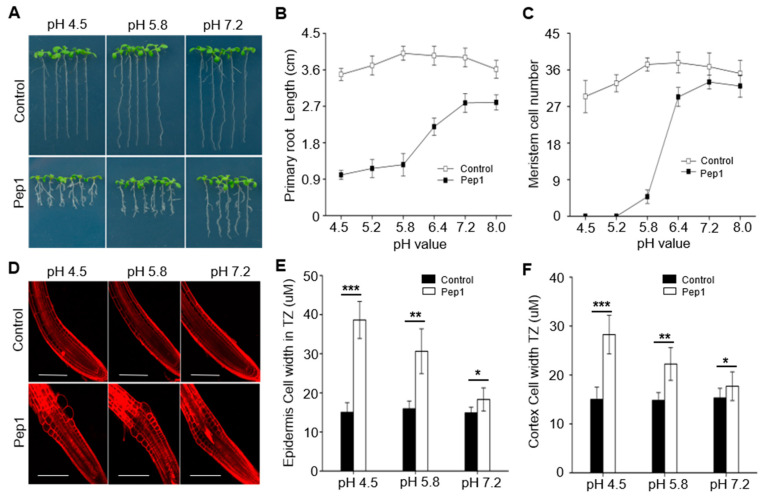
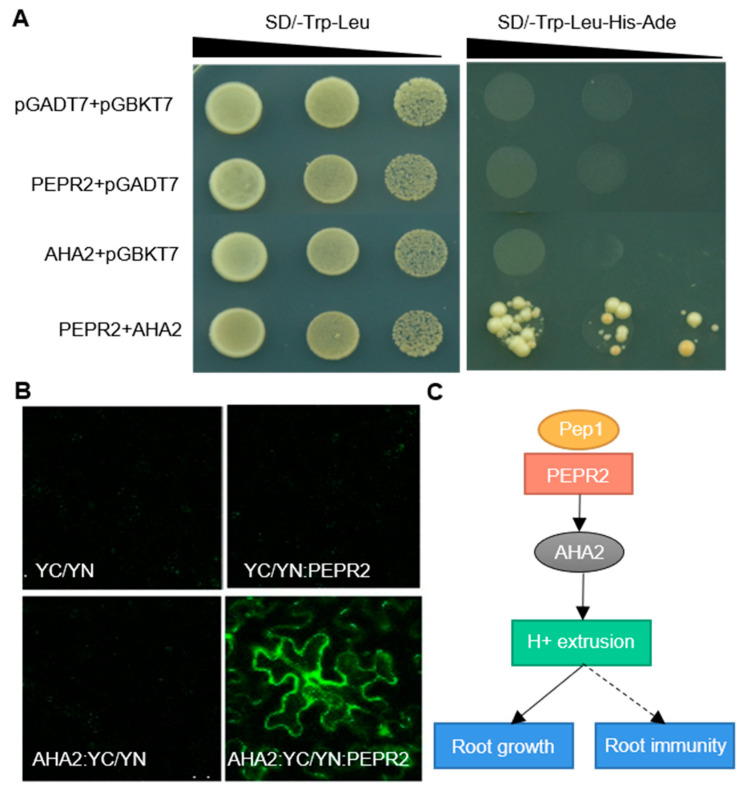
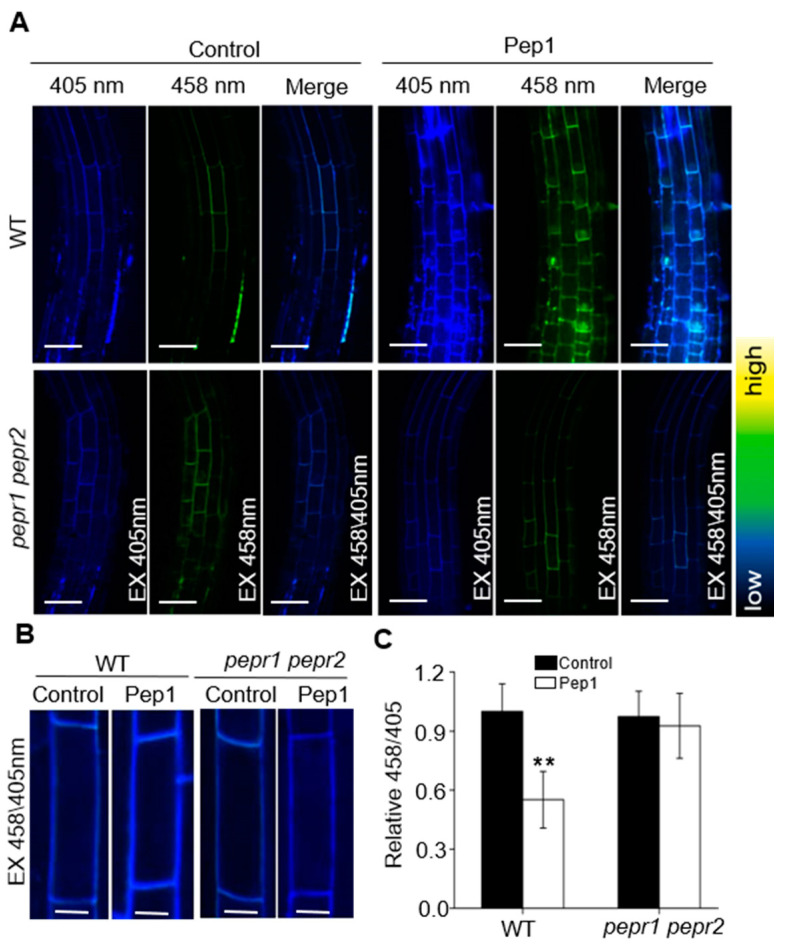
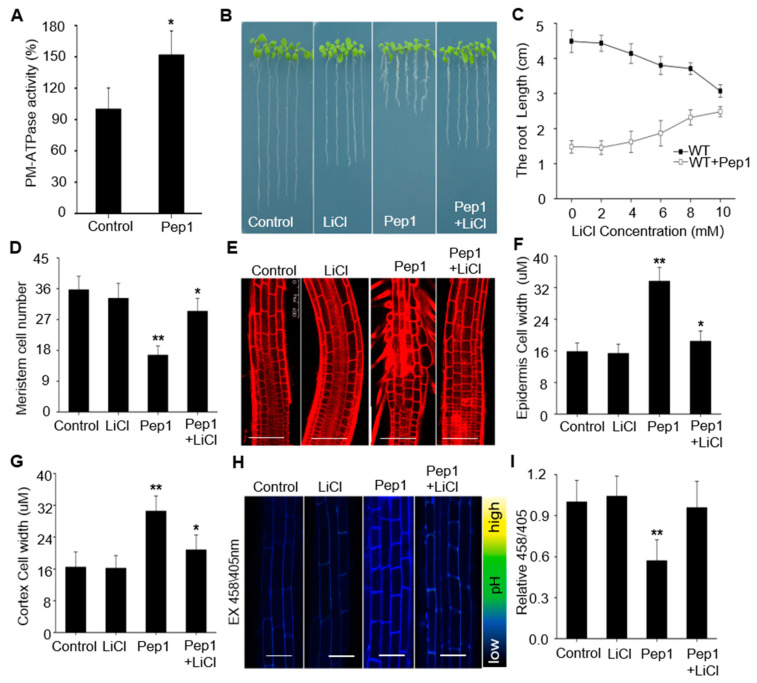
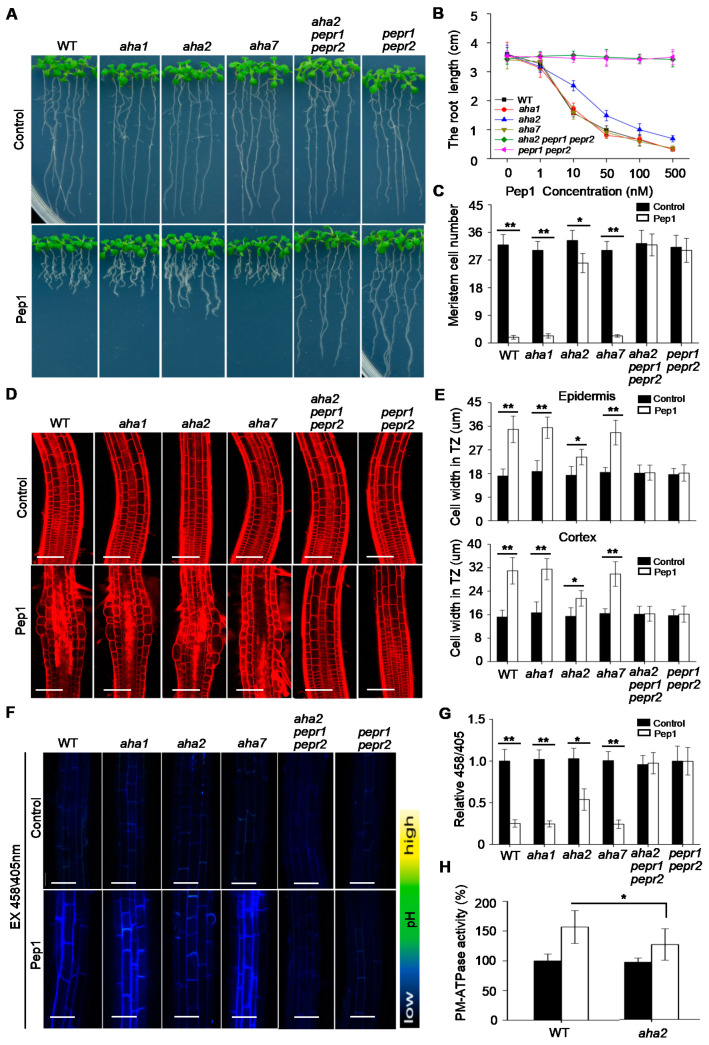
Plant elicitor peptides (Peps) are damage/danger-associated molecular patterns (DAMPs) that are derived from precursor proteins PROPEPs and perceived by a pair of leucine-rich repeat receptor-like kinases (LRR-RLKs), PEPR1 and PEPR2, to enhance innate immunity and to inhibit root growth in . In this study, we show that Pep1 inhibits the root growth by interfering with pH signaling, as acidic condition increased, but neutral and alkaline conditions decreased the Pep1 effect on inhibiting the root growth. The perception of Pep1 to PEPRs activated the plasma membrane-localized H+-ATPases (PM H+-ATPases) -the pump proton in plant cell-to extrude the protons into apoplast, and induced an overly acidic environment in apoplastic space, which further promoted the cell swelling in root apex and inhibited root growth. Furthermore, we revealed that pump proton AUTOINHIBITED H-ATPase 2 (AHA2) physically interacted with PEPR2 and served downstream of the Pep1-PEPRs signaling pathway to regulate Pep1-induced protons extrusion and root growth inhibition. In conclusion, this study demonstrates a previously unrecognized signaling crosstalk between Pep1 and pH signaling to regulate root growth.
植物激发素肽(Peps)是源自前体蛋白 PROPEPs 的损伤/危险相关分子模式(DAMPs),由一对富含亮氨酸重复的受体样激酶(LRR-RLKs)PEPR1 和 PEPR2 感知,以增强先天免疫并抑制 在 中根的生长。在这项研究中,我们表明 Pep1 通过干扰 pH 信号来抑制根的生长,因为酸性条件增加,但中性和碱性条件降低了 Pep1 抑制根生长的作用。Pep1 对 PEPRs 的感知激活了定位于质膜的 H+-ATPases(PM H+-ATPases)-将质子泵入植物细胞中的泵质子-并将质子逐出质外体,从而在质外体空间中诱导过度酸性环境,这进一步促进了根尖细胞的肿胀并抑制了根的生长。此外,我们揭示了泵质子自抑制 H-ATPase 2(AHA2)与 PEPR2 物理相互作用,并作为 Pep1-PEPRs 信号通路的下游调节 Pep1 诱导的质子外排和根生长抑制。总之,这项研究表明 Pep1 和 pH 信号之间存在以前未被识别的信号串扰,以调节根的生长。