Faculty of Medicine, Iuliu Hatieganu University of Medicine and Pharmacy, 8 Victor Babes Street, 400012 Cluj-Napoca, Romania.
Research Center for Functional Genomics, Biomedicine and Translational Medicine, Iuliu Hatieganu University of Medicine and Pharmacy, 23 Marinescu Street, 400337 Cluj-Napoca, Romania.
Int J Mol Sci. 2020 Oct 27;21(21):8002. doi: 10.3390/ijms21218002.
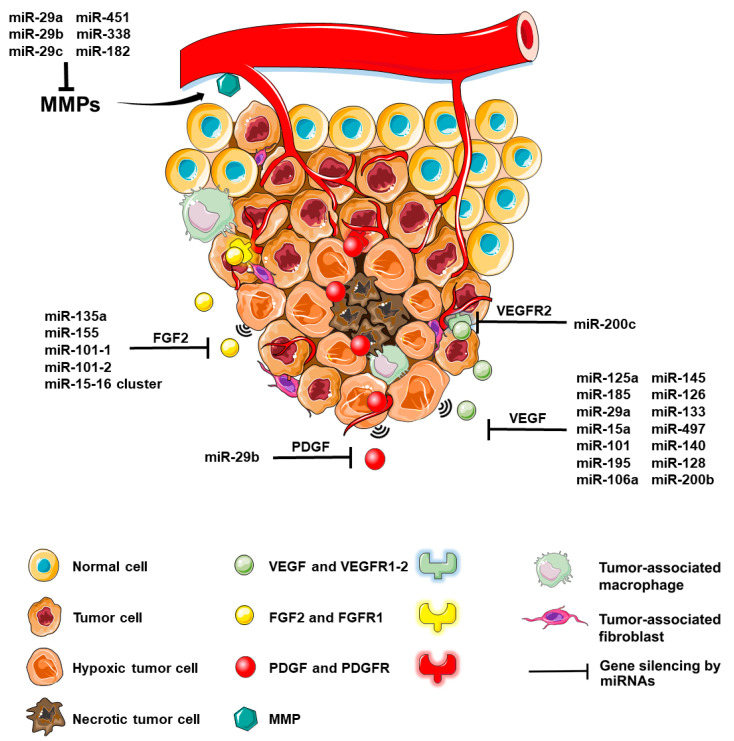
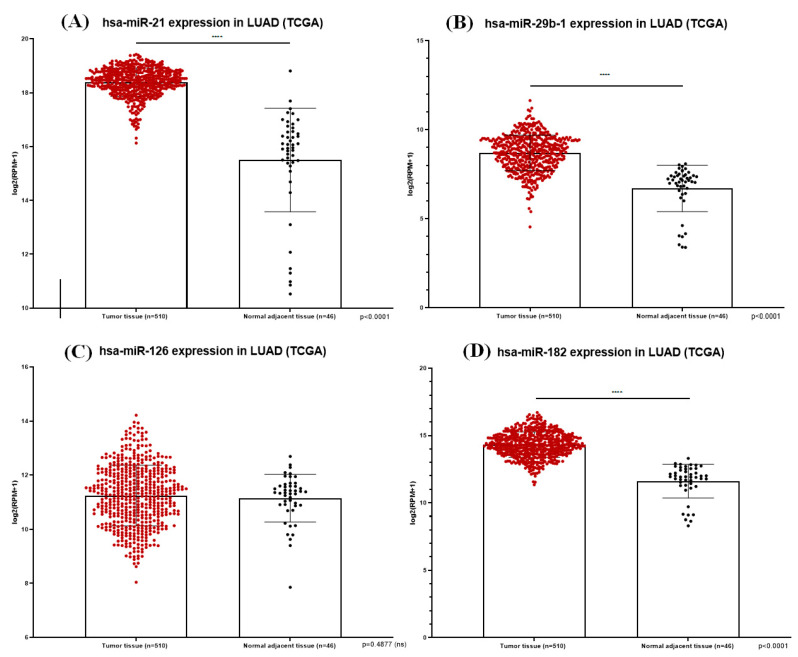
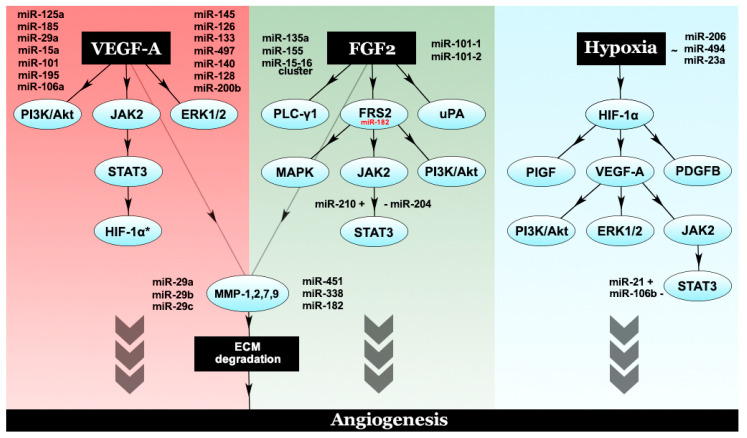
GLOBOCAN 2018 identified lung cancer as the leading oncological pathology in terms of incidence and mortality rates. Angiogenesis is a key adaptive mechanism of numerous malignancies that promotes metastatic spread in view of the dependency of cancer cells on nutrients and oxygen, favoring invasion. Limitation of the angiogenic process could significantly hamper the disease advancement through starvation of the primary tumor and impairment of metastatic spread. This review explores the basic molecular mechanisms of non-small cell lung cancer (NSCLC) angiogenesis, and discusses the influences of the key proangiogenic factors-the vascular endothelial growth factor-A (VEGF-A), basic fibroblast growth factor (FGF2), several matrix metalloproteinases (MMPs-MMP-2, MMP-7, MMP-9) and hypoxia-and the therapeutic implications of microRNAs (miRNAs, miRs) throughout the entire process, while also providing critical reviews of a number of microRNAs, with a focus on miR-126, miR-182, miR-155, miR-21 and let-7b. Finally, current conventional NSCLC anti-angiogenics-bevacizumab, ramucirumab and nintedanib-are briefly summarized through the lens of evidence-based medicine.
GLOBOCAN 2018 确定肺癌是发病率和死亡率方面领先的肿瘤病理学。血管生成是许多恶性肿瘤的关键适应机制,它促进了转移性扩散,因为癌细胞依赖于营养物质和氧气,有利于侵袭。限制血管生成过程可以通过原发性肿瘤的饥饿和转移扩散的损害来显著阻碍疾病的进展。这篇综述探讨了非小细胞肺癌 (NSCLC) 血管生成的基本分子机制,并讨论了关键的促血管生成因子——血管内皮生长因子-A (VEGF-A)、碱性成纤维细胞生长因子 (FGF2)、几种基质金属蛋白酶 (MMPs-MMP-2、MMP-7、MMP-9) 和缺氧——以及整个过程中 microRNAs (miRNAs,miRs) 的治疗意义,同时还对一些 microRNAs 进行了批判性评价,重点是 miR-126、miR-182、miR-155、miR-21 和 let-7b。最后,通过循证医学的视角,简要总结了目前用于 NSCLC 的常规抗血管生成药物——贝伐珠单抗、雷莫芦单抗和尼达尼布。