Department of Cardiology, Chongqing Ninth People's Hospital; Chongqing-China.
Department of Nephrology, Chongqing Ninth People's Hospital; Chongqing-China.
Anatol J Cardiol. 2020 Nov;24(5):290-299. doi: 10.14744/AnatolJCardiol.2020.91582.
In recent years, research on microRNAs (miRNAs) associated with coronary artery disease (CAD) has attracted considerable attention. However, findings of these studies on the validity of circulating miRNAs in CAD diagnosis are controversial. A meta-analysis was therefore conducted to determine the potential value of miRNAs as biomarkers in CAD diagnosis.
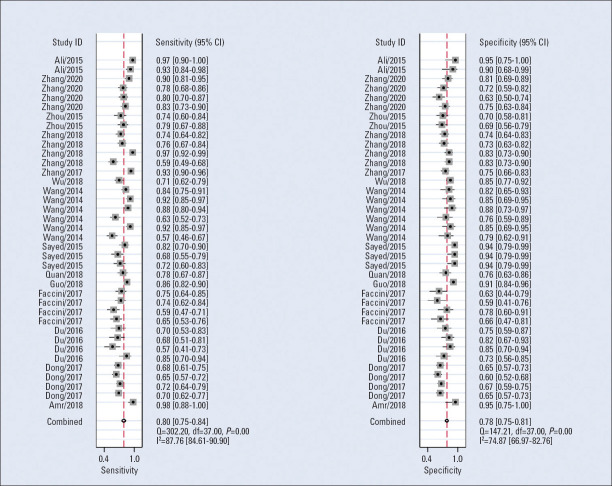
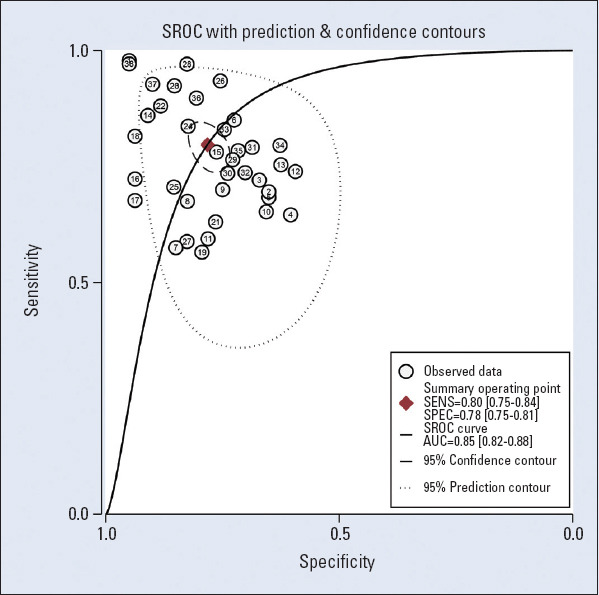
Relevant documents on miRNAs expression levels in the diagnosis of CAD were searched and collected from Pubmed, Embase, and Web of Science. They were collected from the time of inception of the database till January 31, 2020. A meta-analysis was conducted using Stata14.0 software. Forest maps were studied and a comprehensive evaluation of the diagnostic value of the expression levels of mRNAs in CAD was conducted using statistical indicators such as the summary receiver operating characteristic curve.
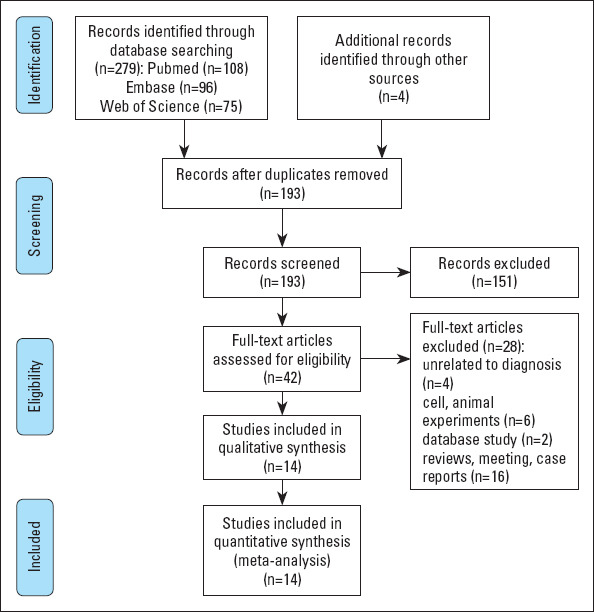
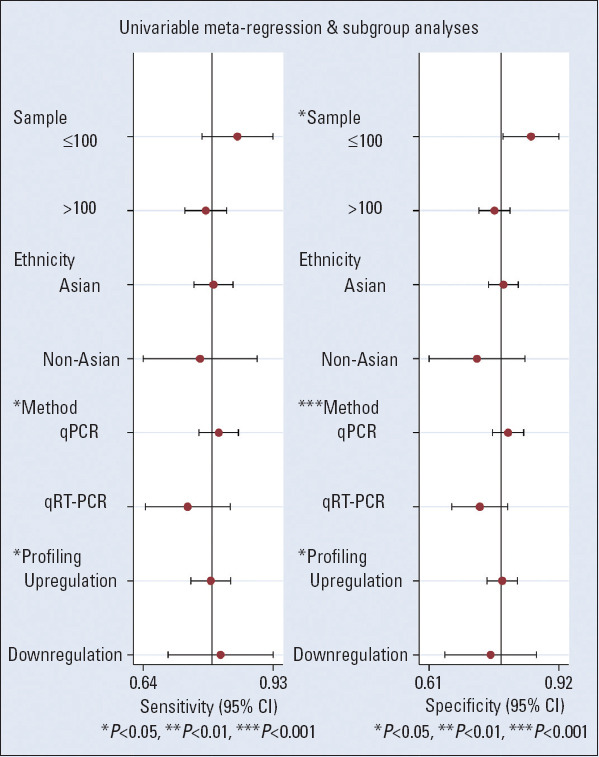
Overall, 14 studies were included, with 38 data sets, involving 29 miRNAs with 846 cases and 898 controls. The meta-analysis revealed that the average sensitivity and specificity of miRNAs for CAD diagnosis were 0.80 (0.75-0.84) and 0.78 (0.75-0.81), respectively. The positive likelihood, negative likelihood, and diagnostic odds ratios were 3.7 (3.1-4.4), 0.26 (0.21-0.33), and 14 (10-21), respectively, and the area under the curve was 0.85 (0.82-0.88). Subgroup analysis revealed that the accuracy in the Asian population was higher than that in the non-Asian population. Multiple miRNAs may be more diagnostically accurate than single miRNAs. MiRNAs in whole blood were more accurate than those in plasma, serum, and peripheral blood mononuclear cells. The diagnostic performance of the quantitative real-time polymerase chain reaction group was better than that of the qPCR group.
According to our study, miRNAs may be a new, non-invasive diagnostic tool for the diagnosis of CAD. As a screening tool in clinical practice, it has potential diagnostic value and is worthy of clinical promotion. Considering the number and quality of the studies included in this meta-analysis, the above conclusion requires more quality research to verify it.
近年来,与冠状动脉疾病(CAD)相关的 microRNAs(miRNAs)的研究受到了广泛关注。然而,这些关于循环 miRNAs 在 CAD 诊断中有效性的研究结果存在争议。因此,进行了荟萃分析以确定 miRNAs 作为 CAD 诊断生物标志物的潜在价值。
从 Pubmed、Embase 和 Web of Science 中搜索并收集与 miRNA 表达水平在 CAD 诊断中的相关文献。检索时间从数据库建立开始到 2020 年 1 月 31 日。使用 Stata14.0 软件进行荟萃分析。研究森林图,并使用汇总受试者工作特征曲线等统计指标对 CAD 中 mRNAs 表达水平的诊断价值进行综合评估。
总体而言,共纳入 14 项研究,包含 38 个数据集,涉及 29 个 miRNA,共 846 例病例和 898 例对照。荟萃分析显示,miRNAs 诊断 CAD 的平均敏感度和特异度分别为 0.80(0.75-0.84)和 0.78(0.75-0.81)。阳性似然比、阴性似然比和诊断比值比分别为 3.7(3.1-4.4)、0.26(0.21-0.33)和 14(10-21),曲线下面积为 0.85(0.82-0.88)。亚组分析显示,亚洲人群的准确性高于非亚洲人群。多种 miRNA 可能比单一 miRNA 更具有诊断准确性。全血中的 miRNA 比血浆、血清和外周血单核细胞中的 miRNA 更准确。定量实时聚合酶链反应组的诊断性能优于 qPCR 组。
根据我们的研究,miRNAs 可能是 CAD 诊断的一种新的非侵入性诊断工具。作为临床实践中的筛查工具,它具有潜在的诊断价值,值得临床推广。考虑到本荟萃分析纳入研究的数量和质量,上述结论需要更多高质量的研究来验证。