Liu Hui, Yang Chunmei, Zhao Xiaoyan, Le Jing, Wu Gongqiang, Wei Juying, Liang Yun, Qian Wenbin
Department of Hematology, The Second Affiliated Hospital, College of Medicine, Zhejiang University, Hangzhou, Zhejiang 310009, People's Republic of China.
Institute of Hematology, Zhejiang University, Hangzhou, Zhejiang 31003, People's Republic of China.
Onco Targets Ther. 2020 Oct 23;13:10797-10806. doi: 10.2147/OTT.S275334. eCollection 2020.
Diffuse large B cell lymphoma (DLBCL) is an aggressive B-cell malignancy with clinical and molecular heterogeneity whose genetics may have clinical implications for patient stratification and treatment. The circulating tumor DNA (ctDNA) is a novel noninvasive, real-time, and tumor-specific biomarker harboring tumor-derived genetic alterations that are identical to those of tumor cells, thus showing great promise in individualized medicine, including precise diagnosis, prediction of prognosis, response monitoring, and relapse detection for DLBCL.
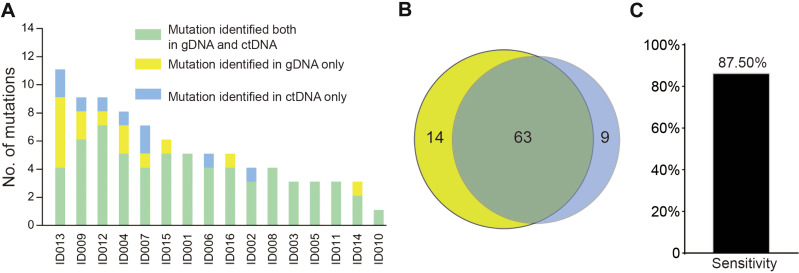
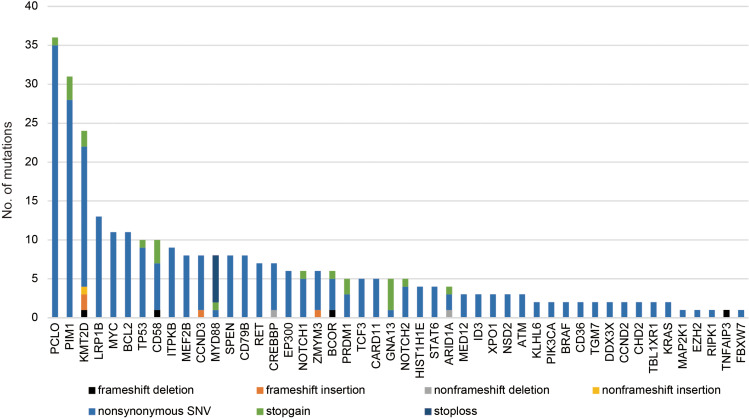
In this study, we applied NGS analysis to tumor biopsies and ctDNA samples from 16 DLBCL subjects. Then, we compared the genomic alterations from 41 newly diagnosed patients and 56 relapsed/refractory (R/R) patients.
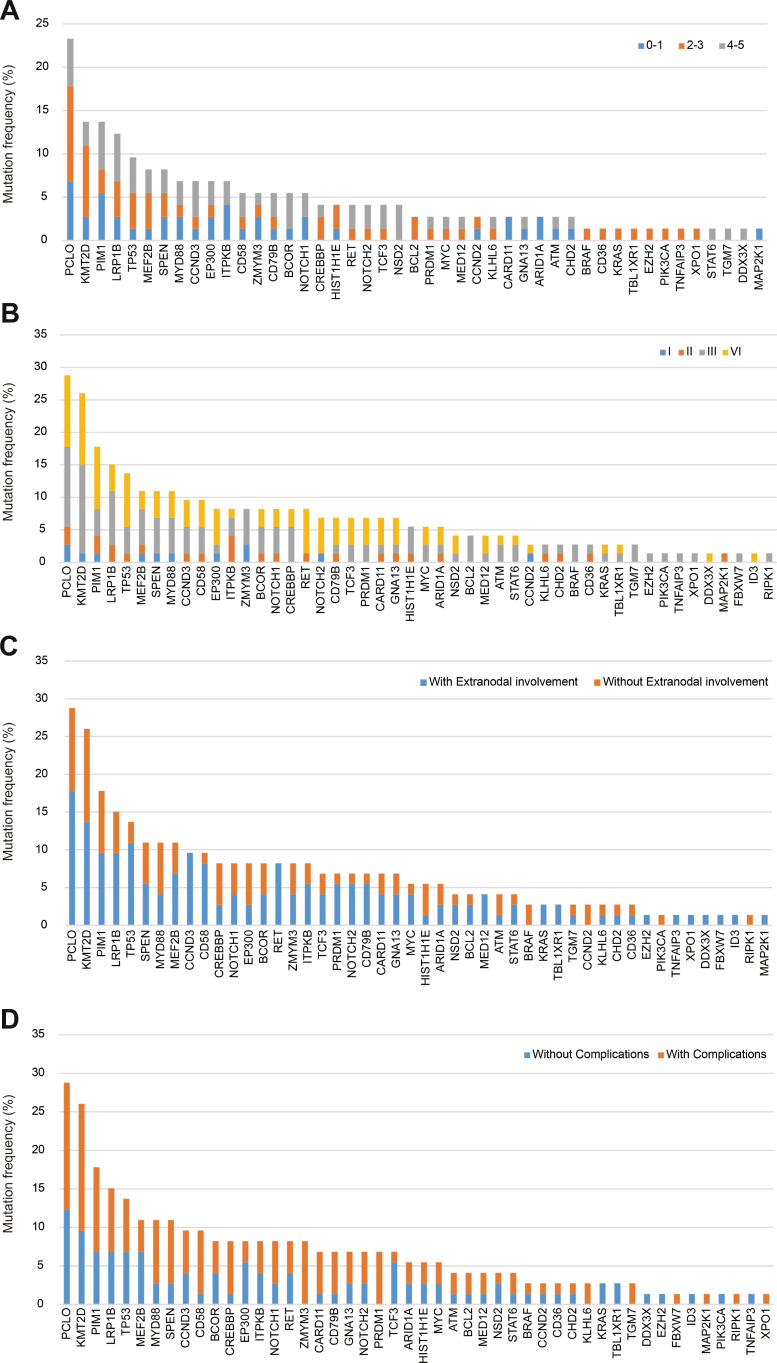
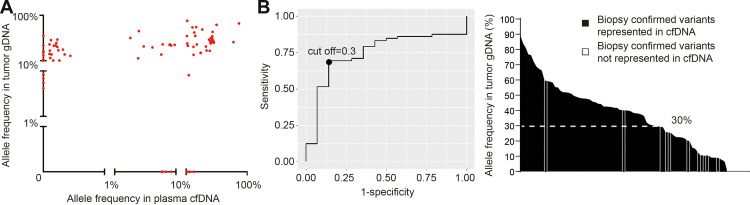
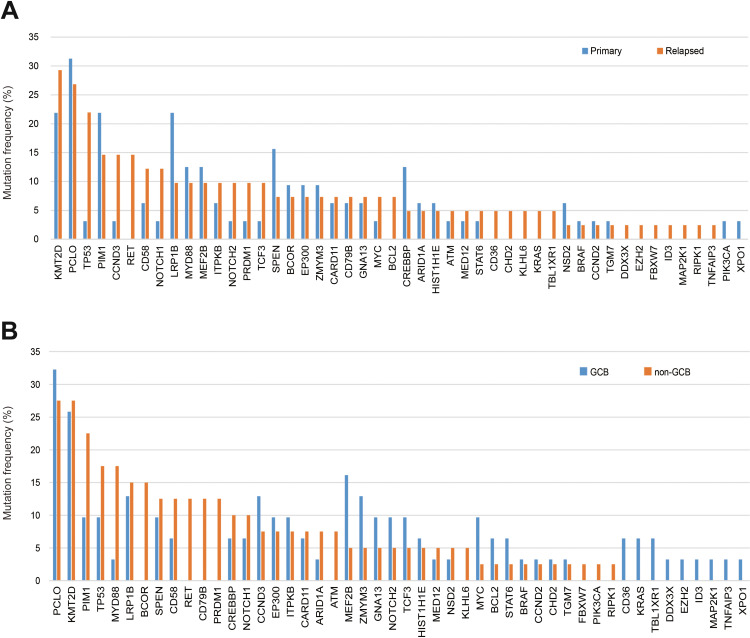
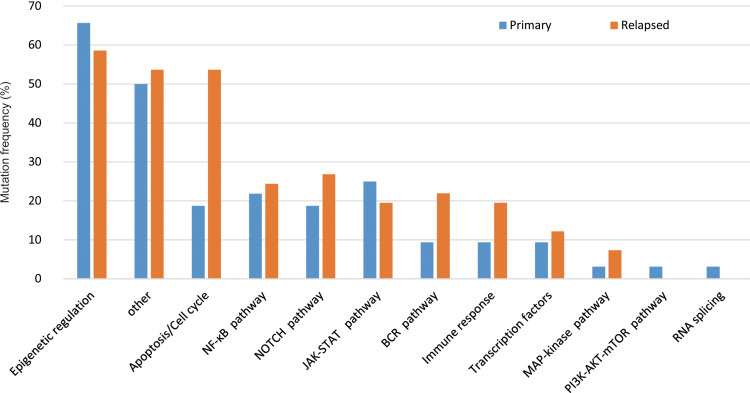
Our results show that ctDNA can function as a liquid biopsy for tracking recurrently mutated genes in DLBCL (sensitivity: 87.50%). The mutational profiles of newly diagnosed and R/R DLBCL groups largely overlapped, but the frequencies of some gene mutations differ between the two cohorts. The distribution of mutations also revealed different frequencies in the two cohorts due to different signaling pathways. Genes from apoptosis pathway, immune response and BCR pathway suffered more mutations in R/R patients.
Overall, this study establishes ctDNA as an easily accessible source of tumor DNA for DLBCL genotyping and provides a deeper understanding of the somatic alteration spectrum for both newly diagnosed and R/R DLBCL patients.
弥漫性大B细胞淋巴瘤(DLBCL)是一种侵袭性B细胞恶性肿瘤,具有临床和分子异质性,其遗传学特征可能对患者分层和治疗具有临床意义。循环肿瘤DNA(ctDNA)是一种新型的非侵入性、实时且肿瘤特异性的生物标志物,携带与肿瘤细胞相同的肿瘤源性基因改变,因此在个性化医疗中显示出巨大潜力,包括DLBCL的精确诊断、预后预测、疗效监测和复发检测。
在本研究中,我们对16例DLBCL患者的肿瘤活检组织和ctDNA样本进行了NGS分析。然后,我们比较了41例新诊断患者和56例复发/难治性(R/R)患者的基因组改变。
我们的结果表明,ctDNA可作为一种液体活检方法用于追踪DLBCL中反复突变的基因(敏感性:87.50%)。新诊断和R/R DLBCL组的突变谱在很大程度上重叠,但两个队列中某些基因突变的频率有所不同。由于信号通路不同,两个队列中的突变分布也显示出不同的频率。凋亡通路、免疫反应和BCR通路的基因在R/R患者中发生更多突变。
总体而言,本研究将ctDNA确立为DLBCL基因分型中易于获取的肿瘤DNA来源,并为新诊断和R/R DLBCL患者的体细胞改变谱提供了更深入的理解。