Gao Feng, Guo Yun, Chu Hongyu, Yu Weiyong, Chen Zhenbo, Chen Liang, Li Jun, Yang Degang, Yang Mingliang, Du Liangjie, Li Jianjun, Chan Chetwyn C H
School of Rehabilitation Medicine, Capital Medical University, Beijing, China.
Department of Spinal and Neural Functional Reconstruction, China Rehabilitation Research Center, Beijing, China.
Front Neurol. 2020 Oct 6;11:555733. doi: 10.3389/fneur.2020.555733. eCollection 2020.
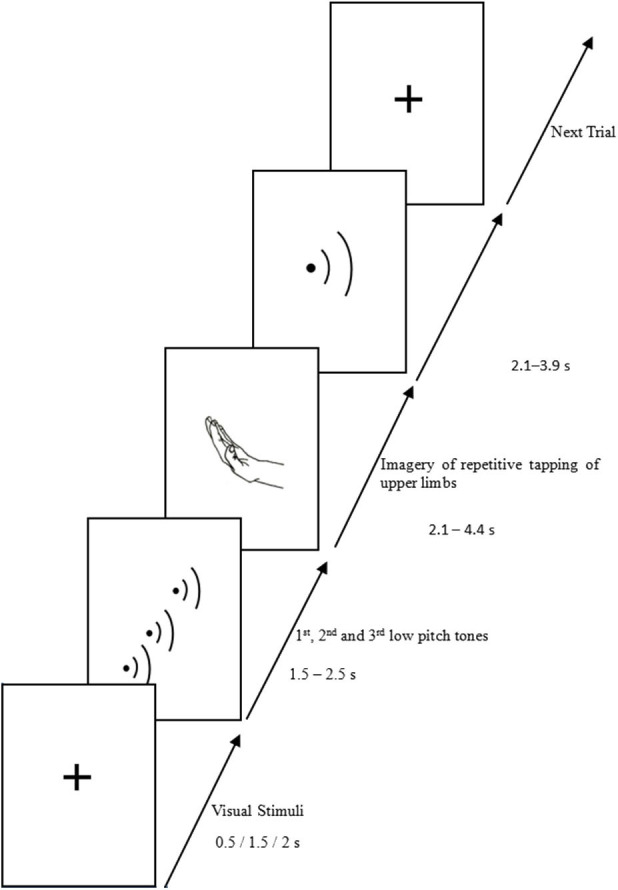
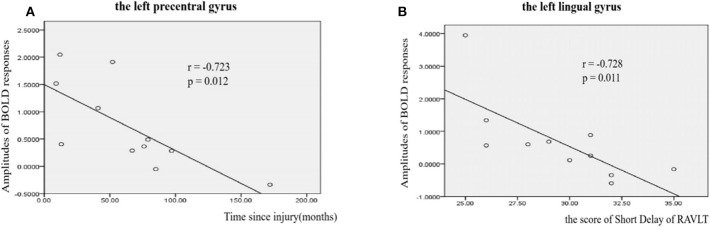
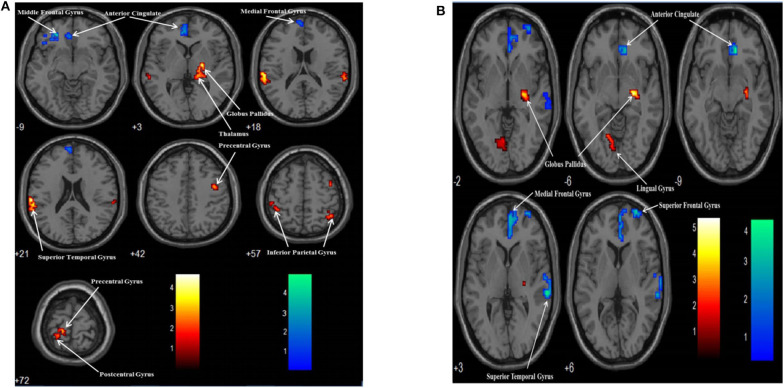
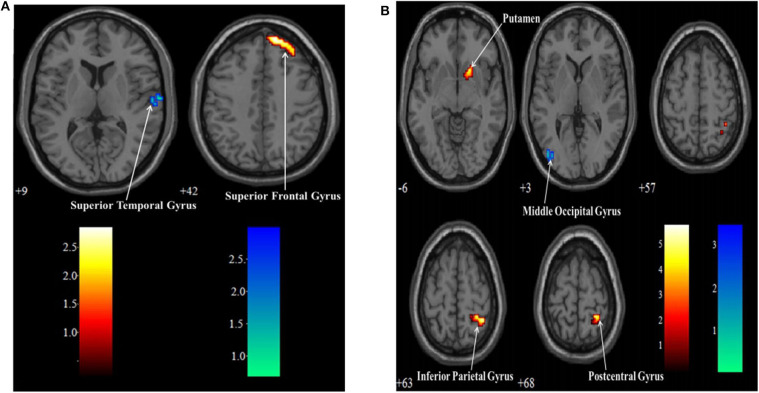
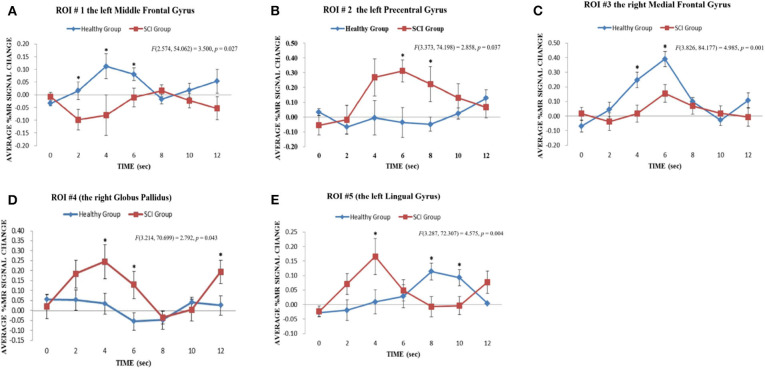
This study aims to investigate functional brain reorganization brought about by the loss of physical movement and sensory feedback in lower limbs in chronic spinal cord injury (SCI). Eleven paraplegia patients with SCI and 13 healthy controls (HCs) were recruited. The experimental task used was a visuomotor imagery task requiring subjects to engage in visualization of repetitive tapping movements of the upper or lower limbs. Blood oxygen level-dependent (BOLD) responses were captured during the experimental task, along with the accuracy rate and the response time. The SCI patients performed worse in the Rey Auditory Verbal Learning Test (RAVLT) and the Trail Making Test. SCI patients had a larger BOLD signal in the left lingual gyrus and right external globus pallidus (GPe) when imagining lower-limb movements. For the upper-limb task, SCI patients showed stronger BOLD responses than the HCs in extensive areas over the brain, including the bilateral precentral gyrus (preCG), bilateral inferior parietal gyrus, right GPe, right thalamus, left postcentral gyrus, and right superior temporal gyrus. In contrast, the HCs displayed stronger BOLD responses in the medial frontal gyrus and anterior cingulate gyrus for both upper- and lower-limb tasks than the SCI patients. In the SCI group, for the upper-limb condition, the amplitudes of BOLD responses in the left preCG were negatively correlated with the time since injury ( = -0.72, = 0.012). For the lower-limb condition, the amplitudes of BOLD responses in the left lingual gyrus were negatively correlated with the scores on the Short Delay task of the RAVLT ( = -0.73, = 0.011). Our study provided imaging evidence for abnormal changes in brain function and worsened cognitive test performance in SCI patients. These findings suggested possible compensatory strategies adopted by the SCI patients for the loss of sensorimotor function from the lower limbs when performing a limb imagery task.
本研究旨在调查慢性脊髓损伤(SCI)患者下肢失去肢体运动和感觉反馈后导致的大脑功能重组。招募了11名患有SCI的截瘫患者和13名健康对照者(HCs)。所使用的实验任务是一项视觉运动想象任务,要求受试者想象上肢或下肢的重复性敲击动作。在实验任务期间,采集了血氧水平依赖(BOLD)反应,以及准确率和反应时间。SCI患者在雷伊听觉词语学习测验(RAVLT)和连线测验中的表现较差。在想象下肢运动时,SCI患者左舌回和右外侧苍白球(GPe)的BOLD信号更大。对于上肢任务,SCI患者在大脑的广泛区域,包括双侧中央前回(preCG)、双侧顶下小叶、右侧GPe、右侧丘脑、左侧中央后回和右侧颞上回,比HCs表现出更强的BOLD反应。相比之下,在上下肢任务中,HCs在内侧前额叶和前扣带回的BOLD反应比SCI患者更强。在SCI组中,对于上肢情况,左侧preCG中BOLD反应的幅度与受伤时间呈负相关(r = -0.72,p = 0.012)。对于下肢情况而言,左舌回中BOLD反应的幅度与RAVLT的短时延迟任务得分呈负相关(r = -0.73,p = 0.011)。我们的研究为SCI患者大脑功能的异常变化和认知测试表现恶化提供了影像学证据。这些发现提示了SCI患者在执行肢体想象任务时,针对下肢感觉运动功能丧失可能采取的代偿策略。