Biomedical Research Center, Qatar University, Doha, Qatar.
Virology Laboratory, Hamad Medical Corporation, Doha, Qatar.
Front Cell Infect Microbiol. 2020 Oct 6;10:575613. doi: 10.3389/fcimb.2020.575613. eCollection 2020.
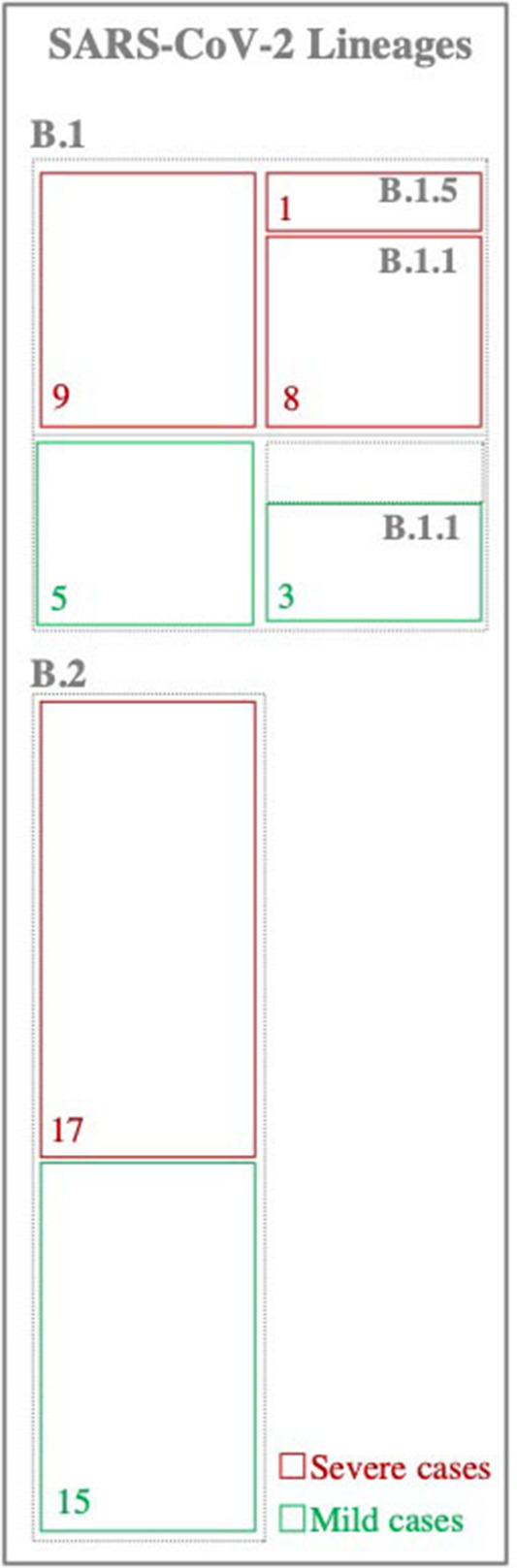
The ongoing pandemic of SARS-COV-2 has already infected more than eight million people worldwide. The majority of COVID-19 patients either are asymptomatic or have mild symptoms. Yet, about 15% of the cases experience severe complications and require intensive care. Factors determining disease severity are not yet fully characterized. Here, we investigated the within-host virus diversity in COVID-19 patients with different clinical manifestations. We compared SARS-COV-2 genetic diversity in 19 mild and 27 severe cases. Viral RNA was extracted from nasopharyngeal samples and sequenced using the Illumina MiSeq platform. This was followed by deep-sequencing analyses of SARS-CoV-2 genomes at both consensus and sub-consensus sequence levels. Consensus sequences of all viruses were very similar, showing more than 99.8% sequence identity regardless of the disease severity. However, the sub-consensus analysis revealed significant differences in within-host diversity between mild and severe cases. Patients with severe symptoms exhibited a significantly (-value 0.001) higher number of variants in coding and non-coding regions compared to mild cases. Analysis also revealed higher prevalence of some variants among severe cases. Most importantly, severe cases exhibited significantly higher within-host diversity (mean = 13) compared to mild cases (mean = 6). Further, higher within-host diversity was observed in patients above the age of 60 compared to the younger age group. These observations provided evidence that within-host diversity might play a role in the development of severe disease outcomes in COVID-19 patients; however, further investigations are required to elucidate this association.
持续的 SARS-CoV-2 大流行已经在全球范围内感染了超过 800 万人。大多数 COVID-19 患者要么没有症状,要么有轻度症状。然而,约 15%的病例出现严重并发症,需要重症监护。决定疾病严重程度的因素尚未完全确定。在这里,我们研究了不同临床表现的 COVID-19 患者体内病毒的多样性。我们比较了 19 例轻度和 27 例重度病例中的 SARS-CoV-2 遗传多样性。从鼻咽样本中提取病毒 RNA,使用 Illumina MiSeq 平台进行测序。随后在共识和亚共识序列水平上对 SARS-CoV-2 基因组进行深度测序分析。所有病毒的共识序列非常相似,无论疾病严重程度如何,都显示出超过 99.8%的序列同一性。然而,亚共识分析显示轻度和重度病例之间的体内多样性存在显著差异。症状严重的患者在编码和非编码区域的变异数量明显高于轻度患者(-值 0.001)。分析还显示,一些变异在严重病例中更为普遍。最重要的是,严重病例的体内多样性明显高于轻度病例(平均=13 对 6)。此外,在 60 岁以上的患者中观察到的体内多样性高于年轻组。这些观察结果提供了证据表明,体内多样性可能在 COVID-19 患者严重疾病结果的发展中起作用;然而,需要进一步的研究来阐明这种关联。