Wu Linshi, Wang Yinping, Zhu Sibo, Bao Xunxia, Fu Zhiliang, Zhen Timing, Yuan Zhiqing, Li Qiwei, Deng Zheng, Sun Jianhua, Chen Tao
Department of General Surgery, South Campus, Renji Hospital, School of Medicine, Shanghai Jiaotong University, Shanghai, China.
Department of Biliary-Pancreatic Surgery, South Campus, Renji Hospital, School of Medicine, Shanghai Jiaotong University, No. 2000 Jiangyue Road, Pujin Street, Minhang District, Shanghai, 201100, China.
BMC Gastroenterol. 2020 Oct 31;20(1):363. doi: 10.1186/s12876-020-01512-8.
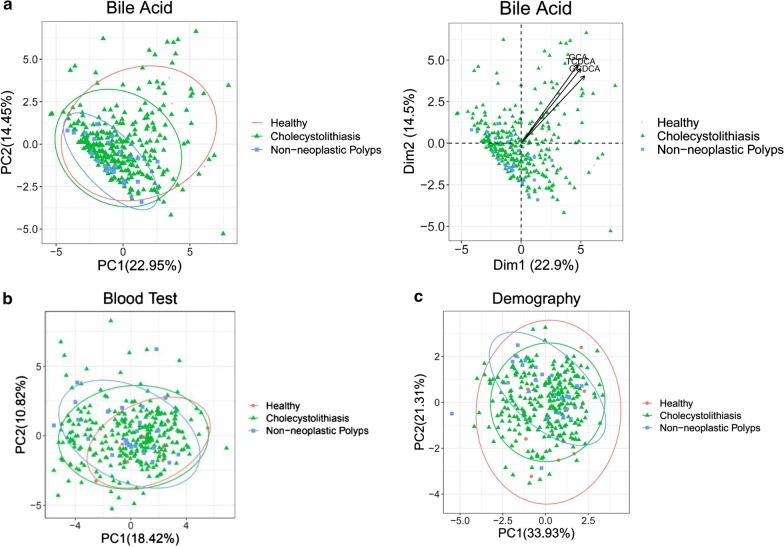
The development of gallbladder disease (GBD) is related to bile acid (BA) metabolism, and the rate of BA circulation increases the risk of biliary cancer. However, it is unclear whether patterns of circulating bile acids (BAs) change in patients with benign GBDs such as gallbladder stones and polyps. Herein, we compared and characterised plasma BA profiles in patients with cholecystolithiasis and non-neoplastic polyps with healthy controls, and explored relationships between plasma BA profiles, demographics, and laboratory test indices.
A total of 330 subjects (13 healthy controls, 292 cholecystolithiasis and 25 non-neoplastic polyps) were recruited and plasma BA profiles including 14 metabolites from patients with pathologically confirmed cholecystolithiasis and non-neoplastic polyps were compared with controls. BAs were quantitated by liquid chromatography and mass spectrometry, and statistical and regression analyses of demographics and laboratory test indices were performed.
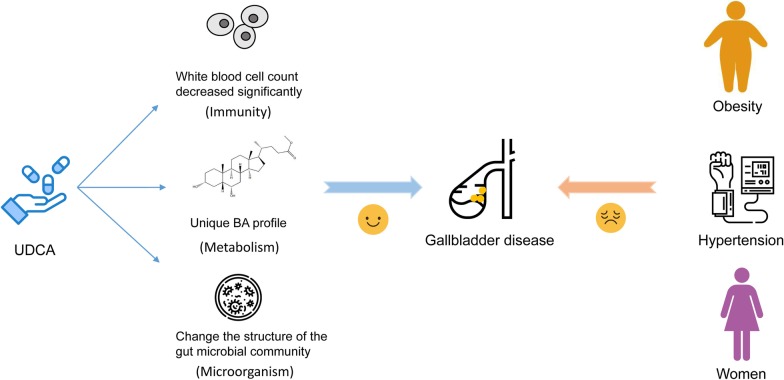
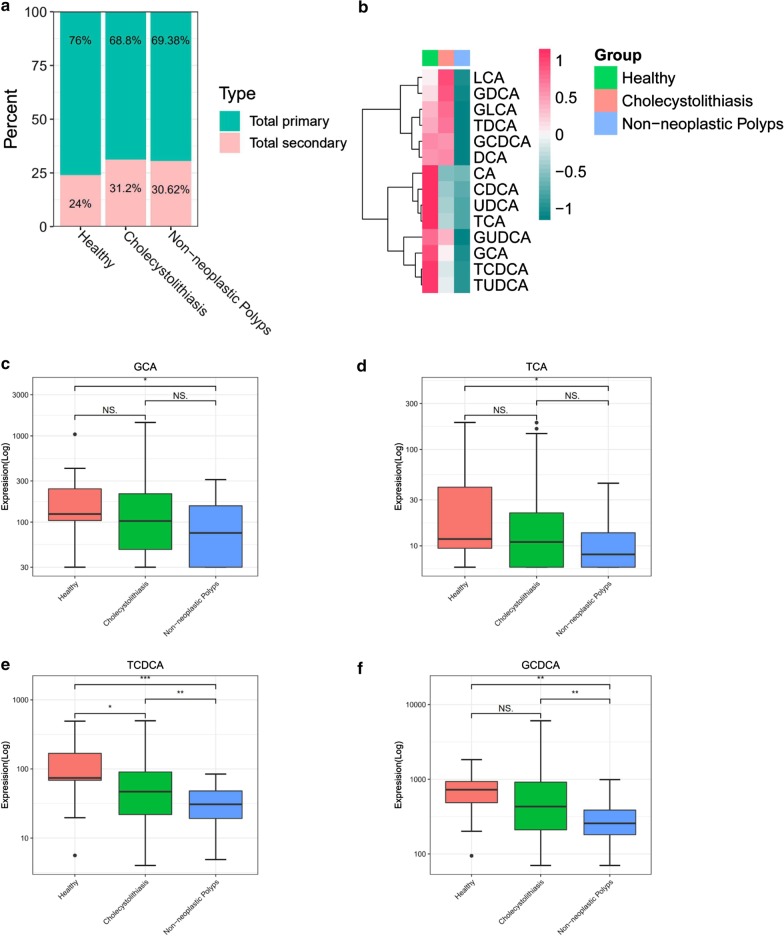
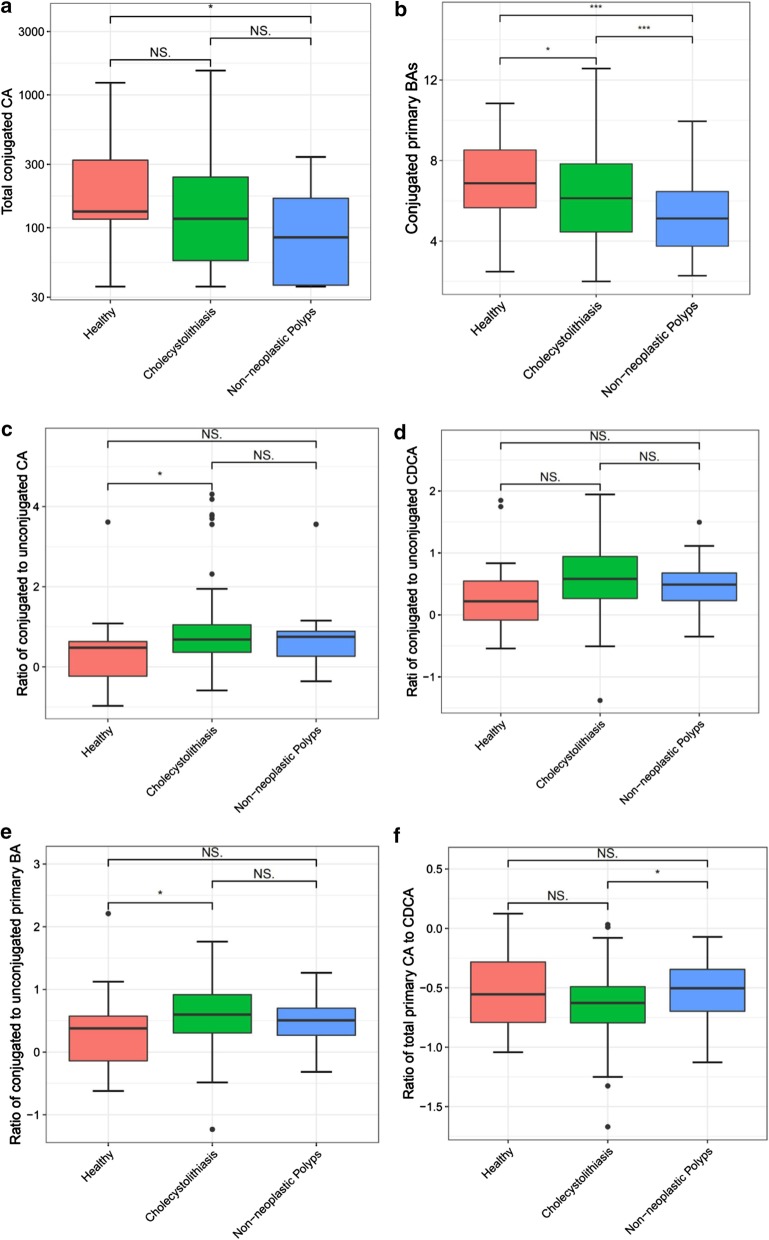
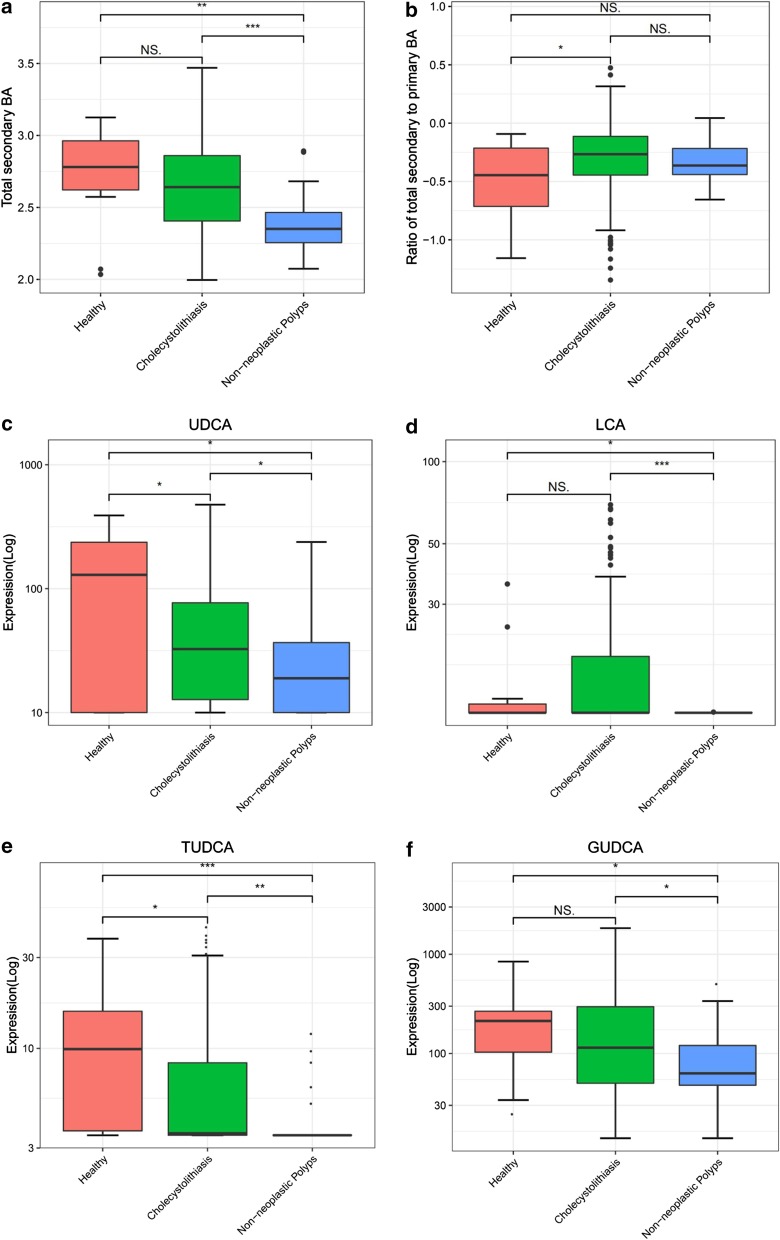
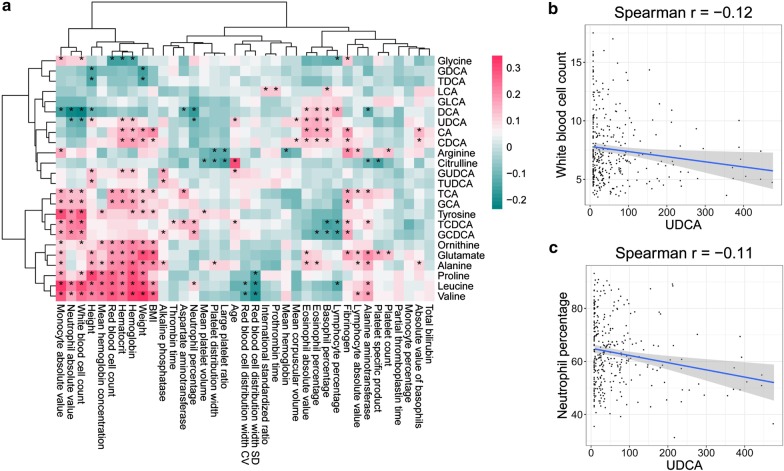
Females displayed a higher burden of GBD than males (63.36% cholecystolithiasis, 60% non-neoplastic polyps). Cholecystolithiasis and non-neoplastic polyps were associated with increased plasma total secondary BAs, while levels of primary BAs were lower than in healthy controls. Plasma ursodeoxycholic acid (UDCA), tauroursodeoxycholic acid (TUDCA), glycyurdeoxycholic acid (GUDCA), taurochenodeoxycholic acid (TCDCA) and glycochenodeoxycholic acid (GCDCA) were decreased significantly in GBDs, and ursodeoxycholic acid (UDCA) was negatively correlated with white blood cell count and neutrophil percentage.
Secondary BA levels were higher in patients with cholecystolithiasis and non-neoplastic polyps. White blood cell count and percentage of neutrophil in peripheral blood were negatively correlated with UDCA, indicating an anti-inflammation effect of UDCA.
胆囊疾病(GBD)的发生与胆汁酸(BA)代谢有关,BA循环速率增加会增加胆管癌风险。然而,尚不清楚胆囊结石和息肉等良性GBD患者的循环胆汁酸(BAs)模式是否会发生变化。在此,我们比较并分析了胆囊结石和非肿瘤性息肉患者与健康对照者的血浆BA谱,并探讨了血浆BA谱、人口统计学特征和实验室检查指标之间的关系。
共招募了330名受试者(13名健康对照者、292名胆囊结石患者和25名非肿瘤性息肉患者),将经病理确诊的胆囊结石和非肿瘤性息肉患者的14种代谢物血浆BA谱与对照者进行比较。通过液相色谱和质谱法定量分析BAs,并对人口统计学特征和实验室检查指标进行统计和回归分析。
女性的GBD负担高于男性(胆囊结石患者中占63.36%,非肿瘤性息肉患者中占60%)。胆囊结石和非肿瘤性息肉与血浆总次级BAs增加有关,而初级BAs水平低于健康对照者。GBD患者的血浆熊去氧胆酸(UDCA)、牛磺熊去氧胆酸(TUDCA)、甘氨脱氧胆酸(GUDCA)、牛磺鹅去氧胆酸(TCDCA)和甘氨鹅去氧胆酸(GCDCA)显著降低,且UDCA与白细胞计数和中性粒细胞百分比呈负相关。
胆囊结石和非肿瘤性息肉患者的次级BA水平较高。外周血白细胞计数和中性粒细胞百分比与UDCA呈负相关,表明UDCA具有抗炎作用。