Department of Thoracic Surgery, Tangdu Hospital, Fourth Military Medical University, 569 Xinsi Road, Baqiao District, Xi'an City, 710038, Shaanxi Province, China.
Department of Thoracic Surgery, Air Force Medical Center, PLA, 30 Fucheng Road, Haidian District, Beijing, 100142, China.
BMC Cancer. 2020 Oct 31;20(1):1046. doi: 10.1186/s12885-020-07473-1.
Lung adenocarcinoma (LUAD) remains a crucial factor endangering human health. Gene-based clinical predictions could be of great help for cancer intervention strategies. Here, we tried to build a gene-based survival score (SS) for LUAD via analyzing multiple transcriptional datasets.
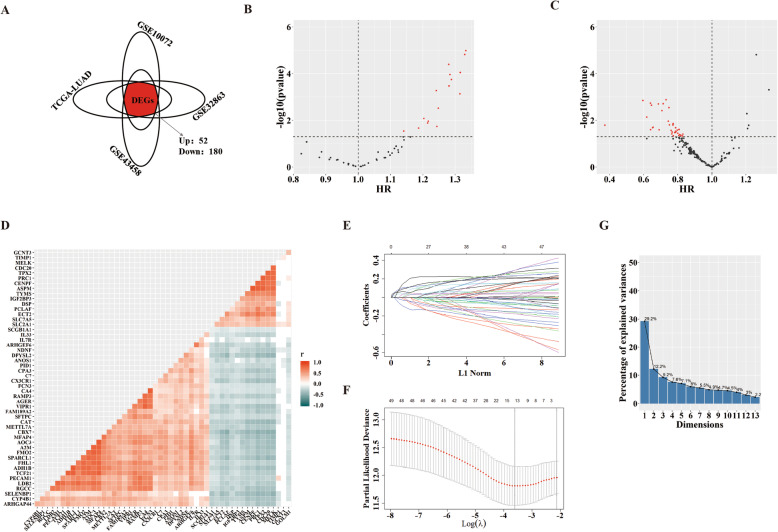
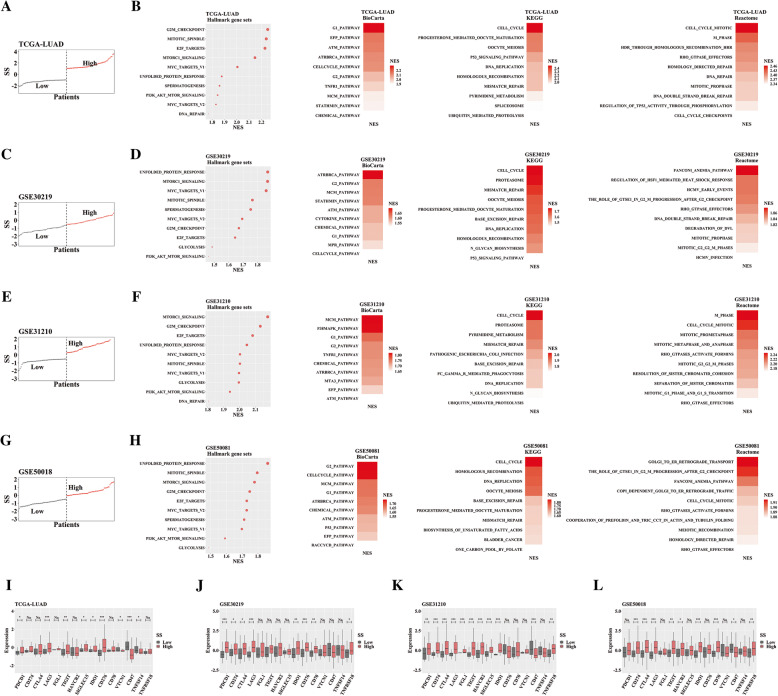
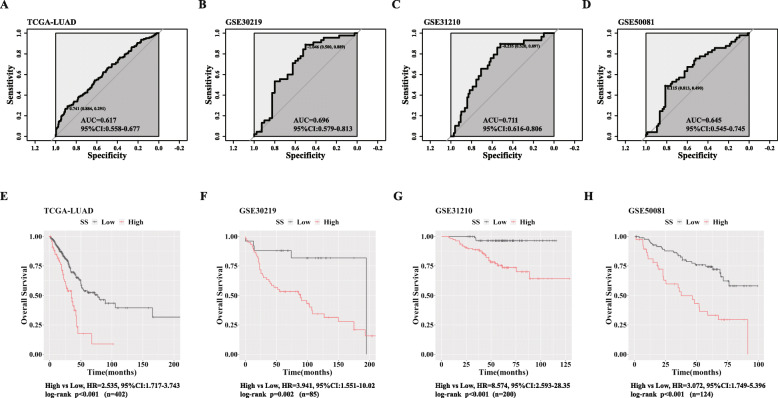
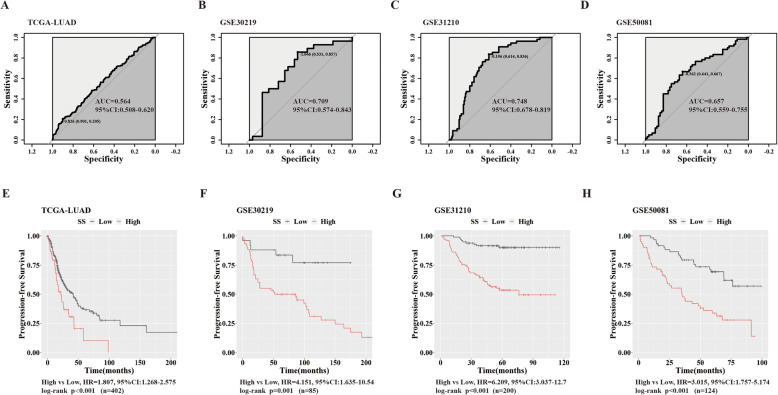
We first acquired differentially expressed genes between tumors and normal tissues from intersections of four LUAD datasets. Next, survival-related genes were preliminarily unscrambled by univariate Cox regression and further filtrated by LASSO regression. Then, we applied PCA to establish a comprehensive SS based on survival-related genes. Subsequently, we applied four independent LUAD datasets to evaluate prognostic prediction of SS. Moreover, we explored associations between SS and clinicopathological features. Furthermore, we assessed independent predictive value of SS by multivariate Cox analysis and then built prognostic models based on clinical stage and SS. Finally, we performed pathway enrichments analysis and investigated immune checkpoints expression underlying SS in four datasets.
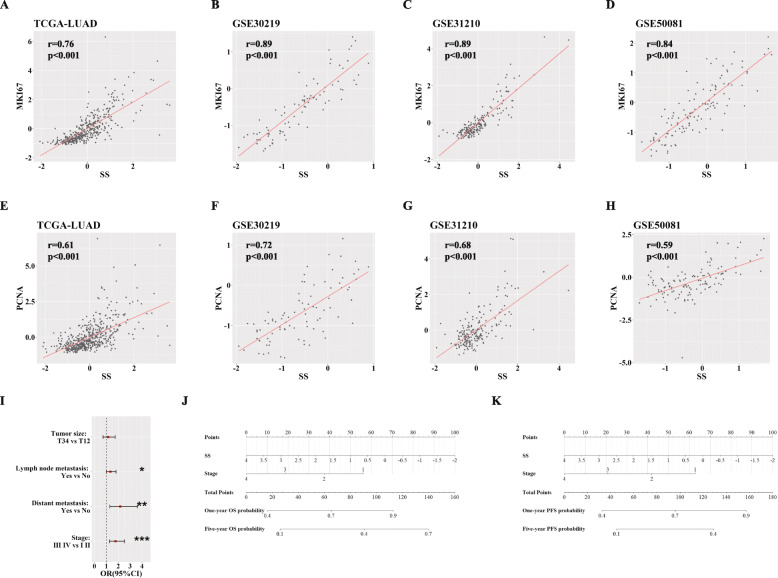
We established a 13 gene-based SS, which could precisely predict OS and PFS of LUAD. Close relations were elicited between SS and canonical malignant indictors. Furthermore, SS could serve as an independent risk factor for OS and PFS. Besides, the predictive efficacies of prognostic models were also reasonable (C-indexes: OS, 0.7; PFS, 0.7). Finally, we demonstrated enhanced cell proliferation and immune escape might account for high clinical risk of SS.
We built a 13 gene-based SS for prognostic prediction of LUAD, which exhibited wide applicability and could contribute to LUAD management.
肺腺癌(LUAD)仍然是危害人类健康的重要因素。基于基因的临床预测对于癌症干预策略可能有很大帮助。在这里,我们试图通过分析多个转录组数据集,构建基于基因的 LUAD 生存评分(SS)。
我们首先从四个 LUAD 数据集的交集获取肿瘤和正常组织之间的差异表达基因。接下来,通过单变量 Cox 回归初步筛选生存相关基因,然后通过 LASSO 回归进一步筛选。然后,我们应用 PCA 基于生存相关基因建立综合 SS。随后,我们应用四个独立的 LUAD 数据集来评估 SS 的预后预测。此外,我们探讨了 SS 与临床病理特征之间的关系。此外,我们通过多变量 Cox 分析评估 SS 的独立预测价值,然后基于临床分期和 SS 构建预后模型。最后,我们进行了通路富集分析,并在四个数据集调查了 SS 下的免疫检查点表达。
我们建立了一个基于 13 个基因的 SS,它可以准确预测 LUAD 的 OS 和 PFS。SS 与经典恶性指标之间存在密切关系。此外,SS 可以作为 OS 和 PFS 的独立危险因素。此外,预后模型的预测效果也合理(C 指数:OS,0.7;PFS,0.7)。最后,我们证明了增强的细胞增殖和免疫逃逸可能是 SS 高临床风险的原因。
我们构建了一个基于 13 个基因的 LUAD 预后预测 SS,它具有广泛的适用性,可以为 LUAD 的管理做出贡献。