Bottari Benedetta, Levante Alessia, Bancalari Elena, Sforza Stefano, Bottesini Chiara, Prandi Barbara, De Filippis Francesca, Ercolini Danilo, Nocetti Marco, Gatti Monica
Department of Food and Drug, University of Parma, Parma, Italy.
Department of Agricultural Sciences, University of Naples Federico II, Naples, Italy.
Front Microbiol. 2020 Oct 2;11:581658. doi: 10.3389/fmicb.2020.581658. eCollection 2020.
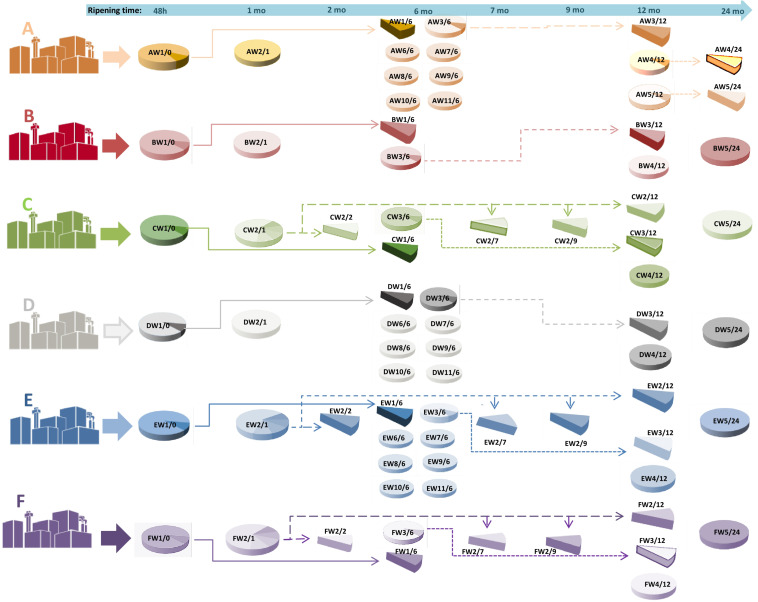
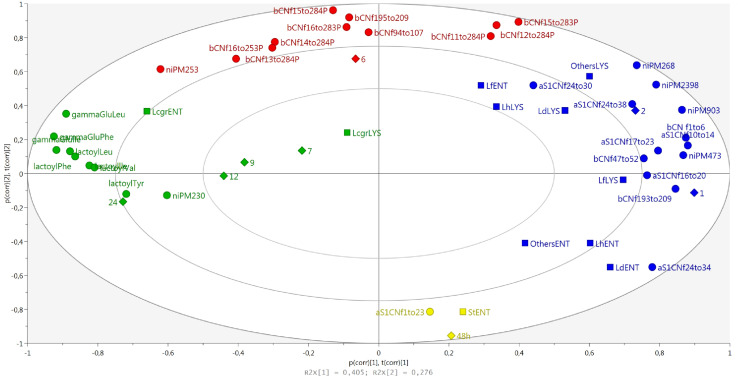
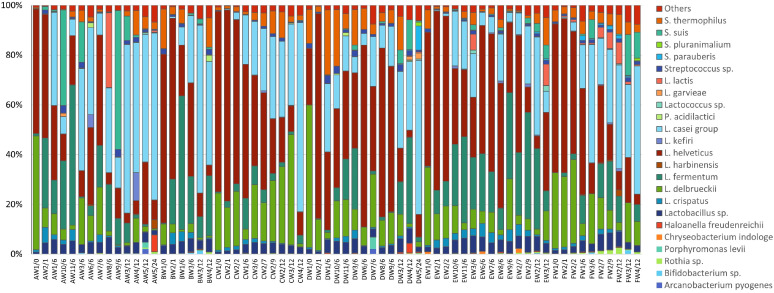
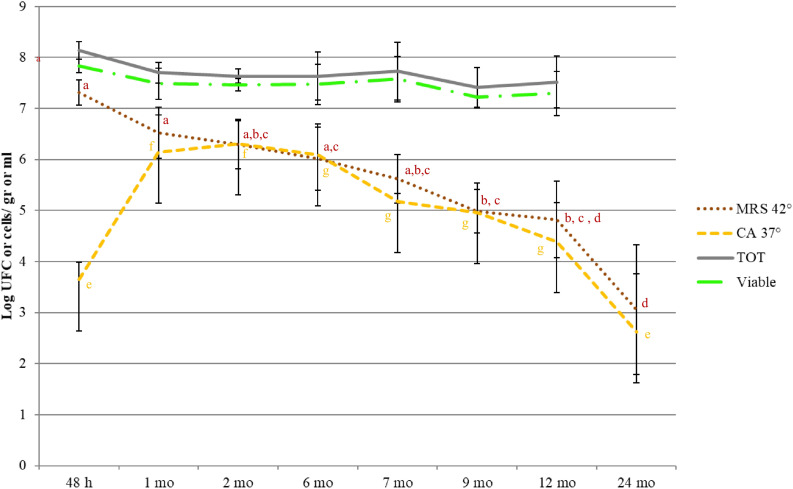
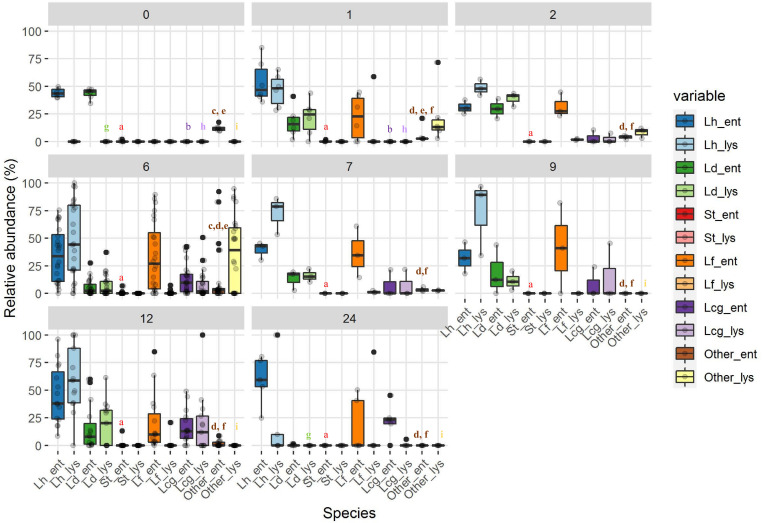
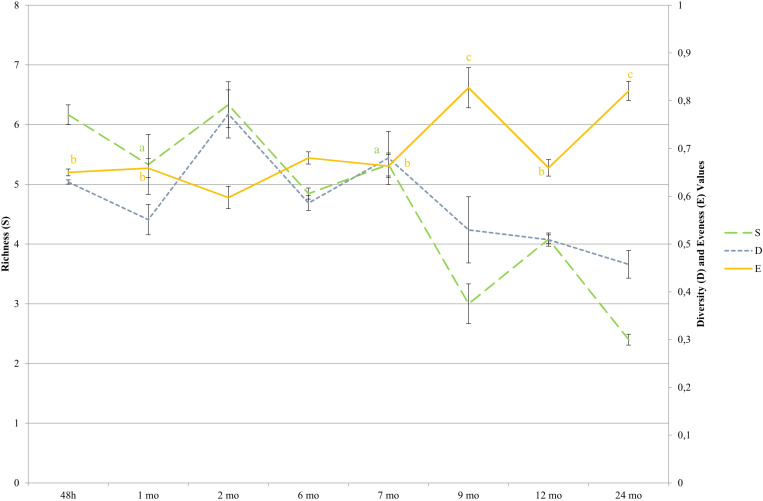
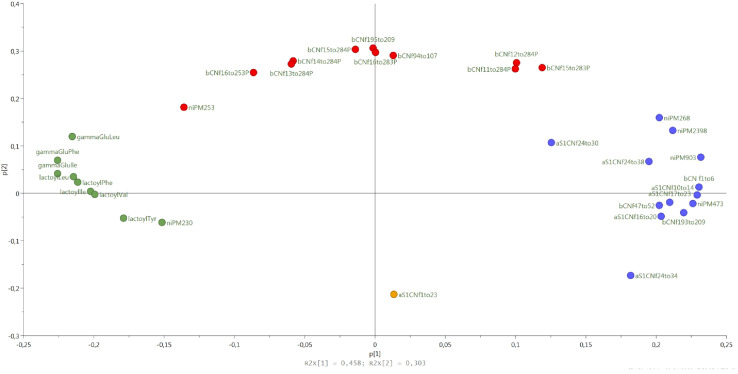
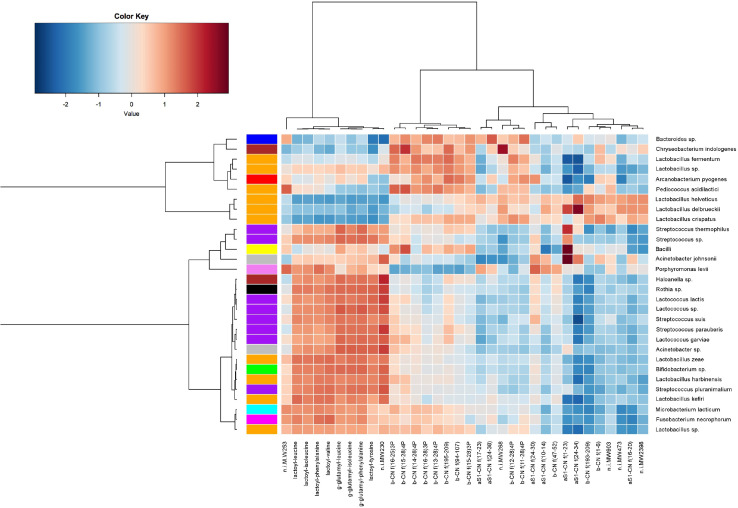
Cheese microbiota contribute significantly to the final characteristics of cheeses due to the growth and interaction between cheese microorganisms during processing and ripening. For raw milk cheeses, such as Parmigiano Reggiano (PR), the microbiota derive from the raw milk itself, the dairy environment, and the starter. The process of cheese making and time of ripening shape this complex ecosystem through the selection of different species and biotypes that will drive the quality of the final product by performing functions of their metabolism such as proteolysis. The diversity in the final peptide and amino acid composition of the cheese is thus mostly linked to the diversity of this microbiota. The purpose of this study was to get more insight into the factors affecting PR cheese diversity and, more specifically, to evaluate whether the composition of the bacterial community of cheeses along with the specific peptide composition are more affected by the ripening times or by the cheese making process. To this end, the microbiota and the peptide fractions of 69 cheese samples (from curd to cheese ripened 24 months) were analyzed during 6 complete PR production cycles, which were performed in six different dairies located in the PR production area. The relation among microbial dynamics, peptide evolution, and ripening times were investigated in this unique and tightly controlled production and sampling set up. The study of microbial and peptide moieties in products from different dairies - from curd to at least 12 months, the earliest time from which the cheese can be sold, and up to a maximum of 24 months of ripening - highlighted the presence of differences between samples coming from different dairies, probably due to small differences in the cheese making process. Besides these differences, however, ripening time had by far the greatest impact on microbial dynamics and, consequently, on peptide composition.
由于奶酪微生物在加工和成熟过程中的生长及相互作用,奶酪微生物群对奶酪的最终特性有显著贡献。对于生乳奶酪,如帕尔马干酪(PR),其微生物群来源于生乳本身、乳制品生产环境以及发酵剂。奶酪制作过程和成熟时间通过选择不同的物种和生物型来塑造这个复杂的生态系统,这些物种和生物型通过执行蛋白水解等代谢功能来决定最终产品的质量。因此,奶酪最终肽和氨基酸组成的多样性主要与这种微生物群的多样性相关。本研究的目的是更深入地了解影响PR奶酪多样性的因素,更具体地说,是评估奶酪细菌群落的组成以及特定的肽组成是受成熟时间还是奶酪制作过程的影响更大。为此,在位于PR产区的六个不同乳品厂进行的6个完整的PR生产周期中,分析了69个奶酪样品(从凝乳到成熟24个月的奶酪)的微生物群和肽组分。在这个独特且严格控制的生产和采样设置中,研究了微生物动态、肽演变和成熟时间之间的关系。对来自不同乳品厂的产品(从凝乳到至少12个月,即奶酪最早可销售的时间,以及最长24个月的成熟期)中的微生物和肽部分进行研究,结果表明来自不同乳品厂的样品之间存在差异,这可能是由于奶酪制作过程中的微小差异所致。然而,除了这些差异外,成熟时间对微生物动态以及因此对肽组成的影响最大。