
伸展和力量训练以改善手术室中的姿势工效学和耐力
Stretching and Strength Training to Improve Postural Ergonomics and Endurance in the Operating Room.
作者信息
Winters James N, Sommer Nicole Z, Romanelli Michael R, Marschik Chad, Hulcher Leah, Cutler Brigitte J
机构信息
Institute for Plastic Surgery SIU School of Medicine, Springfield, Ill.
No hospital affiliation.
出版信息
Plast Reconstr Surg Glob Open. 2020 May 13;8(5):e2810. doi: 10.1097/GOX.0000000000002810. eCollection 2020 May.
UNLABELLED
Plastic surgeons report the highest prevalence of chronic musculoskeletal pain and fatigue among surgical subspecialties. Musculoskeletal pain impacts daily life, career longevity, and economic burden secondary to occupational injury. Poor postural awareness and ergonomic set up in the operating room represent the most common etiology.
METHODS
A literature review was performed to highlight the ergonomic set-up, postural pitfalls, occupational injuries, and musculoskeletal pain in the operating room. An institutional survey was administered among resident and attending surgeons regarding musculoskeletal pain, posture, ergonomic education, and future improvements. Literature results, survey data, and intraoperative photographs were analyzed in collaboration with physical therapists and personal trainers.
RESULTS
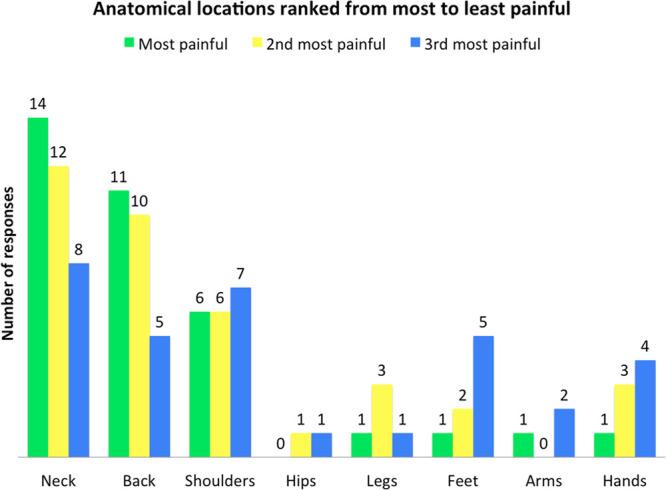
Survey results demonstrated that 97% of resident and attending respondents experienced musculoskeletal pain and 83% reported a lack of education in posture and ergonomics. The main postural pitfalls included head forward and flexed positioning, abduction and internal arm rotation, and kyphosis of the thoracic spine. The collaborators developed instructional videos to assess posture and biomechanics and demonstrate targeted stretching and strength exercises to address specific neck, back, and shoulder pain.
CONCLUSIONS
Poor posture is unavoidable in the operating room at times. These educational videos should be utilized for self-motivated and prophylactic conditioning outside of the operating room to maintain physical well-being throughout a career in plastic surgery. Future focus should be aimed at implementing dedicated ergonomic education and physical wellness programs early in surgical resident training.
未标注
整形外科医生报告称,在外科亚专业中,慢性肌肉骨骼疼痛和疲劳的患病率最高。肌肉骨骼疼痛会影响日常生活、职业寿命以及职业伤害带来的经济负担。手术室中姿势意识差和人体工程学设置不佳是最常见的病因。
方法
进行了一项文献综述,以突出手术室中的人体工程学设置、姿势缺陷、职业伤害和肌肉骨骼疼痛。对住院医师和主治医生进行了一项机构调查,内容涉及肌肉骨骼疼痛、姿势、人体工程学教育以及未来的改进措施。结合物理治疗师和私人教练对文献结果、调查数据和术中照片进行了分析。
结果
调查结果显示,97%的住院医师和主治医生受访者经历过肌肉骨骼疼痛,83%的人报告缺乏姿势和人体工程学方面的教育。主要的姿势缺陷包括头部前倾和屈曲姿势、手臂外展和内旋以及胸椎后凸。合作者制作了教学视频,以评估姿势和生物力学,并展示针对性的伸展和力量练习,以解决特定的颈部、背部和肩部疼痛。
结论
手术室中有时姿势不佳是不可避免的。这些教学视频应在手术室之外用于自我激励和预防性训练,以在整形外科职业生涯中保持身体健康。未来的重点应是在外科住院医师培训早期实施专门的人体工程学教育和身体健康计划。




 Zotero 插件