Wong Becky J, Yoon Isabel A, Krane Elliot J
Stanford University School of Medicine, Stanford, CA, USA.
Stanford Children's Health and the Packard Children's Hospital at Stanford, Stanford, CA, USA.
Pain Rep. 2020 Oct 12;5(6):e860. doi: 10.1097/PR9.0000000000000860. eCollection 2020 Nov-Dec.
Complex regional pain syndrome (CRPS) is a neuropathic pain condition of unknown etiology. Little is known of long-term outcomes of young adults who were diagnosed with CRPS as children.
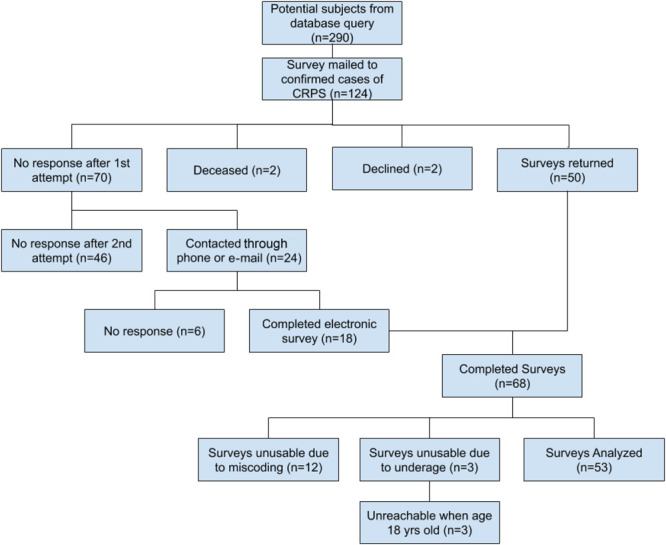
In this study, surveys were mailed to adults who were treated for childhood CRPS at the Lucile Packard Children's Hospital between 1994 and 2018. Completed surveys were analyzed for pain symptoms. Health-related quality-of-life surveys, the Optum SF-8, were analyzed based on norm-based scoring.
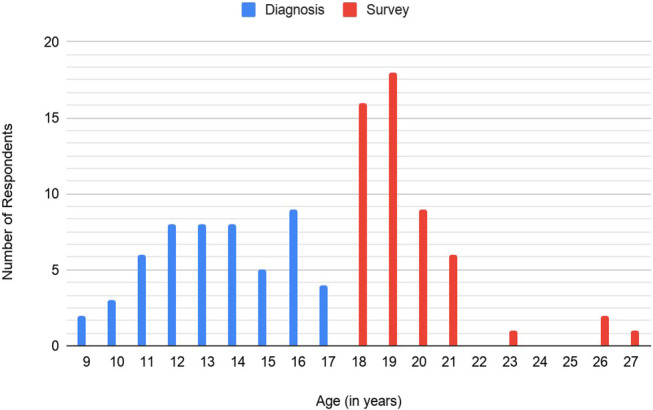
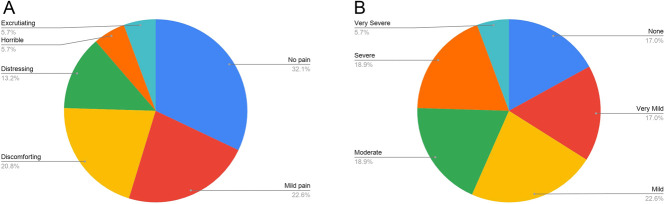
This study had a 50% response rate. Patients were treated with physical and occupational therapy, peripheral or sympathetic nerve blocks, medication for neuropathic pain, and psychotherapy. Sixty-eight percent of the subjects reported pain. Each 1-year increase in the patient's age at the time of CRPS diagnosis increased the odds of having at least mild pain as an adult by 61% ( = 0.005). Most patients had slightly lower quality-of-life scores than the US population average in both the mental component score (43.4, 95%, confidence interval 3.4) and the physical component score (44.4, 95%, confidence interval 3.3).
Young adults in our sample had long-lasting pain symptoms. More than two-thirds of adult patients reported some degree of pain, and these patients had a lower quality of life. Encouraging was that the majority did not have CRPS spreading to other areas, and their pain did not warrant further treatment. Understanding long-term outcomes may lead to risk stratification earlier in the disease to improve future quality of life.
复杂性区域疼痛综合征(CRPS)是一种病因不明的神经性疼痛疾病。对于儿童时期被诊断为CRPS的年轻人的长期预后知之甚少。
在本研究中,向1994年至2018年期间在露西尔·帕卡德儿童医院接受儿童CRPS治疗的成年人邮寄了调查问卷。对完成的调查问卷进行疼痛症状分析。基于基于规范的评分对与健康相关的生活质量调查问卷Optum SF-8进行分析。
本研究的回复率为50%。患者接受了物理和职业治疗、外周或交感神经阻滞、神经性疼痛药物治疗以及心理治疗。68%的受试者报告有疼痛。CRPS诊断时患者年龄每增加1岁,成年后至少有轻度疼痛的几率增加61%( = 0.005)。大多数患者在心理成分评分(43.4,95%,置信区间3.4)和身体成分评分(44.4,95%,置信区间3.3)方面的生活质量得分略低于美国人群平均水平。
我们样本中的年轻人有持久的疼痛症状。超过三分之二的成年患者报告有一定程度的疼痛,且这些患者的生活质量较低。令人鼓舞的是,大多数患者的CRPS没有扩散到其他部位,且他们的疼痛无需进一步治疗。了解长期预后可能会在疾病早期进行风险分层,以改善未来的生活质量。