College of Biological Sciences, China Agricultural University, China.
National Institute of Biological Sciences, China.
PLoS Genet. 2020 Nov 2;16(11):e1009172. doi: 10.1371/journal.pgen.1009172. eCollection 2020 Nov.
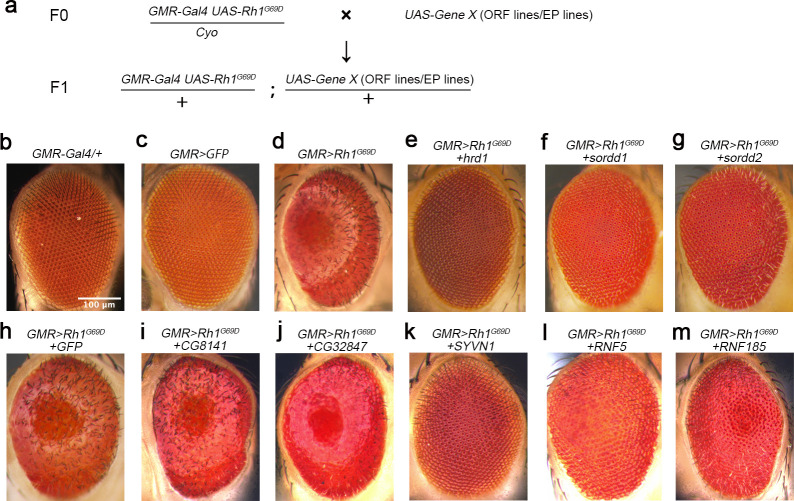
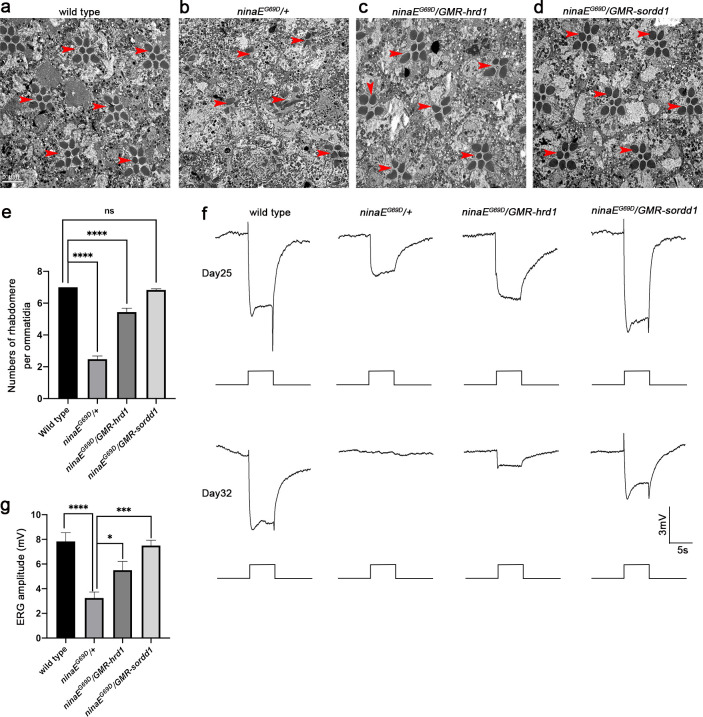
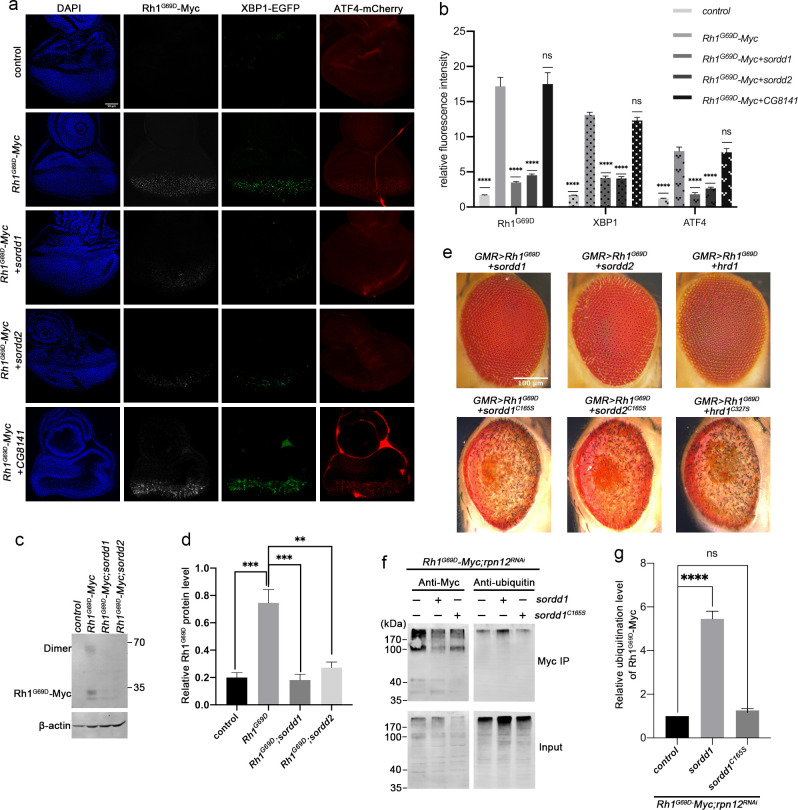
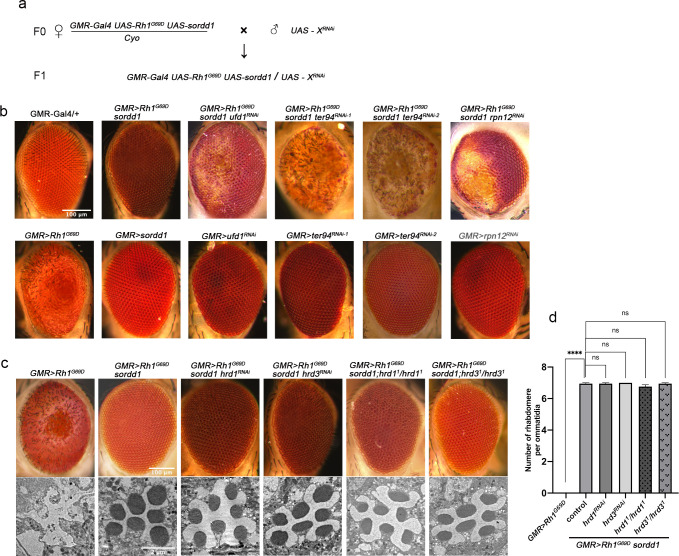
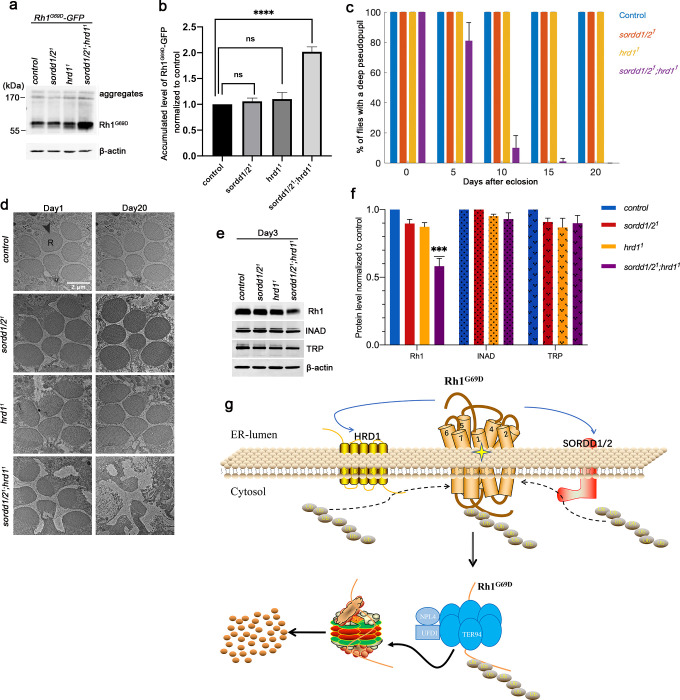
Mutations in the gene rhodopsin are one of the major causes of autosomal dominant retinitis pigmentosa (adRP). Mutant forms of Rhodopsin frequently accumulate in the endoplasmic reticulum (ER), cause ER stress, and trigger photoreceptor cell degeneration. Here, we performed a genome-wide screen to identify suppressors of retinal degeneration in a Drosophila model of adRP, carrying a point mutation in the major rhodopsin, Rh1 (Rh1G69D). We identified two novel E3 ubiquitin ligases SORDD1 and SORDD2 that effectively suppressed Rh1G69D-induced photoreceptor dysfunction and retinal degeneration. SORDD1/2 promoted the ubiquitination and degradation of Rh1G69D through VCP (valosin containing protein) and independent of processes reliant on the HRD1 (HMG-CoA reductase degradation protein 1)/HRD3 complex. We further demonstrate that SORDD1/2 and HRD1 function in parallel and in a redundant fashion to maintain rhodopsin homeostasis and integrity of photoreceptor cells. These findings identify a new ER-associated protein degradation (ERAD) pathway and suggest that facilitating SORDD1/2 function may be a therapeutic strategy to treat adRP.
基因视紫红质突变是常染色体显性遗传视网膜色素变性(adRP)的主要原因之一。视紫红质的突变形式经常在内质网(ER)中积累,引起 ER 应激,并触发光感受器细胞变性。在这里,我们进行了全基因组筛选,以鉴定携带主要视紫红质 Rh1 点突变(Rh1G69D)的 adRP 果蝇模型中视网膜变性的抑制因子。我们鉴定了两种新型 E3 泛素连接酶 SORDD1 和 SORDD2,它们有效地抑制了 Rh1G69D 诱导的光感受器功能障碍和视网膜变性。SORDD1/2 通过 VCP(含有泛素结合结构域的蛋白)促进 Rh1G69D 的泛素化和降解,而不依赖于依赖 HRD1(HMG-CoA 还原酶降解蛋白 1)/HRD3 复合物的过程。我们进一步证明 SORDD1/2 和 HRD1 平行且冗余地发挥作用,以维持视紫红质的动态平衡和光感受器细胞的完整性。这些发现确定了一种新的内质网相关蛋白降解(ERAD)途径,并表明促进 SORDD1/2 功能可能是治疗 adRP 的一种治疗策略。