Department of Medicine I, Medizinische Fakultät Carl Gustav Carus, Technische Universität Dresden, Dresden, Germany.
Department of Neurosurgery, Medizinische Fakultät Carl Gustav Carus, Technische Universität Dresden, Dresden, Germany.
Neoplasia. 2020 Dec;22(12):800-808. doi: 10.1016/j.neo.2020.10.010. Epub 2020 Nov 2.
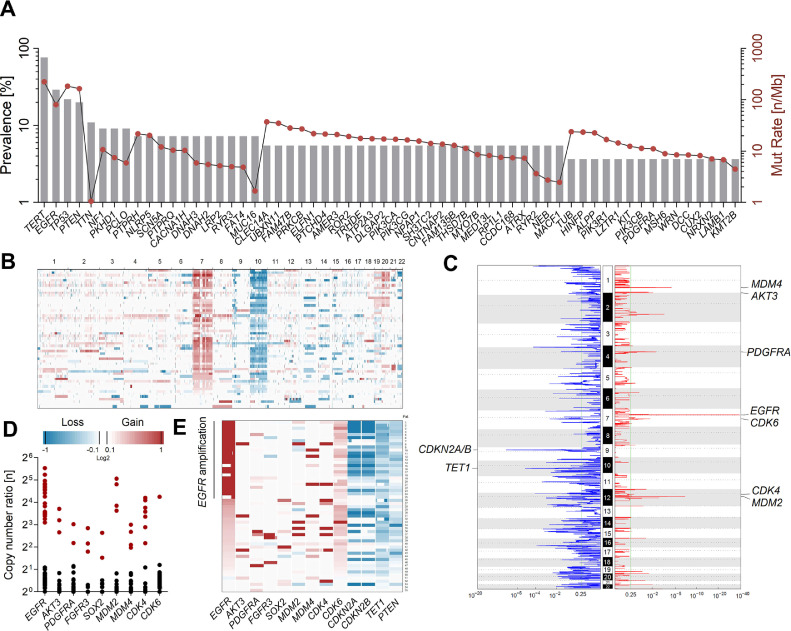
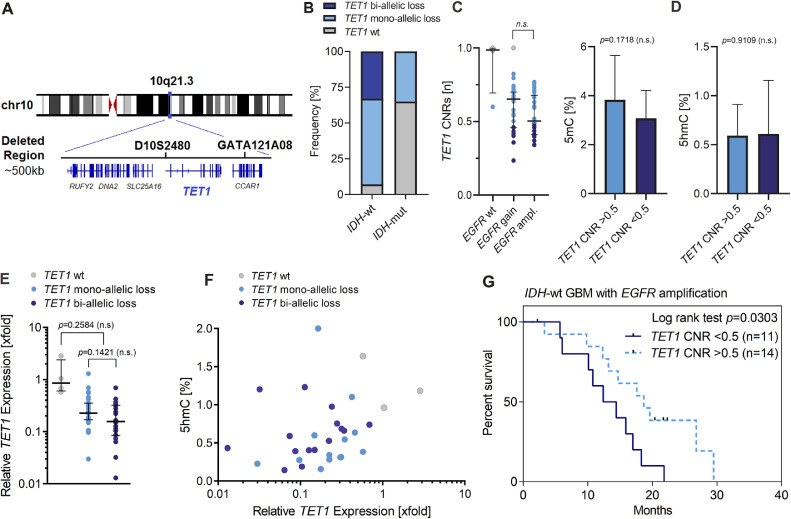
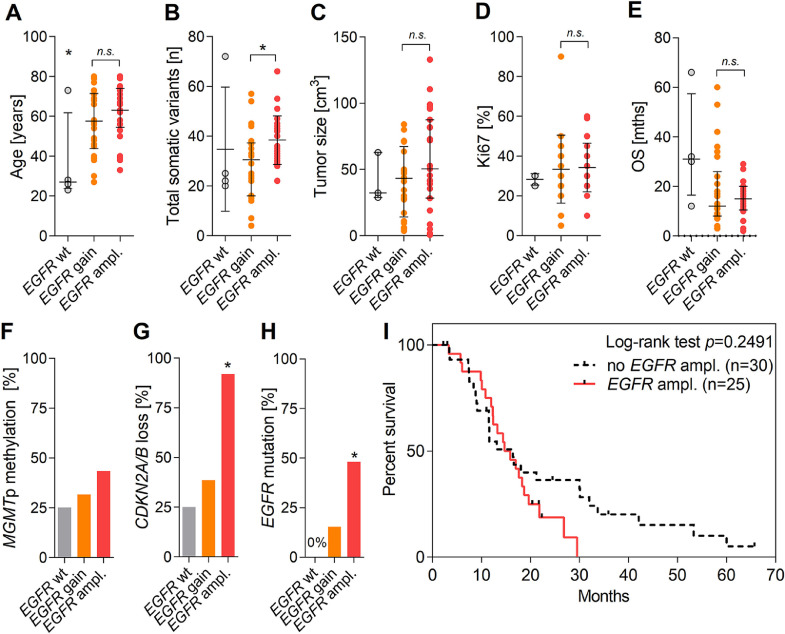
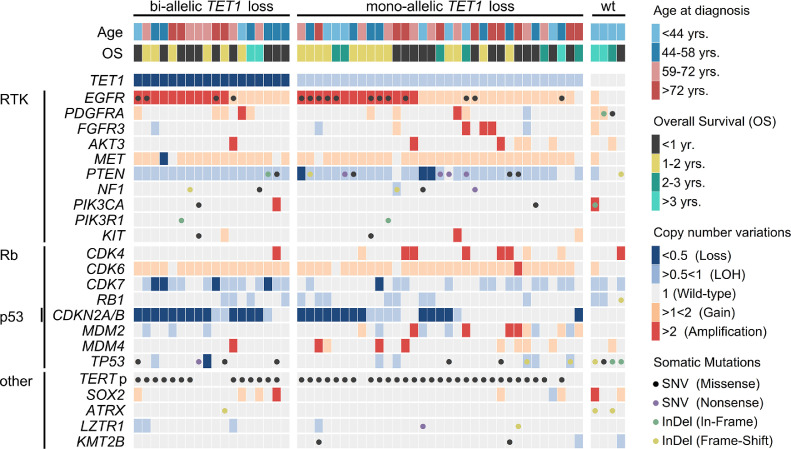
Glioblastoma (GBM) is the most common and malignant brain tumor in adults. Genomic and epigenomic alterations of multiple cancer-driving genes are frequent in GBM. To identify molecular alterations associated with epigenetic aberrations, we performed whole exome sequencing-based analysis of DNA copy number variations in 55 adult patients with IDH-wild-type GBM. Beside mutations in common GBM driver genes such as TERTp (76%), TP53 (22%) and PTEN (20%), 67% of patients were affected by amplifications of genes associated with RTK/Rb/p53 cell signaling, including EGFR (45%), CDK4 (13%), and MDM2/4 (both 7%). The minimal deleted region at chromosome 10 was detected at the DNA demethylase TET1 (93%), mainly due to a loss-of-heterozygosity of complete chromosome 10 (53%) or by a mono-allelic microdeletion at 10q21.3 (7%). In addition, bi-allelic TET1 deletions, detected in 18 patients (33%), frequently co-occurred with EGFR amplification and were associated with low levels of TET1 mRNA expression, pointing at loss of TET1 activity. Bi-allelic TET1 loss was not associated with global concentrations of 5-hydroxymethylcytosine, indicating a site-specific effect of TET1 for DNA (de)methylation. Focal amplification of EGFR positively correlated with overall mutational burden, tumor size, and poor long-term survival. Bi-allelic TET1 loss was not an independent prognostic factor, but significantly associated with poor survival in patients with concomitant EGFR amplification. Rates of genomic TET1 deletion were significantly lower in a cohort of IDH1-mutated patients. Despite the relevance of TET1 for DNA demethylation and as potential therapeutic target, a frequent genomic loss of TET1 has not previously been reported in GBM.
胶质母细胞瘤(GBM)是成人中最常见和最恶性的脑肿瘤。在 GBM 中,多个致癌基因的基因组和表观基因组改变很常见。为了确定与表观遗传异常相关的分子改变,我们对 55 名 IDH 野生型 GBM 成人患者进行了基于全外显子测序的 DNA 拷贝数变异分析。除了 TERTp(76%)、TP53(22%)和 PTEN(20%)等常见 GBM 驱动基因的突变外,67%的患者还受到与 RTK/Rb/p53 细胞信号传导相关基因扩增的影响,包括 EGFR(45%)、CDK4(13%)和 MDM2/4(均为 7%)。在 DNA 去甲基酶 TET1 处检测到染色体 10 的最小缺失区域(93%),主要是由于染色体 10 的完全杂合性丢失(53%)或 10q21.3 处的单等位基因微缺失(7%)。此外,在 18 名患者(33%)中检测到双等位基因 TET1 缺失,常与 EGFR 扩增同时发生,并与 TET1 mRNA 表达水平降低相关,表明 TET1 活性丧失。双等位基因 TET1 缺失与 5-羟甲基胞嘧啶的总浓度无关,表明 TET1 对 DNA(去)甲基化具有特定部位的作用。EGFR 的局灶性扩增与总突变负担、肿瘤大小和不良长期生存呈正相关。双等位基因 TET1 缺失不是独立的预后因素,但与伴有 EGFR 扩增的患者的不良生存显著相关。在 IDH1 突变患者的队列中,基因组 TET1 缺失的发生率明显较低。尽管 TET1 对 DNA 去甲基化和作为潜在治疗靶点很重要,但以前在 GBM 中尚未报道过 TET1 的频繁基因组缺失。