Instituto de Alta Investigación, CEDENNA, Universidad de Tarapacá, Casilla 7D, Arica, Chile.
Escuela de Medicina, Universidad de Valparaíso, Valparaíso, Chile.
Epidemiol Infect. 2020 Nov 4;148:e270. doi: 10.1017/S0950268820002678.
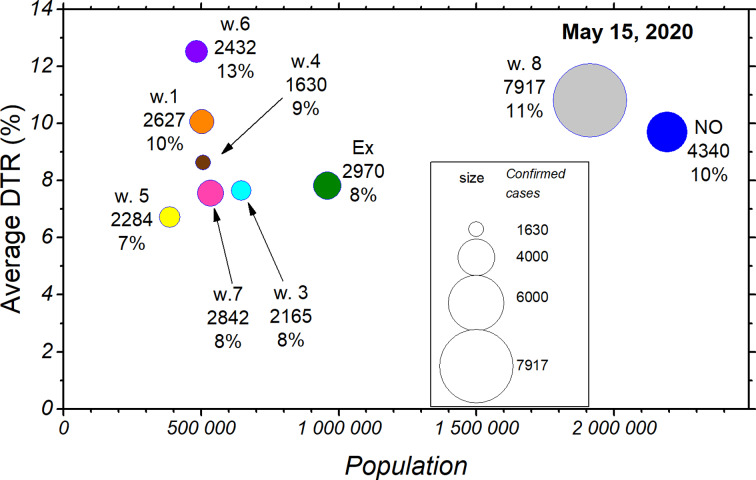
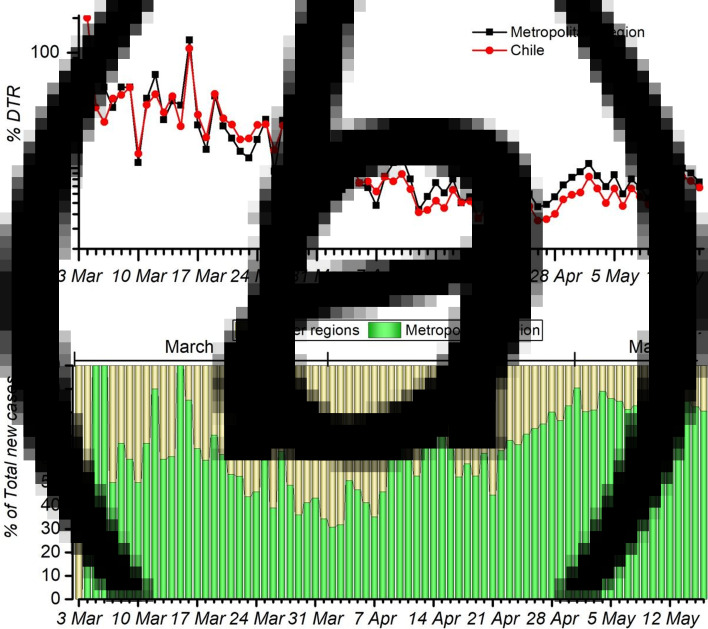
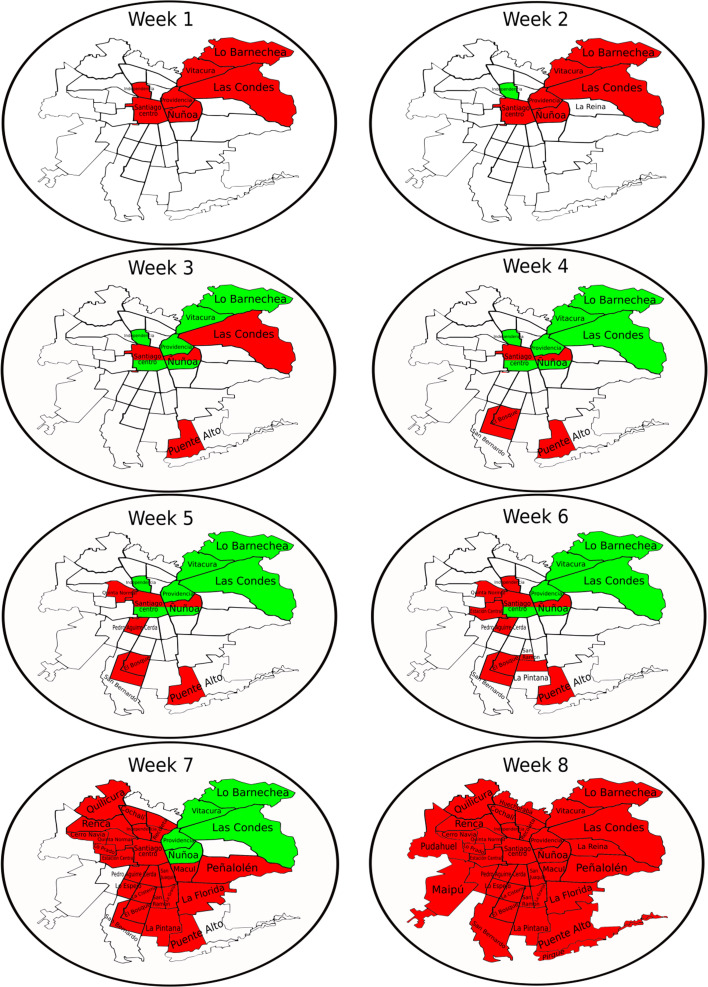
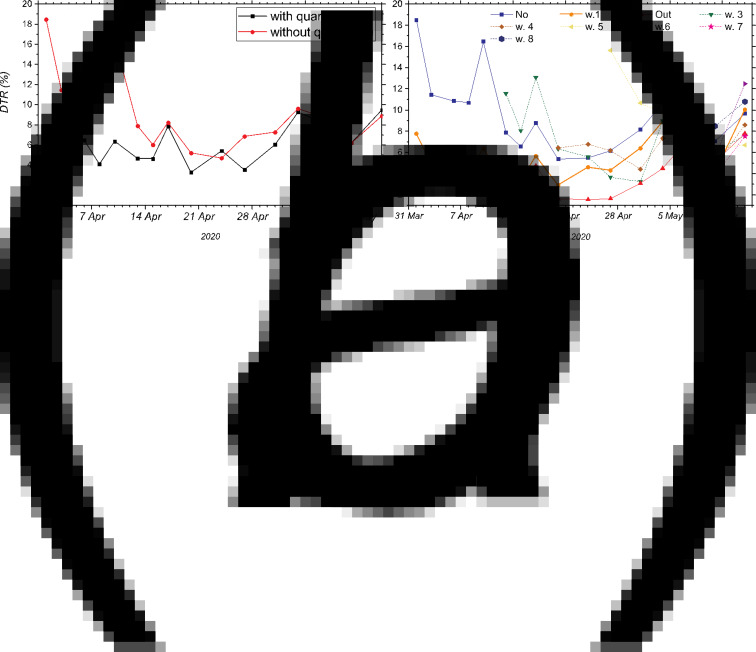
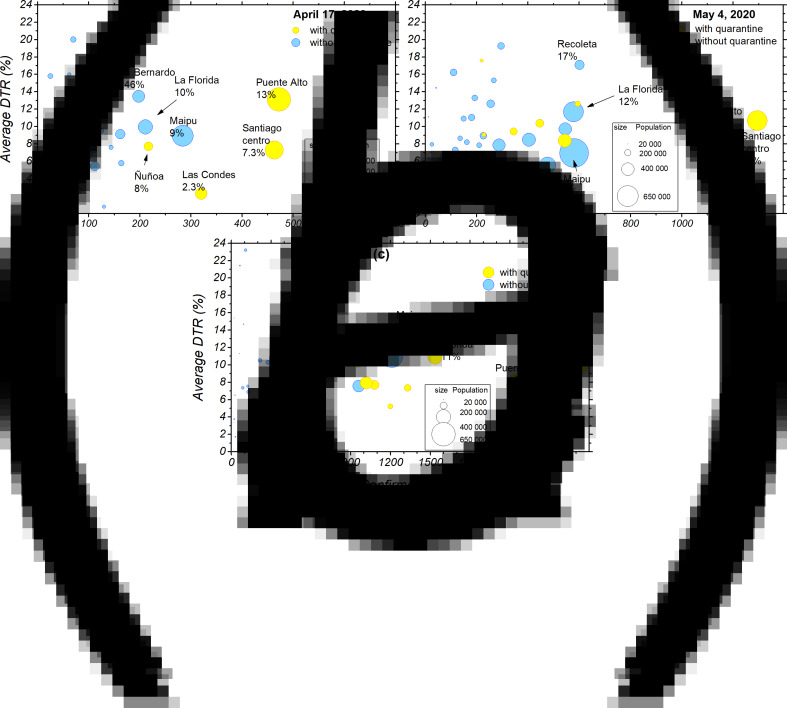
In this study, an analysis of the Chilean public health response to mitigate the spread of COVID-19 is presented. The analysis is based on the daily transmission rate (DTR). The Chilean response has been based on dynamic quarantines, which are established, lifted or prolonged based on the percentage of infected individuals in the fundamental administrative sections, called communes. This analysis is performed at a national level, at the level of the Metropolitan Region (MR) and at the commune level in the MR according to whether the commune did or did not enter quarantine between late March and mid-May of 2020. The analysis shows a certain degree of efficacy in controlling the pandemic using the dynamic quarantine strategy. However, it also shows that apparent control has only been partially achieved to date. With this policy, the control of the DTR partially falls to 4%, where it settles, and the MR is the primary vector of infection at the country level. For this reason, we can conclude that the MR has not managed to control the disease, with variable results within its own territory.
本研究对智利公共卫生部门为减缓 COVID-19 传播而采取的措施进行了分析。该分析基于每日传播率(DTR)。智利的应对措施基于动态隔离,根据基本行政分区(称为公社)中感染个体的百分比来设立、解除或延长隔离。该分析在全国范围内、首都大区(MR)级别以及 MR 中的公社级别进行,具体取决于公社是否在 2020 年 3 月底至 5 月中旬期间进入隔离状态。分析表明,使用动态隔离策略在控制大流行方面具有一定的效果。然而,它也表明,到目前为止,疫情的控制仅取得了部分成功。根据这项政策,DTR 的控制部分下降到 4%,并在此稳定下来,而首都大区是全国范围内感染的主要媒介。因此,我们可以得出结论,首都大区尚未成功控制疾病,其境内的结果各不相同。