Department of Immunology, St. Jude Children's Research Hospital, Memphis, Tennessee, USA.
Department of Microbiology and Immunology, Indiana University School of Medicine, Indianapolis, Indiana, USA.
mBio. 2020 Nov 3;11(6):e01859-20. doi: 10.1128/mBio.01859-20.
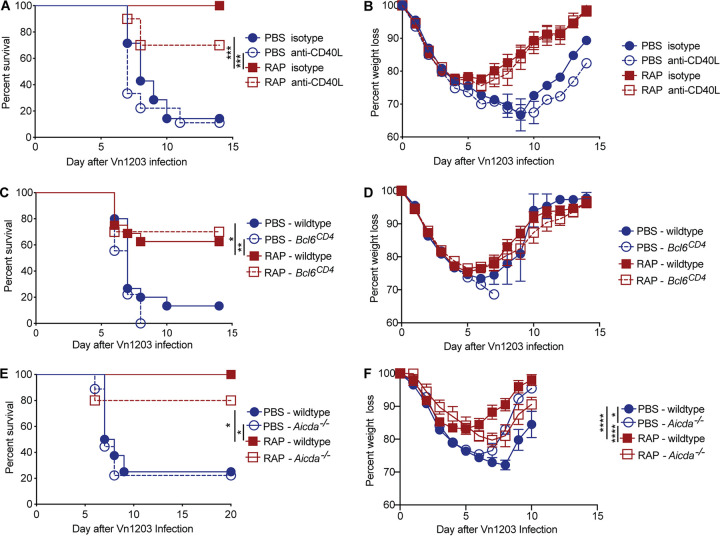
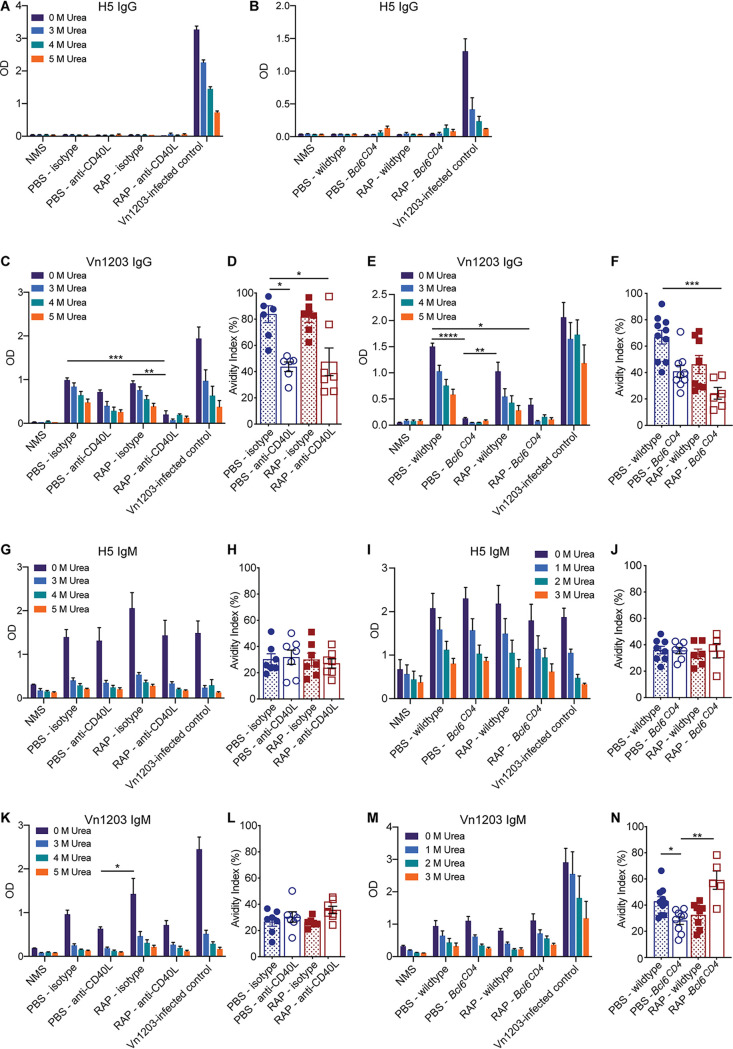
Enhancing the generation of broadly reactive antibodies against influenza A virus (IAV) is a pertinent goal toward developing a universal IAV vaccine. While antibodies that bind conserved IAV epitopes have been identified in humans, antibodies specific for the variable epitopes are much more prevalent than antibodies recognizing conserved epitopes. It is important to define the factors that limit the generation of broadly reactive IAV antibodies in order to develop an effective universal IAV vaccine. The predominant theory is that competition within germinal centers favors the synthesis of high-affinity antibodies specific for the variable region of the virus, and limits antibodies specific for conserved IAV epitopes. Here, we show that reducing germinal center formation and removing competition with high-affinity antibodies was not sufficient to increase broadly reactive IAV antibodies or enhance protection against distinct IAV subtypes. These data disprove the prevailing hypothesis that broadly reactive IAV antibodies are rare due to competition within germinal centers, and reveal the critical need to further investigate factors that limit broadly reactive IAV antibodies. Additionally, our data show that IAV-specific IgM antibodies persist in mice in the absence of germinal centers, highlighting the protective capacity of germinal center-independent IgM antibodies, which are not typically considered when testing correlates of protection, and offer an alternate target for delivering a universal IAV vaccine. It is estimated that 250,000 to 650,000 individuals worldwide die each year from seasonal influenza A virus (IAV) infections. Current vaccines provide little protection against newly emerging strains. Thus, considerable effort is focused on enhancing the generation of broadly reactive IAV antibodies in order to develop a universal IAV vaccine. However, broadly reactive IAV antibodies are rare and the factors that limit their generation are not completely understood. Our data disprove the prevailing hypothesis that broadly reactive IAV antibodies are uncommon due to competition in the germinal centers with antibodies specific for the variable, hemagglutinin (HA) head. Understanding the factors that constrain development of antibodies specific for conserved regions of IAV is imperative for developing an effective universal IAV vaccine, which could potentially circumvent a catastrophic pandemic. These findings are significant as they highlight the importance of investigating other mechanisms that contribute to the paucity of broadly reactive IAV antibodies.
增强针对甲型流感病毒(IAV)的广泛反应性抗体的产生是开发通用 IAV 疫苗的一个重要目标。虽然已经在人类中鉴定出了结合保守的 IAV 表位的抗体,但针对可变表位的抗体比识别保守表位的抗体更为普遍。确定限制广泛反应性 IAV 抗体产生的因素对于开发有效的通用 IAV 疫苗非常重要。主要理论是,生发中心内的竞争有利于合成针对病毒可变区的高亲和力抗体,并限制针对保守 IAV 表位的抗体。在这里,我们表明,减少生发中心的形成并消除与高亲和力抗体的竞争不足以增加广泛反应性的 IAV 抗体或增强对不同 IAV 亚型的保护。这些数据否定了广泛反应性 IAV 抗体由于生发中心内的竞争而罕见的流行假设,并揭示了进一步研究限制广泛反应性 IAV 抗体的因素的迫切需要。此外,我们的数据表明,在没有生发中心的情况下,IAV 特异性 IgM 抗体在小鼠中持续存在,突出了生发中心非依赖性 IgM 抗体的保护能力,在测试保护相关性时通常不考虑这些抗体,并且为提供通用 IAV 疫苗提供了另一个目标。据估计,每年有 25 万至 65 万人死于季节性流感 A 病毒(IAV)感染。目前的疫苗对新出现的菌株提供的保护作用很小。因此,人们正在努力增强针对甲型流感病毒(IAV)的广泛反应性抗体的产生,以开发通用的 IAV 疫苗。然而,广泛反应性的 IAV 抗体很少,限制其产生的因素还不完全清楚。我们的数据否定了流行的假设,即广泛反应性的 IAV 抗体由于与针对 HA 头的可变表位的抗体在生发中心中的竞争而罕见。了解限制针对 IAV 保守区域的抗体产生的因素对于开发有效的通用 IAV 疫苗至关重要,这可能会避免灾难性的大流行。这些发现意义重大,因为它们强调了研究导致广泛反应性 IAV 抗体缺乏的其他机制的重要性。