MRC Cancer Unit, University of Cambridge, Hutchison/MRC Research Centre, Box 197, Cambridge Biomedical Campus, Cambridge, CB2 0XZ, UK.
Br J Cancer. 2021 Jan;124(1):3-12. doi: 10.1038/s41416-020-01127-6. Epub 2020 Nov 4.
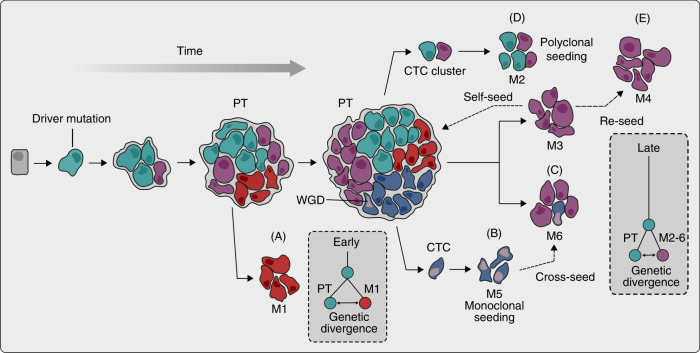
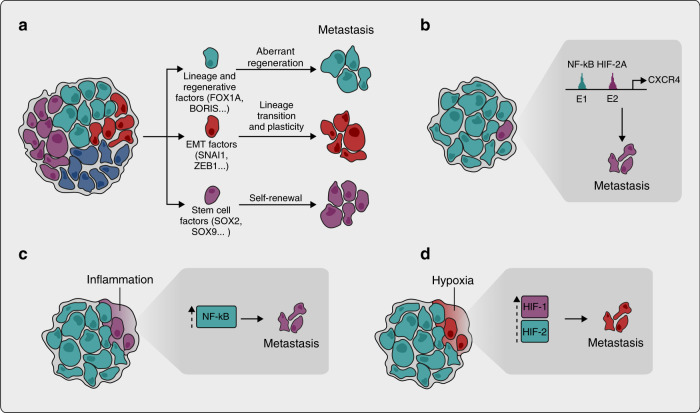
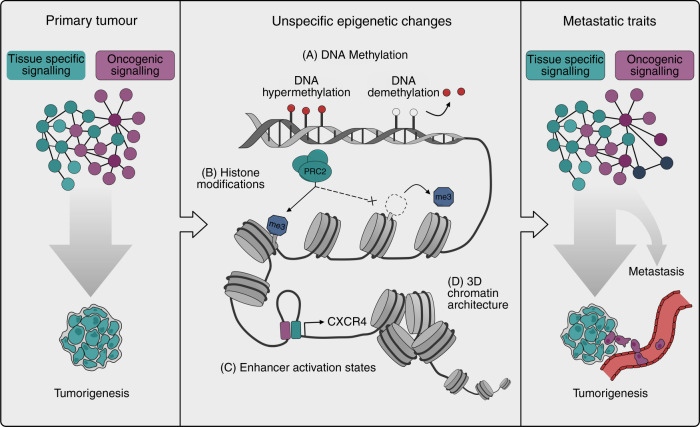
Metastasis remains the leading cause of cancer-associated mortality, and a detailed understanding of the metastatic process could suggest new therapeutic avenues. However, how metastatic phenotypes arise at the genomic level has remained a major open question in cancer biology. Comparative genetic studies of primary and metastatic cancers have revealed a complex picture of metastatic evolution with diverse temporal patterns and trajectories to dissemination. Whole-genome amplification is associated with metastatic cancer clones, but no metastasis-exclusive driver mutations have emerged. Instead, genetically activated oncogenic pathways that drive tumour initiation and early progression acquire metastatic traits by co-opting physiological programmes from stem cell, developmental and regenerative pathways. The functional consequences of oncogenic driver mutations therefore change via epigenetic mechanisms to promote metastasis. Increasing evidence is starting to uncover the molecular mechanisms that determine how specific oncogenic drivers interact with various physiological programmes, and what triggers their activation in support of metastasis. Detailed insight into the mechanisms that control metastasis is likely to reveal novel opportunities for intervention at different stages of metastatic progression.
转移仍然是癌症相关死亡的主要原因,对转移过程的详细了解可能会为新的治疗方法提供线索。然而,在基因组水平上,转移表型是如何产生的,这在癌症生物学中仍然是一个主要的悬而未决的问题。对原发性和转移性癌症的比较遗传学研究揭示了转移性进化的复杂图景,具有不同的时间模式和传播轨迹。全基因组扩增与转移性癌症克隆有关,但尚未出现转移性特有的驱动突变。相反,通过从干细胞、发育和再生途径中篡夺生理程序,驱动肿瘤起始和早期进展的遗传激活致癌途径获得转移特征。因此,致癌驱动突变的功能后果通过表观遗传机制发生改变,以促进转移。越来越多的证据开始揭示决定特定致癌驱动因素与各种生理程序相互作用的分子机制,以及触发它们激活以支持转移的机制。对控制转移的机制的详细了解可能会揭示在转移进展的不同阶段进行干预的新机会。